
Palliative Physiotherapy Assessment
The first visit establishes a safe baseline using history, observation and tests relevant to advanced illness, pain, breathlessness, weakness, edema, stiffness, prolonged bed rest, transfer difficulty.
Palliative Physiotherapy from CareMotion is designed for people with serious or life-limiting illness who need comfort-focused rehabilitation. Care addresses advanced illness, pain, breathlessness, weakness, edema, stiffness, prolonged bed rest, transfer difficulty through comfort positioning, gentle movement, breathing support, secretion care when appropriate, transfers, energy conservation and caregiver guidance. Every plan is adjusted to diagnosis, precautions, response and meaningful daily goals. CareMotion provides Palliative Physiotherapy through scheduled home visits in Hooghly and supported nearby service areas, subject to clinical suitability, therapist availability, travel feasibility and relevant medical precautions.
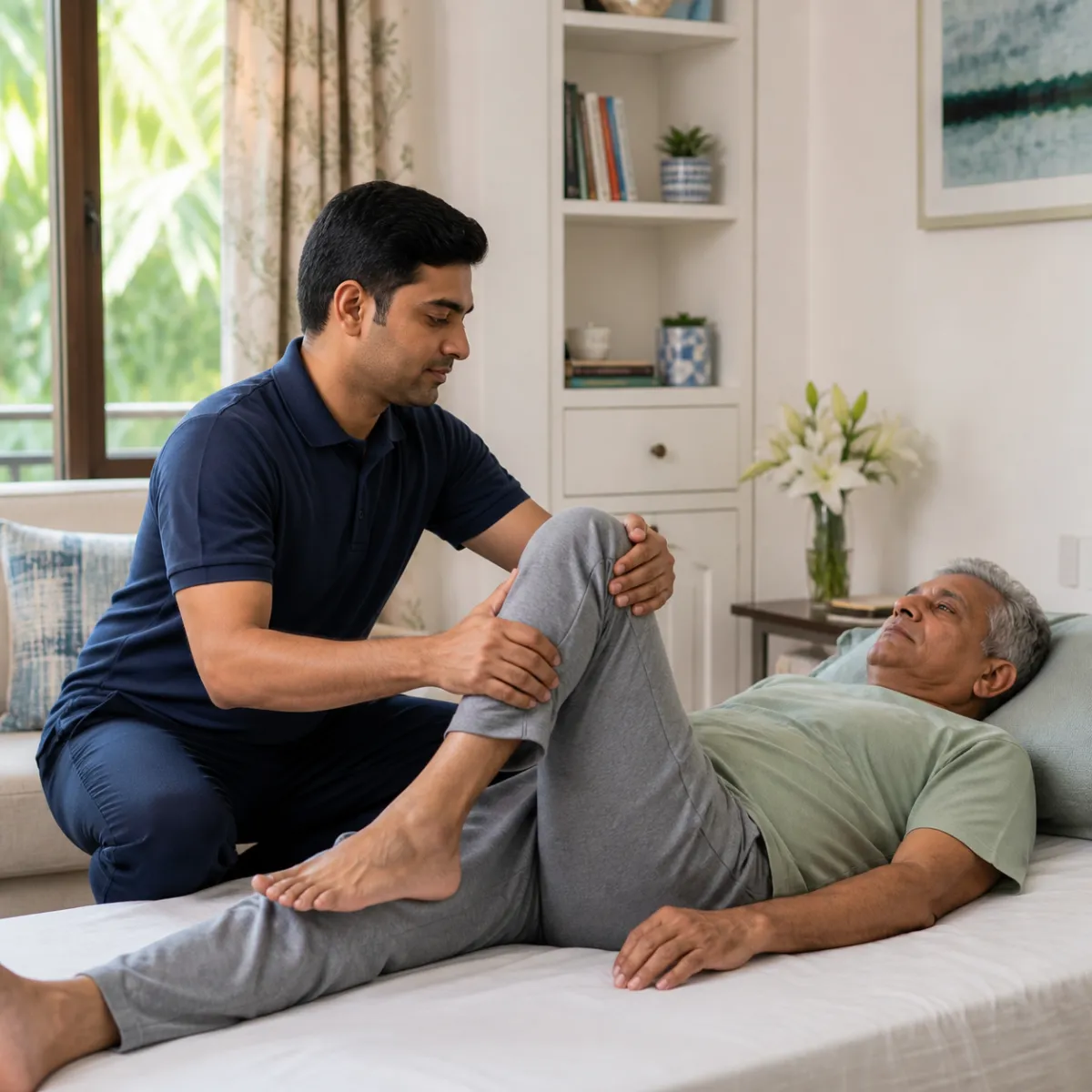
Palliative Physiotherapy at home in Hooghly is intended for people with serious or life-limiting illness who may benefit from comfort-focused movement support. Care can address positioning, stiffness, weakness, breathlessness, bed mobility, transfers, fatigue, caregiver handling and selected functional activity, while treatment intensity is guided by symptoms, patient preference, medical precautions and the overall care plan.
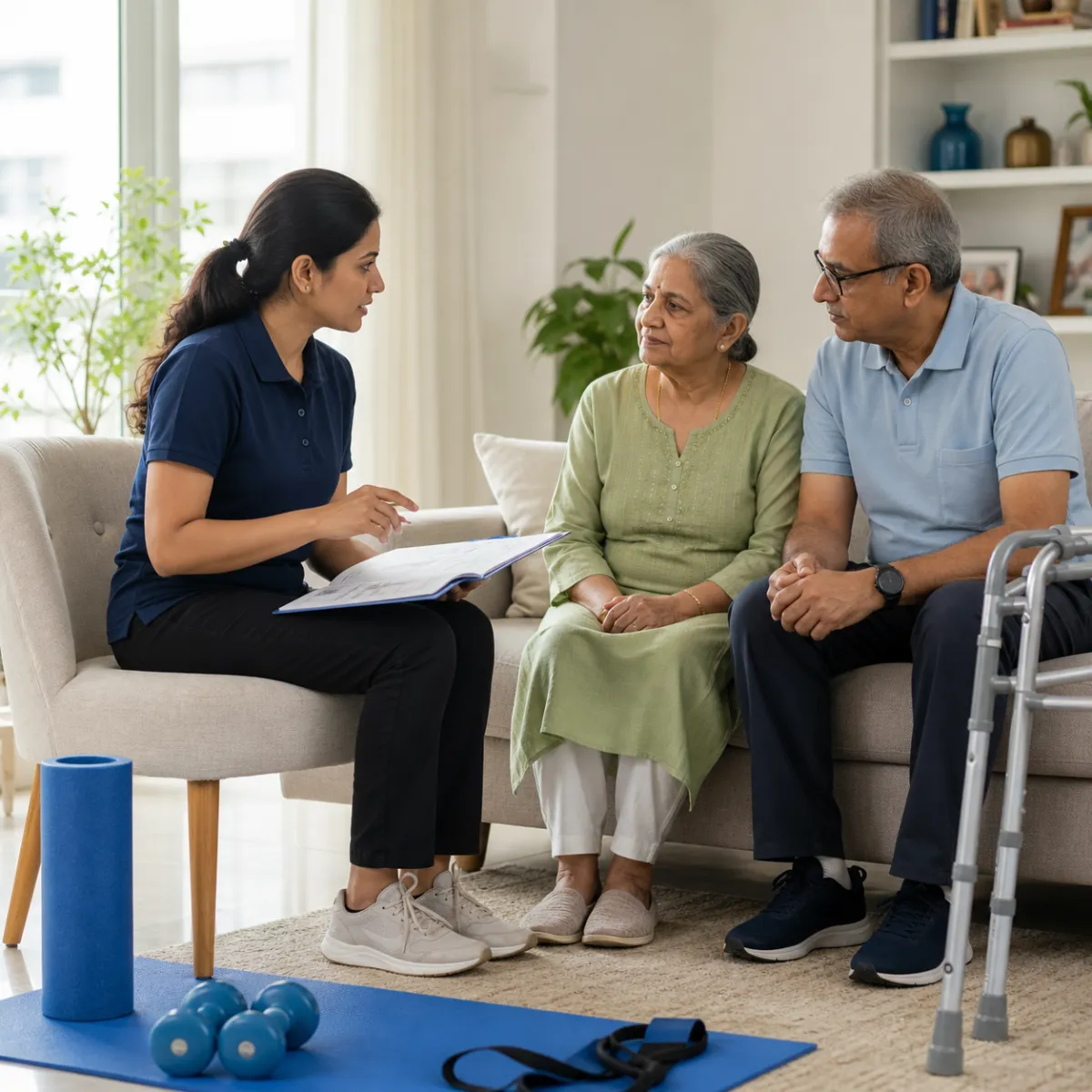
An individualized assessment helps shape safe and relevant Palliative Physiotherapy goals.
The first visit establishes a safe baseline using history, observation and tests relevant to advanced illness, pain, breathlessness, weakness, edema, stiffness, prolonged bed rest, transfer difficulty.
Findings are translated into practical priorities to ease distress, preserve comfortable movement and support dignity and caregiver safety, with patient and caregiver goals included.
The program may use comfort positioning, gentle movement, breathing support, secretion care when appropriate, transfers, energy conservation and caregiver guidance according to indication, tolerance and precautions.
Function is reassessed and the plan is progressed, maintained or referred. Medical review is required for rapid deterioration, uncontrolled symptoms, acute distress or any treatment burden that outweighs comfort and patient preference.
Specialized care for physical recovery.
Palliative Physiotherapy in Hooghly is planned around individual findings rather than a standard routine. Potential benefits may include progress in goal-focused assessment, safer clinical progression and functional relevance, depending on clinical findings, relevant precautions, tolerance and participation. CareMotion reviews response over time and adjusts the program toward practical, measurable goals without promising a fixed outcome.
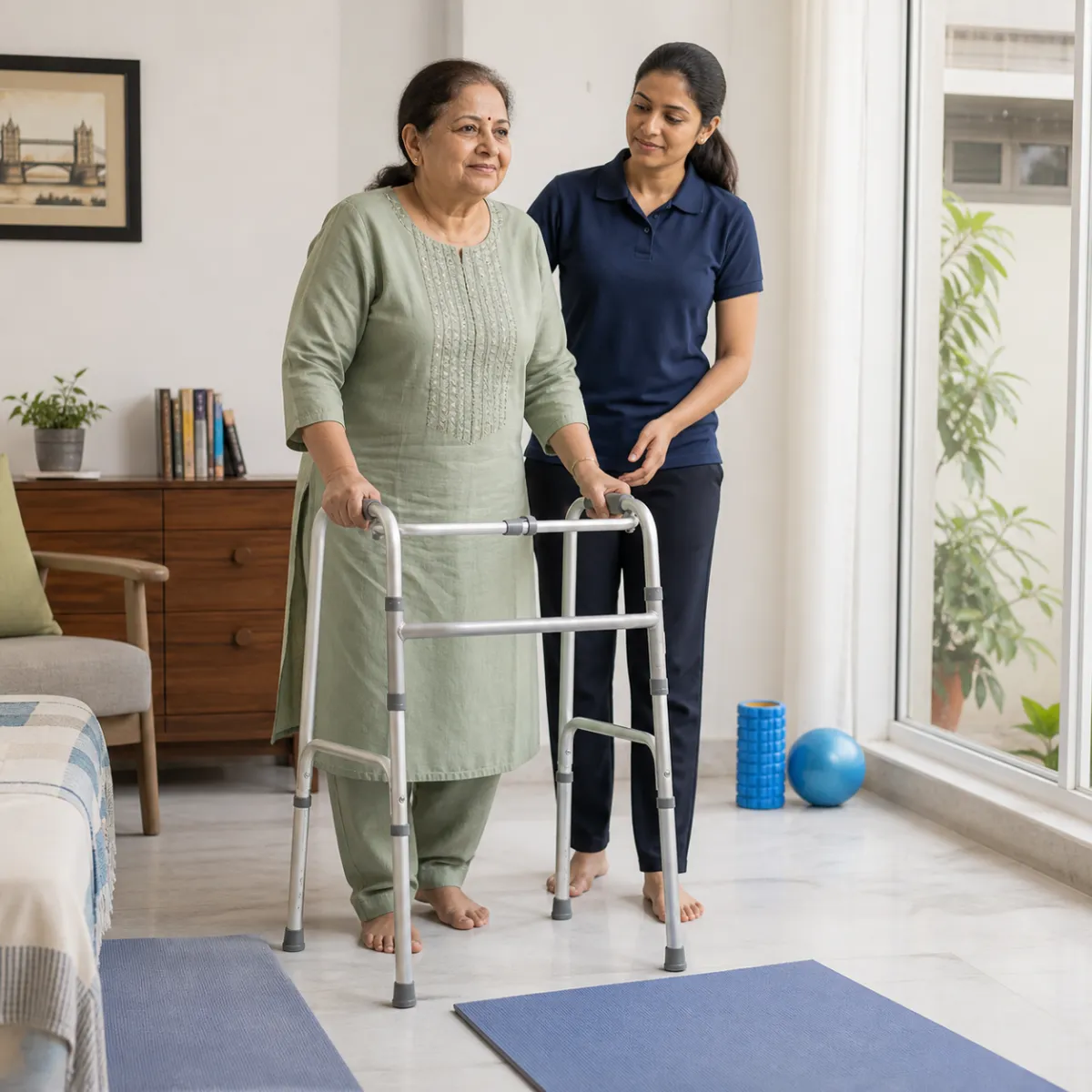
Progress is reviewed against goals that matter for mobility, function and daily participation.
Assessment is directed toward advanced illness, pain, breathlessness, weakness, edema, stiffness, prolonged bed rest, transfer difficulty.
Progression is designed to ease distress, preserve comfortable movement and support dignity and caregiver safety while respecting symptoms and precautions.
Tasks are selected for the activities that matter to people with serious or life-limiting illness who need comfort-focused rehabilitation.
Elements such as comfort positioning, gentle movement, breathing support, secretion care when appropriate, transfers, energy conservation and caregiver guidance are dosed according to response rather than used as a fixed routine.
Treatment is practised in the environment where daily difficulty occurs.
Education explains safe practice, warning signs and useful support between visits.
Goals and repeatable functional observations guide changes to the plan.
Findings such as rapid deterioration, uncontrolled symptoms, acute distress or any treatment burden that outweighs comfort and patient preference trigger medical or specialist coordination rather than inappropriate treatment.
"Palliative Physiotherapy is not defined by a promise of recovery. The plan is shaped around what is meaningful now: comfort, ease of movement, safer transfers, breathing support, caregiver confidence and preserving activity when the effort remains worthwhile to the patient. Goals can change as symptoms, energy and medical priorities change."
Palliative Physiotherapy may be relevant to several diagnoses and functional problems, but treatment is not selected from a label alone. The physiotherapist screens symptoms, medical history, precautions, current function and red flags before recommending care or referral.
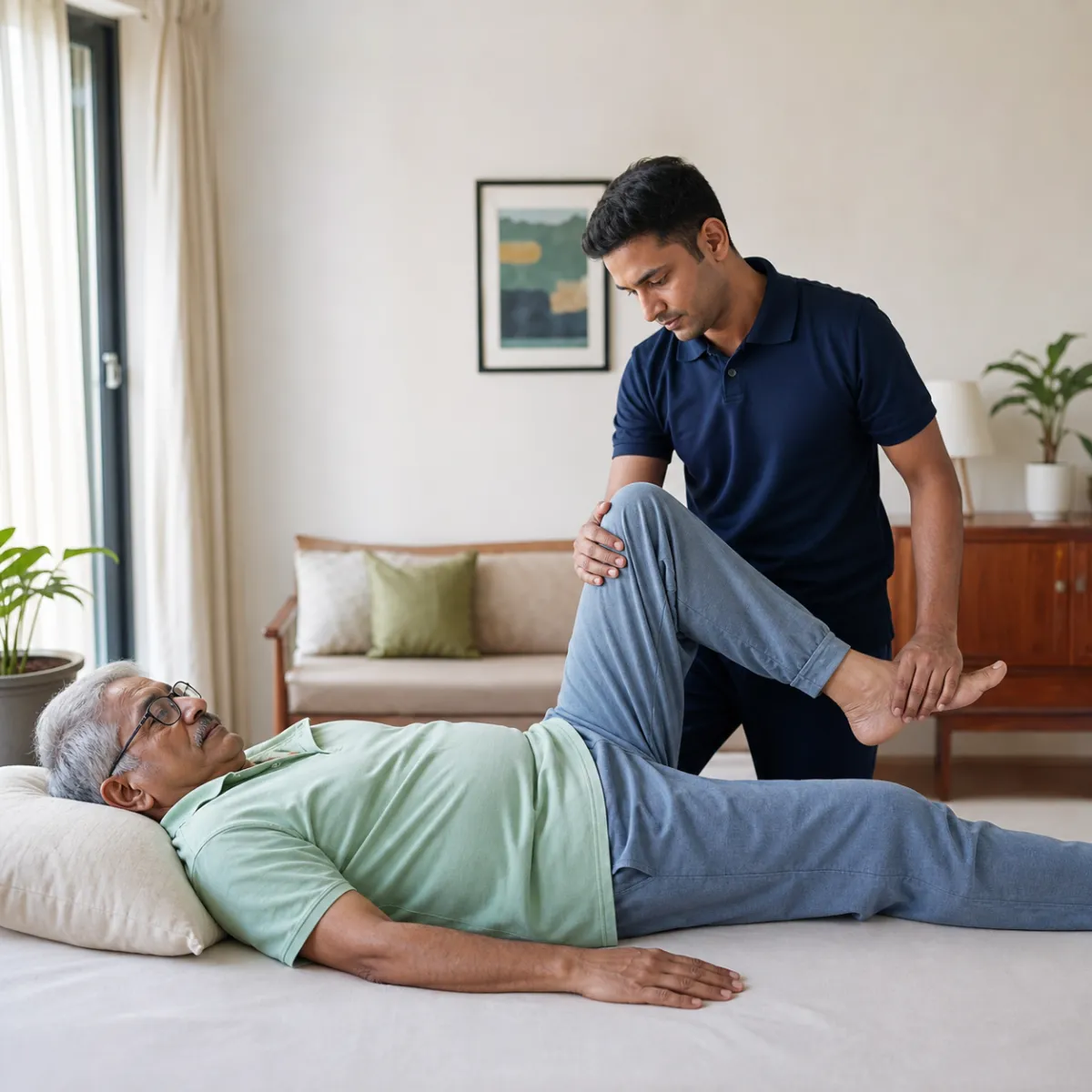
Clinical screening helps determine whether Palliative Physiotherapy is appropriate and when referral is needed.
Early physiotherapy input can be useful when positioning, transfers, breathlessness, weakness or prolonged bed rest begin to make daily care more difficult. The purpose is not to push recovery at all costs, but to identify low-burden strategies that may preserve comfort, reduce avoidable handling difficulty and support caregivers. Rapid deterioration, uncontrolled symptoms or acute distress should be coordinated with the medical or palliative-care team.
Palliative Physiotherapy may be considered when these problems affect safety, movement or participation.
Palliative Physiotherapy may be considered when these problems affect safety, movement or participation.
Palliative Physiotherapy may be considered when these problems affect safety, movement or participation.
Palliative Physiotherapy may be considered when these problems affect safety, movement or participation.
CareMotion's Palliative Physiotherapy service in Hooghly combines assessment, education, goal setting and the interventions listed below. Components are selected individually, progressed according to response and coordinated with medical advice when required.
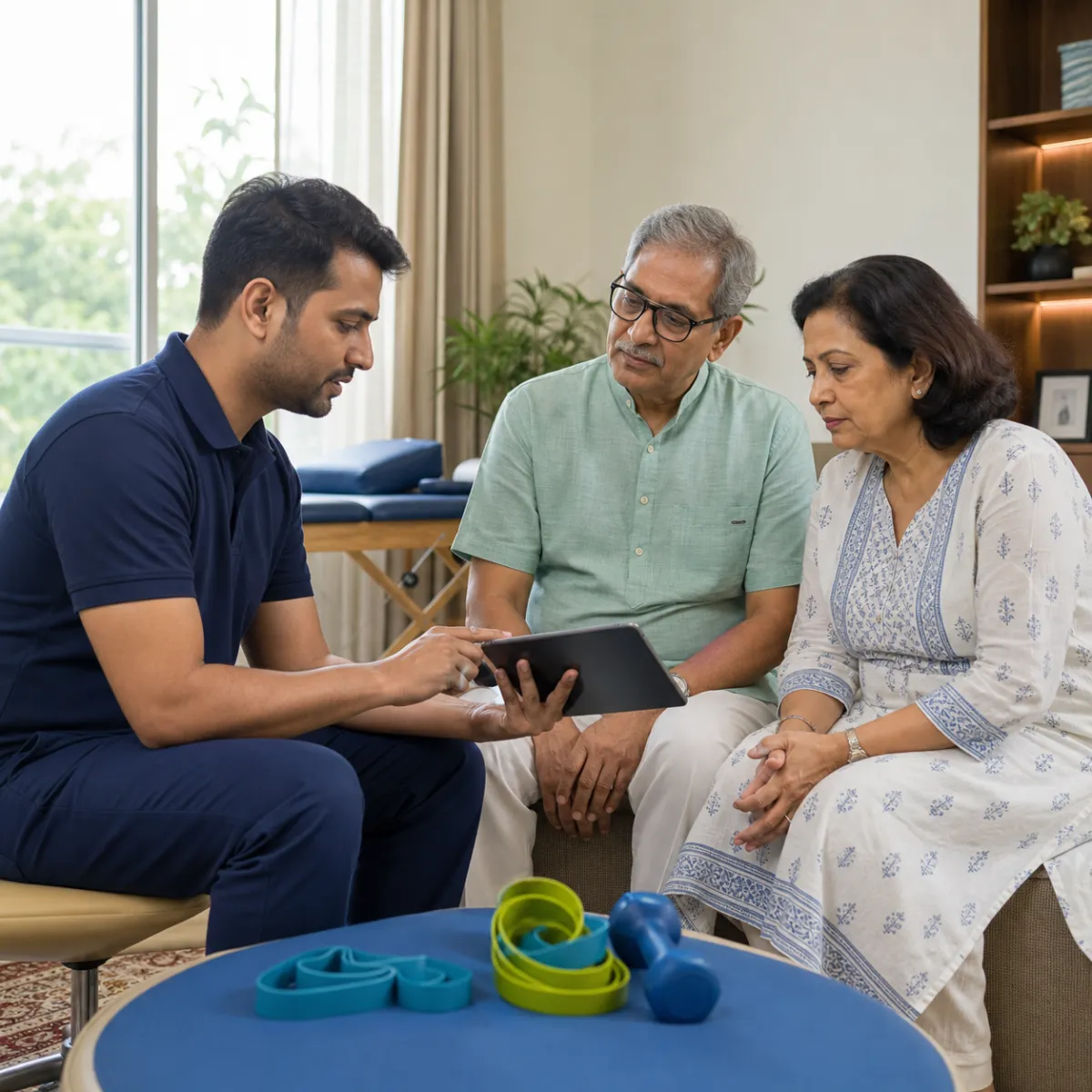
Care is adapted to assessment findings, precautions, available support and agreed goals.
Palliative physiotherapy is deliberately selective. Depending on symptoms and goals, care may include comfort positioning, gentle movement, breathing support, bed mobility, transfers, energy conservation, caregiver guidance and small amounts of functional activity. Interventions are reduced, paused or stopped when the burden outweighs the expected comfort or functional benefit.
Comfort Positioning is used within Palliative Physiotherapy when the assessment shows it is relevant to ease distress, preserve comfortable movement and support dignity and caregiver safety.
Gentle Movement is used within Palliative Physiotherapy when the assessment shows it is relevant to ease distress, preserve comfortable movement and support dignity and caregiver safety.
Breathing Support is used within Palliative Physiotherapy when the assessment shows it is relevant to ease distress, preserve comfortable movement and support dignity and caregiver safety.
Secretion Care When Appropriate is used within Palliative Physiotherapy when the assessment shows it is relevant to ease distress, preserve comfortable movement and support dignity and caregiver safety.
Transfers is used within Palliative Physiotherapy when the assessment shows it is relevant to ease distress, preserve comfortable movement and support dignity and caregiver safety.
Energy Conservation And Caregiver Guidance is used within Palliative Physiotherapy when the assessment shows it is relevant to ease distress, preserve comfortable movement and support dignity and caregiver safety.
Palliative Physiotherapy Assessment is used within Palliative Physiotherapy when the assessment shows it is relevant to ease distress, preserve comfortable movement and support dignity and caregiver safety.
Palliative Physiotherapy Home Program is used within Palliative Physiotherapy when the assessment shows it is relevant to ease distress, preserve comfortable movement and support dignity and caregiver safety.
Palliative Physiotherapy Progress Review is used within Palliative Physiotherapy when the assessment shows it is relevant to ease distress, preserve comfortable movement and support dignity and caregiver safety.
Palliative Physiotherapy follows a clear sequence: history and safety screening, relevant physical and functional assessment, shared goal setting, a personalized plan, guided practice, reassessment and discharge or referral planning.
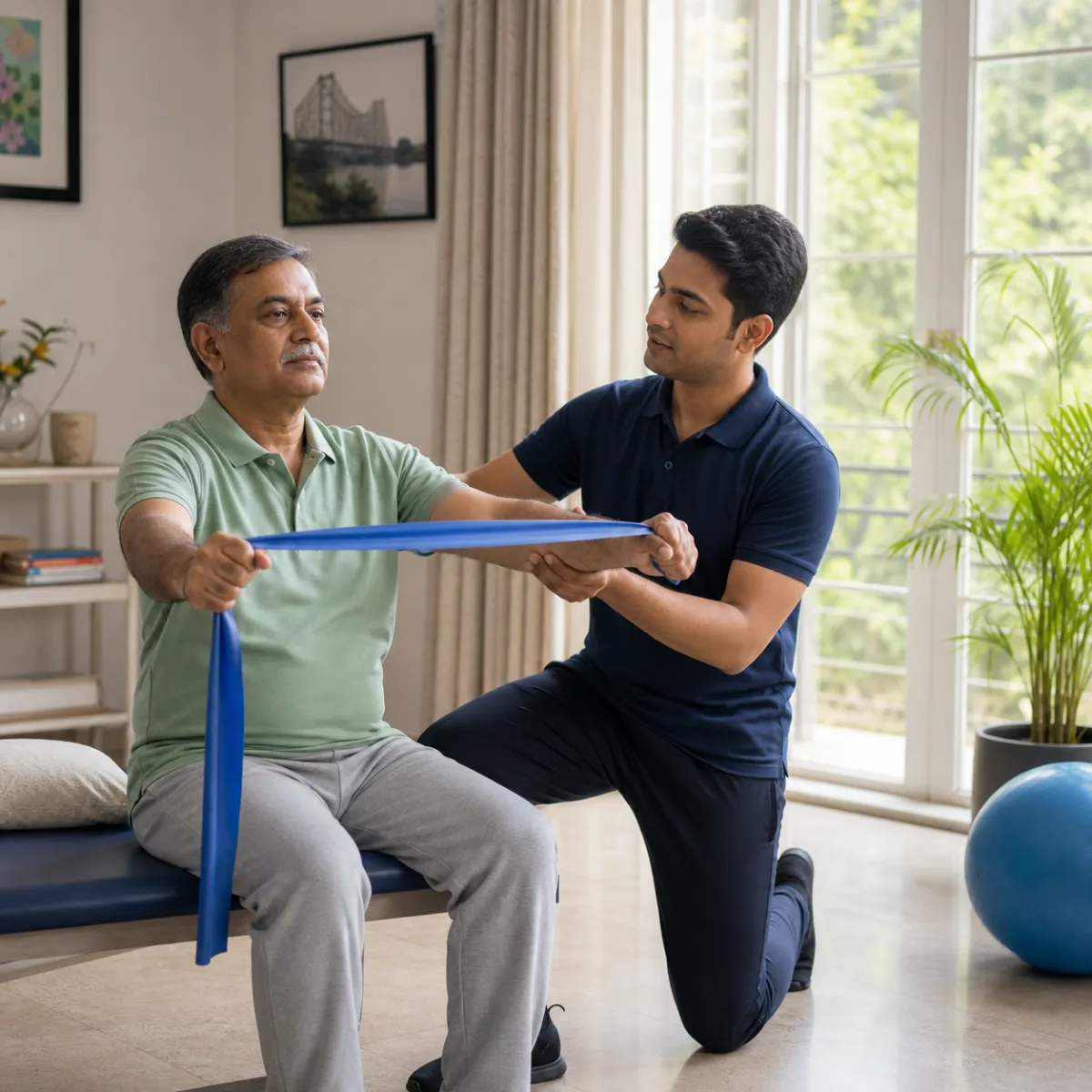
Assessment, planning, guided practice and reassessment keep the care process structured.
Participation is adjusted to energy, symptoms and the patient’s wishes. Caregivers should report new distress, increasing breathlessness, rapid decline or difficulty with transfers so the plan can be simplified, paused or coordinated with the medical team. Home practice is used only when it remains comfortable and worthwhile.
Review diagnosis, symptoms, reports, precautions and warning signs including rapid deterioration, uncontrolled symptoms, acute distress or any treatment burden that outweighs comfort and patient preference.
Assess the movement and functional problems associated with advanced illness, pain, breathlessness, weakness, edema, stiffness, prolonged bed rest, transfer difficulty.
Agree practical priorities to ease distress, preserve comfortable movement and support dignity and caregiver safety.
Select appropriate elements from comfort positioning, gentle movement, breathing support, secretion care when appropriate, transfers, energy conservation and caregiver guidance.
Teach and practise each intervention with the support, dosage and monitoring required for safety.
Provide a realistic written or demonstrated plan for practice between visits.
Repeat relevant functional measures and adjust intensity, complexity, assistance or frequency.
Build long-term management and refer when findings such as rapid deterioration, uncontrolled symptoms, acute distress or any treatment burden that outweighs comfort and patient preference require another clinician.
Techniques used during Palliative Physiotherapy are chosen for a specific clinical purpose. Equipment and hands-on methods are not automatic; the physiotherapist considers evidence, precautions, patient preference, tolerance and measurable response.
Positioning is selected to support comfort, breathing, pressure relief and ease of care, with frequent adjustment according to symptoms and preference.
Low-burden active or assisted movement may be used to maintain comfort and available mobility without exhausting the patient.
Breathing control, supported positions and pacing may be used when they make breathing or activity feel easier.
Airway-clearance support is considered only when clinically relevant, tolerated and consistent with the medical plan.
Bed mobility and transfer practice focuses on reducing unnecessary effort and making essential movement safer for the patient and caregiver.
Activities are simplified, paced and prioritized to preserve energy for tasks that matter most to the patient.
Caregivers can be shown practical positioning, assistance and transfer techniques appropriate to the patient’s current abilities.
Sitting, standing or walking is practised only when it contributes meaningful comfort, participation or ease of care and remains acceptable to the patient.
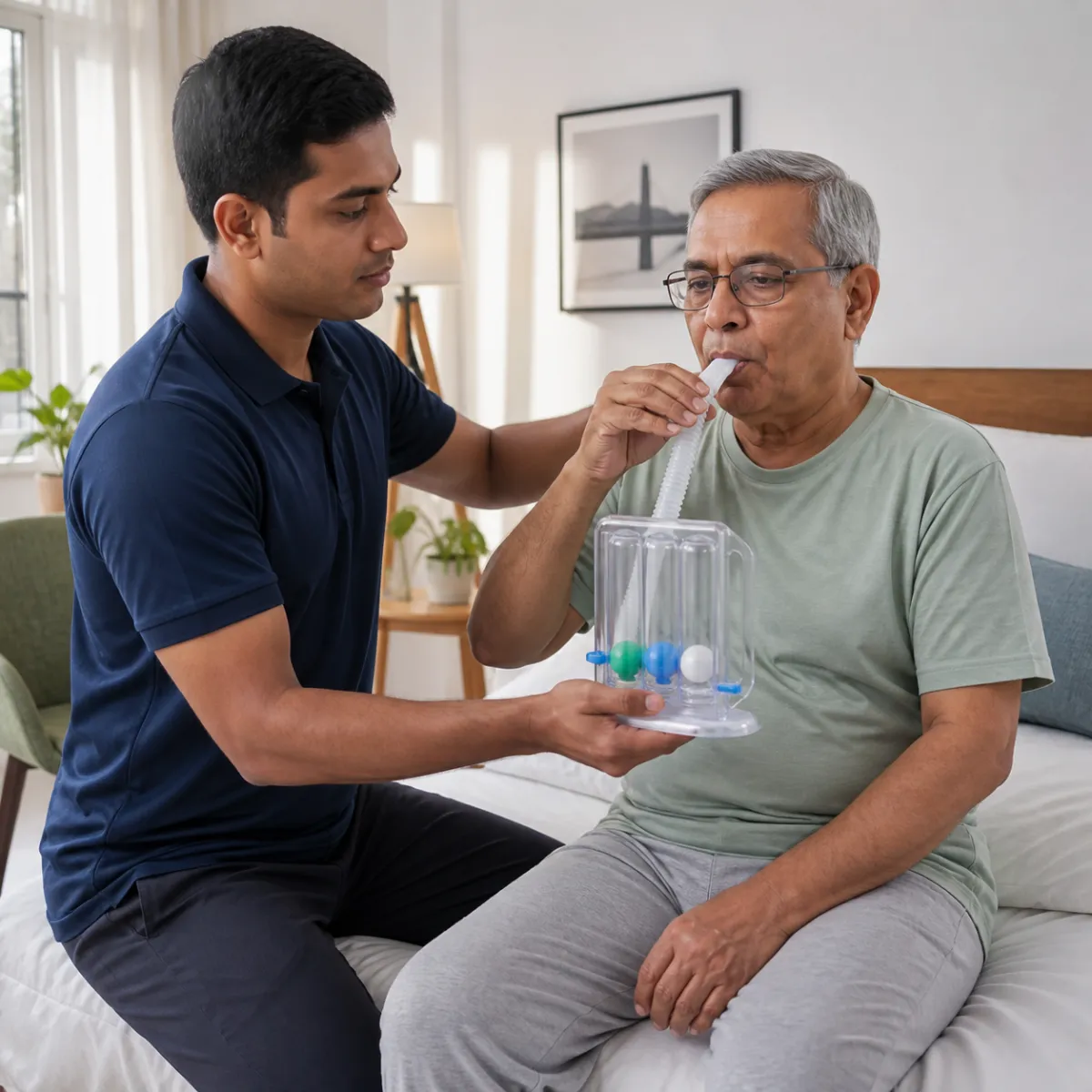
Techniques and equipment are selected only when relevant to findings, safety and goals.
In palliative care, the most appropriate intervention is the one whose expected benefit outweighs the effort or discomfort it creates. Techniques are therefore adjusted to symptoms, energy, prognosis, patient preference, caregiver capacity and medical precautions, and may be simplified or discontinued as priorities change.
Palliative physiotherapy usually relies on simple, low-burden supports rather than routine electrotherapy. Equipment is selected only when it improves comfort, safety, transfer practice or caregiver handling in the home environment.
CareMotion provides Palliative Physiotherapy with one-to-one attention, documented goals and transparent communication. Home-based sessions can address the patient's real environment while the plan remains guided by clinical findings, safety and appropriate referral.
Care is provided by physiotherapists whose available profile information and home-visit coverage are matched to the location. Unsupported palliative-care credentials are not assumed.
The plan is adapted to diagnosis, symptoms, medical precautions, comfort, patient preference, caregiver needs and the practical goals that still matter most.
Receive physiotherapy at home when clinically appropriate, reducing travel and allowing rehabilitation to be practised in the patient’s usual environment.
Methods used for Palliative Physiotherapy are selected from the assessment findings, relevant precautions and agreed functional goals; no technique is applied as a standard routine.
Choose appointment times that fit your routine with convenient home visits across Hooghly.
Progress during Palliative Physiotherapy is reviewed using repeatable observations and relevant measures, and the plan is adjusted according to response.
During Palliative Physiotherapy, we explain findings and next steps clearly, invite questions, and review how the plan fits the patient's goals and circumstances.
Our physiotherapists follow professional hygiene standards and patient safety protocols during every home visit.
Palliative Physiotherapy should be individualized, clearly explained and reviewed against goals that remain meaningful to the patient. Comfort, dignity, caregiver safety and coordination with the wider medical plan take priority over pursuing exercise or independence for its own sake.
Home-visit physiotherapy by scheduled appointment
Meet CareMotion physiotherapists available across supported service areas. Clinical suitability and the rehabilitation plan are confirmed through assessment.

Physiotherapist
CareMotion physiotherapist with 7+ years of clinical experience focused on orthopedic rehabilitation, geriatric rehabilitation, post-operative recovery, chronic pain rehabilitation and manual therapy.
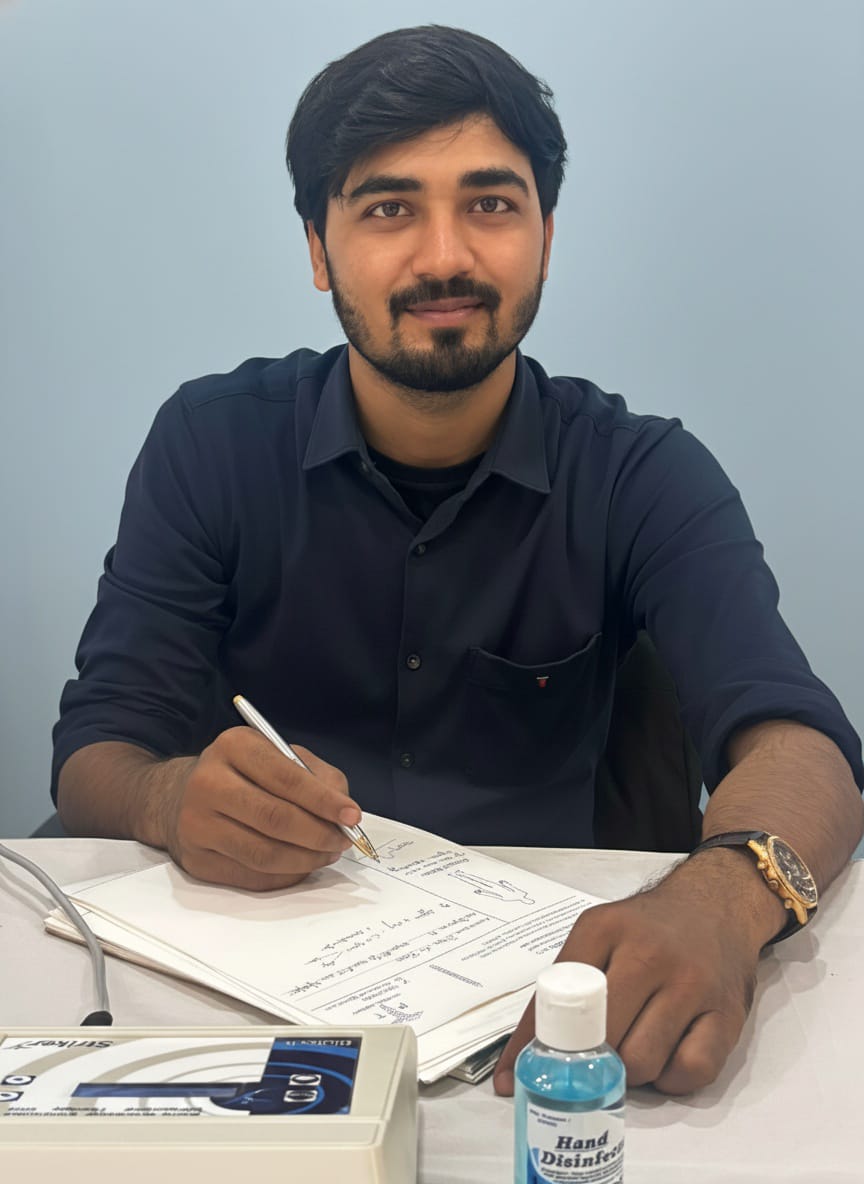
Physiotherapist
CareMotion physiotherapist with 7+ years of clinical experience focused on cardio-pulmonary rehabilitation, chest physiotherapy, respiratory rehabilitation, lung-function recovery and ICU rehabilitation.
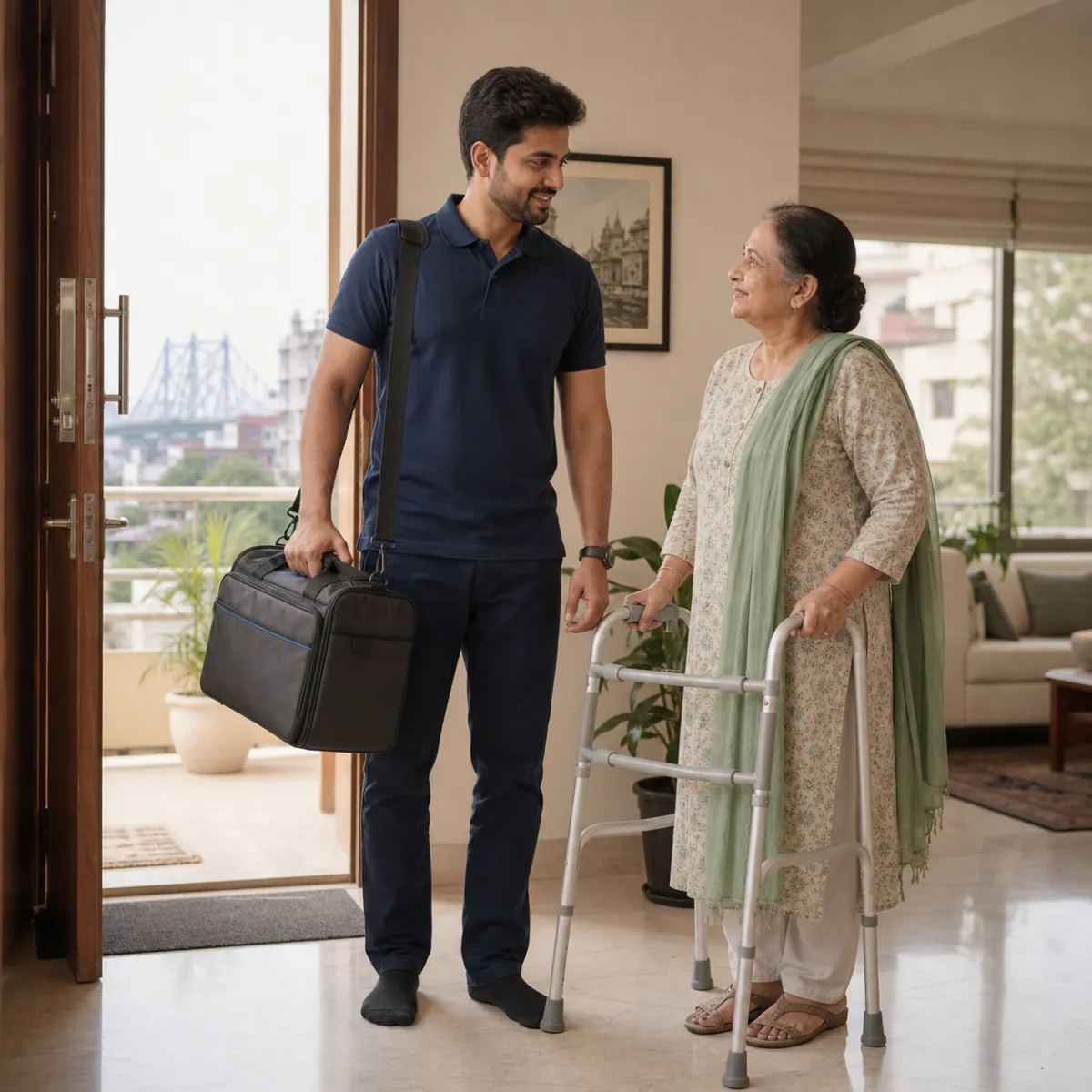
Appointment availability is confirmed for Hooghly and nearby service areas when you book.
Choosing a local home-visit provider can reduce travel and make rehabilitation easier to fit around daily routines. Appointment timing in Hooghly is confirmed according to service needs, locality and therapist availability.
CareMotion offers Palliative Physiotherapy home visits in Hooghly and selected nearby areas. Availability depends on clinician schedules and travel coverage; confirm the address, preferred time and any access requirements when booking.
Home visits allow positioning, transfers and caregiver assistance to be reviewed in the environment where care actually occurs. Availability depends on clinician schedules, travel coverage and the patient’s current condition; confirm the address and any access or handling needs when booking.
Recent patient feedback from the CareMotion Google Business Profile.
Read patient feedback about CareMotion physiotherapy and rehabilitation services. Reviews are loaded from the current Google Business Profile data used across the website.
14 Google reviews

“Rated 5.0 out of 5 on Google.”
in the last week

“CareMotion truly brings healing home. Their team treated us with kindness, respect, and patience from day one. The therapist understood our concerns, explained every step clearly, and designed exercises perfectly suited to the patient’s condition”
a month ago

“Dr.Saurabh is an excellent physiotherapist. He really helped me through my rehab journey. Really grateful to him for his help. Thank you”
a month ago

“Dr. Sourav Dutta, used to provide precise care and strong clinical skill. He understands patient's condition and explains the specific protocol in clear terms. He focuses on safety and consistent progress. He builds trust through careful assessment and effective techniques. I will recommend him to anybody because the quality of care is reliable and professional.”
3 months ago

“Rated 5.0 out of 5 on Google.”
6 months ago

“Rated 5.0 out of 5 on Google.”
7 months ago

“Good experience, specially dr.dutta have efficient knowledge and skillful hand of healing.i have must recommend him to everyone.thank you”
8 months ago

“Caremotion is very good platform.specially Dr Sariful. He is very excellent physiotherapist.”
8 months ago

“Highly satisfied with the physiotherapy treatment. Proper diagnosis, personalized exercise plan, and continuous guidance throughout recovery. Pain relief started within a few sessions and strength improved gradually. Very professional and trustworthy physiotherapist.”
9 months ago

“I took physiotherapy home service from Dr. Sourav Dutta at Caremotion for a slip disc, and I am extremely satisfied with the care I received. Dr. Sourav is highly professional, patient, and knowledgeable. He explained every exercise clearly and always made sure I was comfortable during the sessions. His treatment helped reduce my pain and improved my movement significantly. I truly appreciate his dedication, punctuality, and the friendly way he interacts with patients. I would highly recommend Dr. Sourav Dutta and Caremotion to anyone looking for reliable and effective physiotherapy services.”
9 months ago
These answers explain the general role of palliative physiotherapy at home. Individual suitability depends on the patient’s diagnosis, symptoms, care goals, medical precautions, tolerance and preferences.
Our experienced physiotherapy team is happy to answer your questions, explain treatment options, and help you choose the most suitable rehabilitation program for your condition.
It is comfort-focused physiotherapy for people with serious or life-limiting illness. Goals may include easier positioning, comfortable movement, breathing support, safer transfers, conserving energy and supporting caregivers, depending on the patient’s wishes and medical plan.
People with serious illness who experience pain, breathlessness, weakness, stiffness, prolonged bed rest, transfer difficulty, low activity tolerance or caregiver handling challenges may benefit after assessment and screening.
The therapist reviews the diagnosis, symptoms, current care plan, comfort priorities, movement, positioning, transfers, breathing, fatigue, caregiver support and relevant precautions before deciding whether physiotherapy is likely to add useful benefit.
Depending on findings and patient preference, care may include comfort positioning, gentle movement, breathing support, secretion care when appropriate, bed mobility, transfers, energy conservation, walking support and caregiver guidance.
It can be appropriate after screening when treatment burden is kept proportionate to the expected benefit. Rapid deterioration, uncontrolled symptoms, acute distress or a change in medical status should be coordinated with the treating medical or palliative-care team.
Visits are often planned for approximately 45–60 minutes, but the actual active treatment time may be shorter when fatigue, breathlessness or comfort requires more rest or a lower treatment burden.
There is no fixed course. Frequency depends on symptoms, goals, response, caregiver needs, medical priorities and whether continued physiotherapy remains useful and acceptable to the patient.
Available discharge summaries, diagnoses, medication information, recent reports and instructions from the treating medical or palliative-care team can help the physiotherapist understand precautions and current goals.
Yes. Caregiver education can include positioning, safer assistance, bed mobility, transfers, pacing and practical ways to reduce unnecessary effort during day-to-day care.
Keep available medical information, current mobility aids and details of the most difficult daily care tasks. It is also helpful to identify what the patient considers most important for comfort or participation.
CareMotion pricing for Palliative Physiotherapy in Hooghly is ₹699 for a single session. Package discounts are ₹500 off for 5 sessions, ₹1,000 off for 10 sessions and ₹2,000 off for 20 sessions, where those package sizes are offered. Final fees are confirmed before booking.
Call +919123830795, use the booking form or message CareMotion on WhatsApp with the diagnosis, current symptoms, location and preferred time. Mention any major mobility, breathing or caregiver-handling concerns so the visit can be planned appropriately.
Yes. CareMotion provides Palliative Physiotherapy through scheduled home visits in Hooghly and supported nearby service areas when it is clinically suitable. Appointment availability also depends on therapist availability, travel feasibility and any medical precautions identified during screening.
Pricing for Palliative Physiotherapy uses CareMotion’s standardized package ladder, with average session cost targeted at approximately ₹699–₹799. Package totals vary by number of sessions.
Share the service, location and main rehabilitation need so CareMotion can confirm the applicable fee and availability.
Detailed Palliative Physiotherapy assessment, precautions, functional baseline and rehabilitation planning.
Five planned Palliative Physiotherapy visits with close review of response and safety.
Ten-visit Palliative Physiotherapy program with progressive functional rehabilitation.
Twenty planned Palliative Physiotherapy visits with periodic reassessment and goal review.
Extended Palliative Physiotherapy visit when additional assessment, caregiver training, monitoring or coordination is required.
Payment for Palliative Physiotherapy is made directly to CareMotion unless a separate arrangement is confirmed. Itemized invoices and available clinical documents can support a reimbursement request, but approval and coverage remain the insurer's decision.
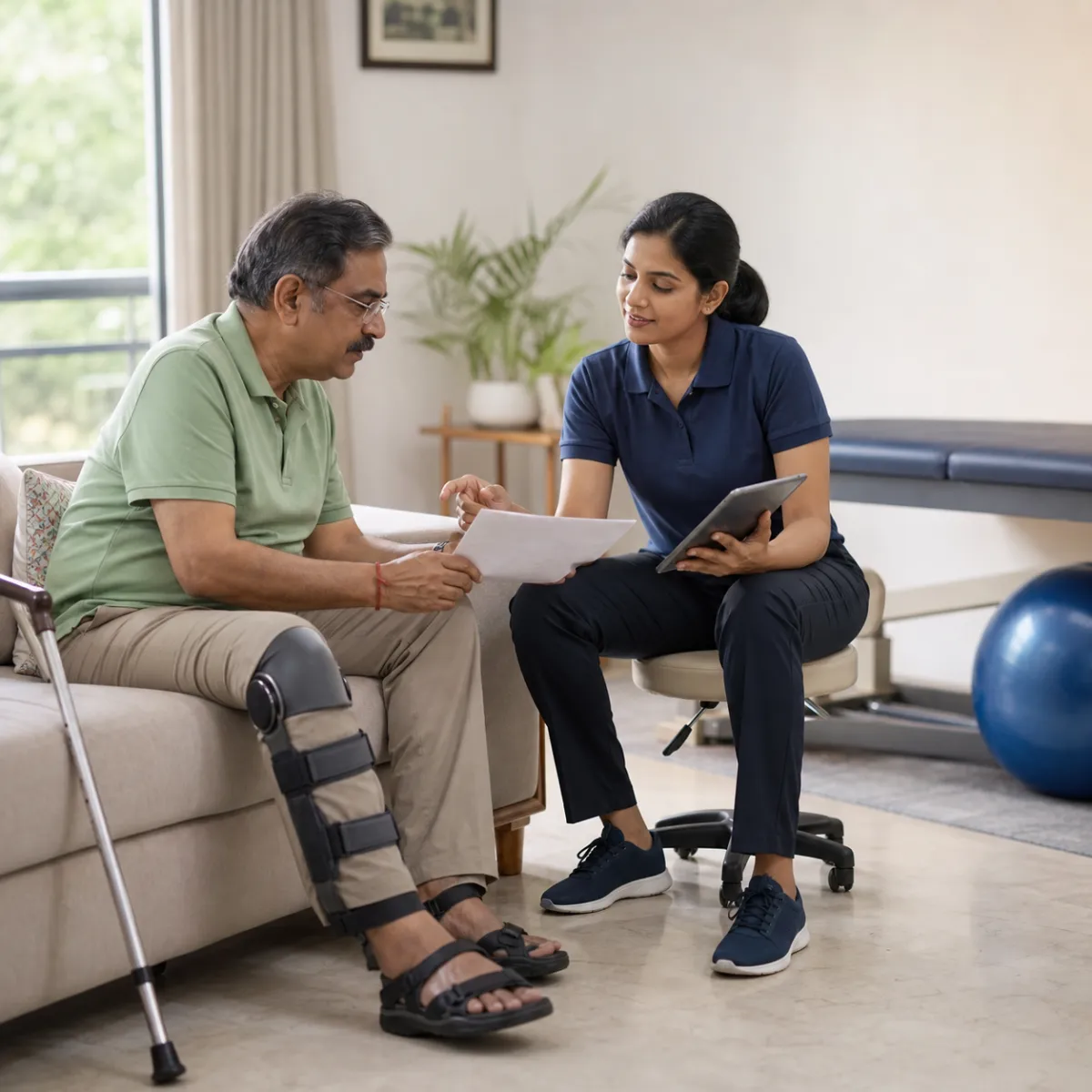
Our team is happy to explain treatment plans, payment options, billing procedures, and available documentation before you begin your rehabilitation journey.
Insurance coverage for physiotherapy varies depending on your insurer, policy terms, employer benefits, and healthcare plan. While direct insurance coverage may not always be available, we provide all necessary documentation to assist eligible patients with reimbursement claims.
Book your appointment.
Receive your palliative physiotherapy assessment.
Choose the recommended treatment plan.
Complete your physiotherapy session.
Receive an invoice and payment receipt.
Request additional documentation if required for reimbursement.
Contact CareMotion to discuss Palliative Physiotherapy in Hooghly. The team can confirm service suitability, visit availability, current fees and what reports or medical clearance may be useful before the first assessment.
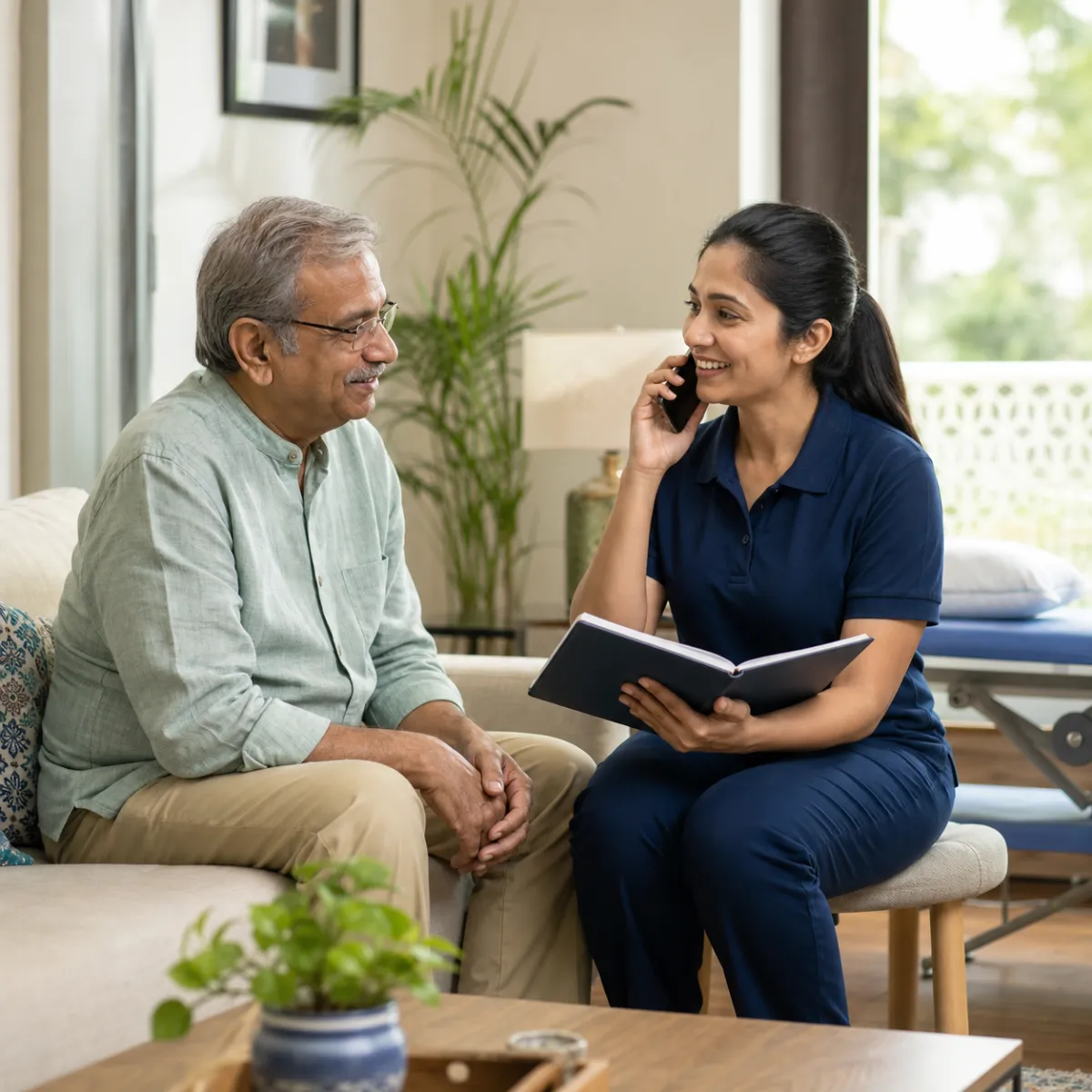
Working Hours: Mon–Sat: Open 24 hours · Sun: Closed
Response Time: Confirmed by the CareMotion team
Service Coverage: Hooghly / Chinsurah & nearby areas
Appointment Availability: Subject to therapist availability
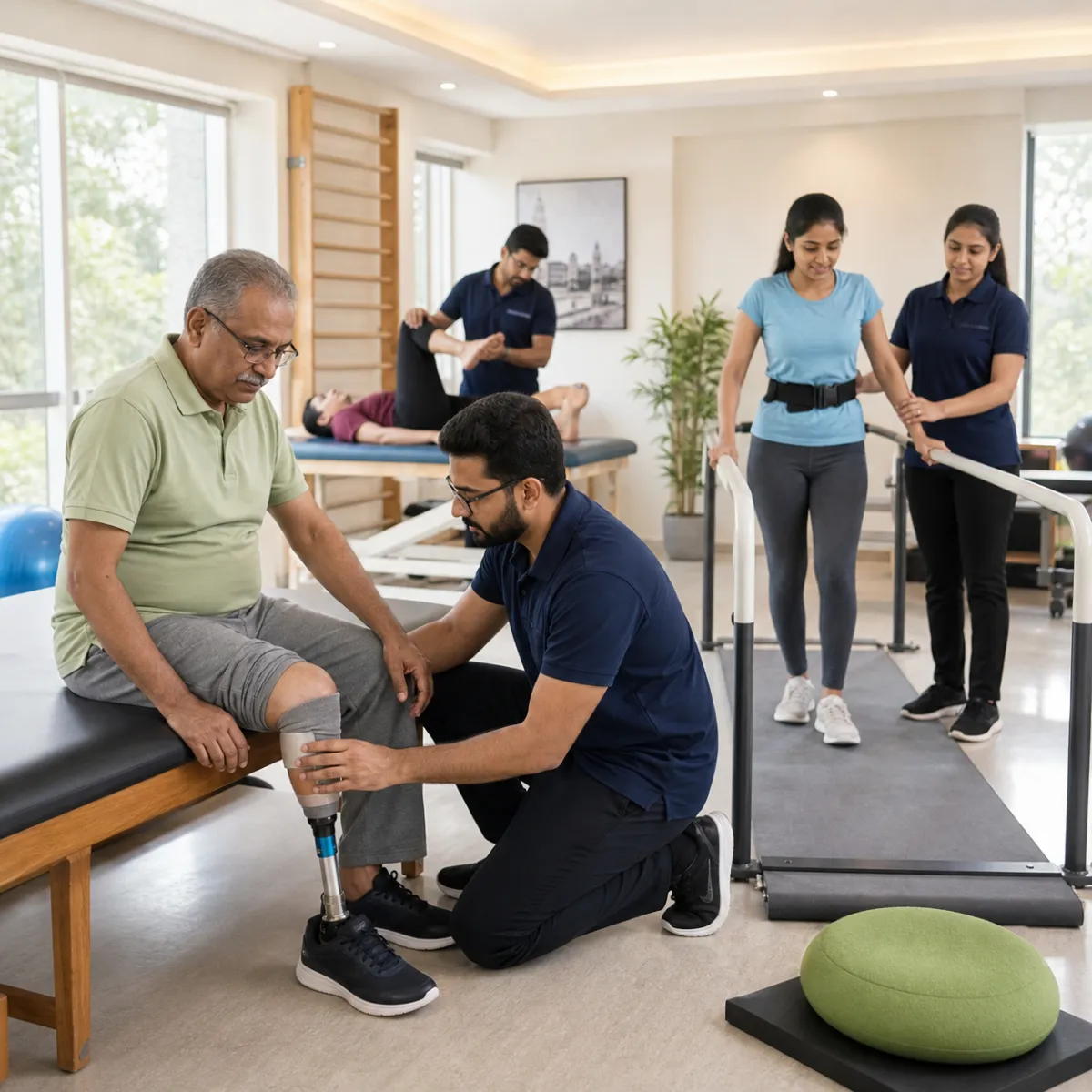
Related services are shown for navigation only. The appropriate combination depends on diagnosis, symptoms, precautions, the wider care plan and the patient’s current goals.
Palliative care priorities can change over time. Related physiotherapy services should be added only when they support the patient’s current comfort, function, respiratory needs, swelling management or caregiver requirements without creating unnecessary treatment burden.
Contact CareMotion to discuss the patient’s current symptoms, care priorities and home situation before selecting additional services.
Explore Home Physiotherapy when it is relevant to the assessment findings, rehabilitation goals and clinical suitability.
Explore Physiotherapy Near You when it is relevant to the assessment findings, rehabilitation goals and clinical suitability.
Explore Geriatric Rehabilitation when it is relevant to the assessment findings, rehabilitation goals and clinical suitability.
Explore Critical Elderly Rehabilitation when it is relevant to the assessment findings, rehabilitation goals and clinical suitability.
Explore Bedridden Patient Rehabilitation when it is relevant to the assessment findings, rehabilitation goals and clinical suitability.
Explore Fall Prevention Programs when it is relevant to the assessment findings, rehabilitation goals and clinical suitability.
Practical education for positioning, transfers, mobility assistance and day-to-day handling at home.
Respiratory physiotherapy and secretion-management support when clinically appropriate.
Contact CareMotion to discuss availability, visit timing and the most suitable therapist.
Speak with CareMotion about Palliative Physiotherapy appointments, availability, fees and preparation for the first visit. Share the diagnosis, current symptoms, mobility or breathing concerns, caregiver needs, location and any relevant medical precautions so the team can guide the next step.
For Hooghly appointments, CareMotion confirms the visit window only after reviewing the complete address, expected travel time, therapist capacity and the requirements of Palliative Physiotherapy.
View Google Business LocationBusiness opening hours do not guarantee immediate home-visit availability. Appointments are confirmed separately.
Call, WhatsApp or book online to discuss Palliative Physiotherapy, current comfort and mobility needs, caregiver concerns and the next appropriate assessment step.
Use the map and coverage details to check CareMotion's base location and request Palliative Physiotherapy in Hooghly. Home-visit availability is confirmed after reviewing the address, travel distance and clinician schedule.
Our physiotherapists travel to patients across Hooghly subject to home-visit coverage and clinician availability. Home visits can reduce travel burden and allow positioning, transfers and caregiver support to be reviewed in the patient’s actual care environment.
Google Rating
Google Reviews
Google Business Status
Contact our team to confirm appointment availability and palliative physiotherapy services in your area.
1st Floor, RA-504, Nabapally, Sector IV, Bidhannagar, Kolkata, West Bengal 700105, India
Google-listed hours: Mon–Sat: Open 24 hours · Sun: Closed
CareMotion provides scheduled Palliative Physiotherapy home visits in supported parts of Hooghly district, with serviceability confirmed after checking the patient’s exact address and therapist route. Hooghly includes river-side towns, suburban municipalities and more distant semi-urban localities, so home-visit travel requirements differ substantially across the district.
Palliative Physiotherapy is available in supported Hooghly localities within CareMotion’s service network, with each request assessed for distance, therapist availability and clinical suitability.