
By CareMotion · Caregiver Support & Safety
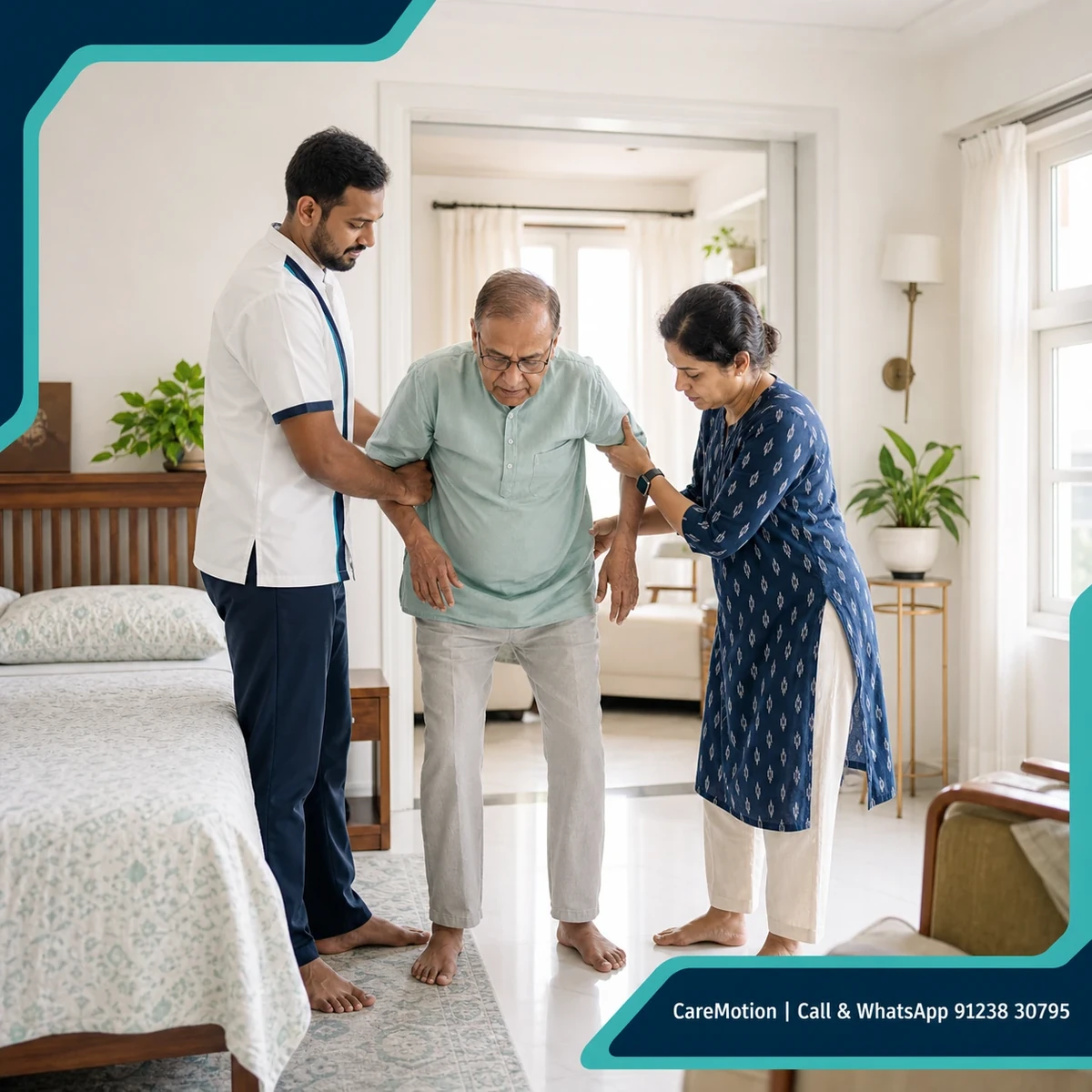
Biomechanical Principles of Human Sit-to-Stand Transfers
Assisting a weak, post-surgical, or stroke-affected family member out of bed is one of the most physically demanding tasks for domestic caregivers in Kolkata, frequently causing severe caregiver lumbar disc injuries.
Successful transfers rely on physics and biomechanics rather than raw lifting strength. The fundamental principle is moving the patient's center of gravity forward over their base of support before initiating upward lift ('nose over toes').
- Never lift a patient by their armpits (axillae), which compresses sensitive brachial plexus nerves.
- Scoot patient forward to the edge of the bed or chair so feet are firmly planted flat on the floor.
- Ensure patient wears non-slip footwear rather than loose socks on smooth tiled or polished floors.
Step-by-Step Stand-Pivot Transfer Protocol
Position the destination chair or bedside commode at a 45-degree angle to the bed on the patient's stronger side, with wheelchair brakes locked firmly. The caregiver bends their own knees, keeps their spine straight, and holds a wide, stable stance.
Use a heavy-duty fabric 'transfer gait belt' around the patient's waist. Holding the belt gives the caregiver secure, balanced control without pulling on clothing or arms.
- Step 1: Patient scoots to edge of bed; knees bent at 90 degrees with feet flat and slightly apart.
- Step 2: Caregiver blocks patient's weaker foot with their own shoe to prevent foot slipping.
- Step 3: On the count of three, patient leans chest forward and pushes down through armrests/bed.
- Step 4: Caregiver guides upward pivot, rotating hips until patient's legs touch the destination chair.
- Step 5: Patient reaches backward with both hands to feel the chair armrests before gently lowering down.
Preventing Caregiver Back Strain in Kolkata Households
Caregivers must lift with their powerful quadriceps and gluteal muscles while keeping the patient held close to their own center of gravity, never twisting their spine while lifting.
CareMotion physiotherapists provide hands-on caregiver training sessions in Kolkata residences, evaluating bed heights, chair stability, and teaching safe handling techniques.
- Always bend at hips and knees, never rounding the lumbar spine while assisting transfers.
- Keep your feet pointed in the direction of the transfer pivot to eliminate spinal torque.
- Consider a bedside commode with drop-down arms to eliminate difficult nighttime bathroom walks.
General information to help you plan a visit. Individual assessment and your treating team's advice guide rehabilitation decisions.