
By CareMotion · Modalities & Technology
What is TENS and How Does It Relieve Pain?
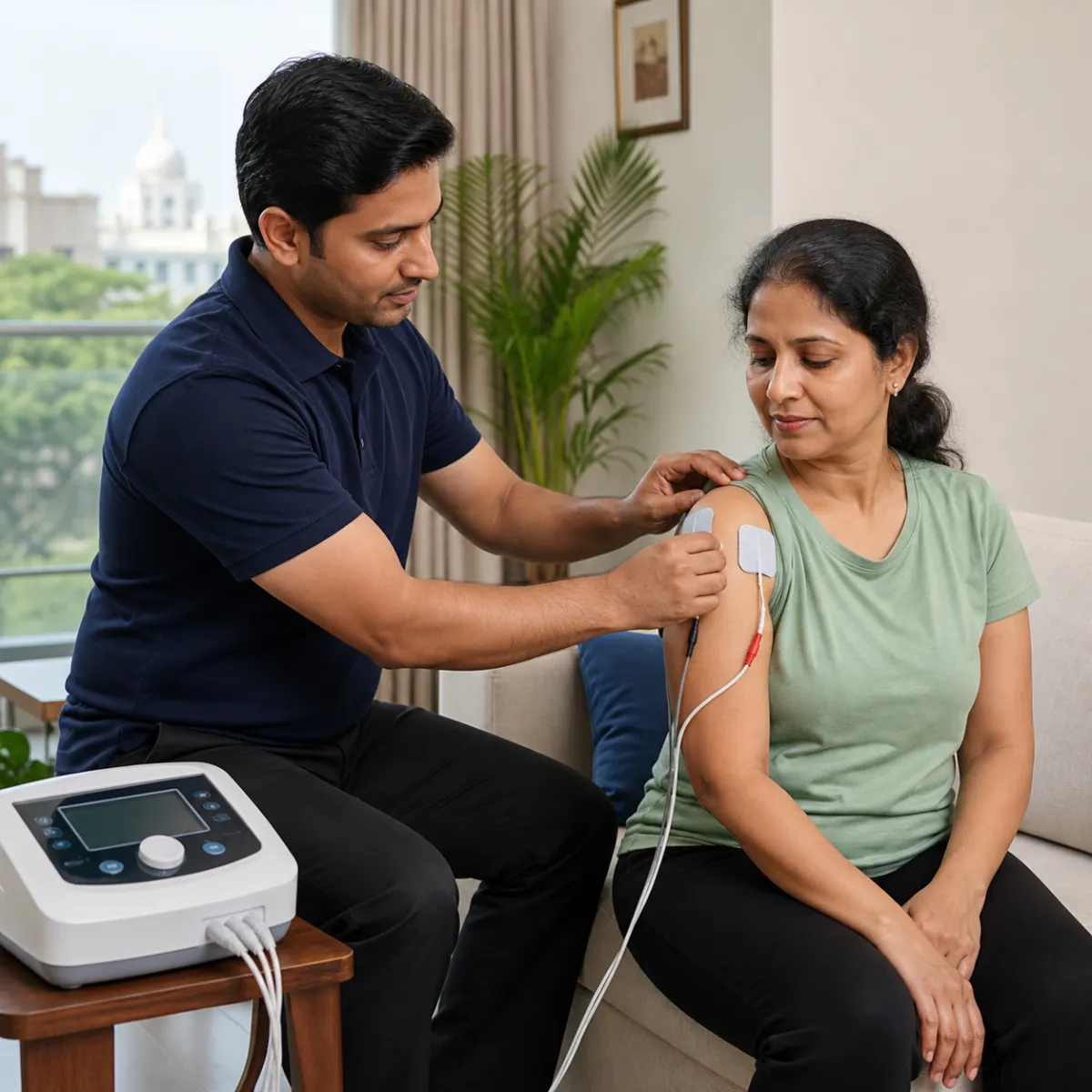
Transcutaneous Electrical Nerve Stimulation (TENS) is a non-invasive electrotherapy modality that delivers mild electrical impulses across the skin via adhesive electrode pads. TENS operates primarily through two physiological mechanisms: the 'Pain Gate Theory' and endorphin release.
High-frequency TENS (80-120 Hz) stimulates large-diameter sensory nerve fibers, closing the neural 'gate' in the spinal cord dorsal horn and blocking nociceptive pain signals from reaching the brain. Low-frequency TENS (1-5 Hz) stimulates the production of natural pain-inhibiting endorphins.
- Provides non-pharmacological pain reduction without systemic drug side effects.
- Can be used during acute exacerbations or chronic muscular aches.
- Helps patients relax tight muscle spasms before active stretching drills.
Clinical Indications and Electrode Placement Rules
TENS is commonly prescribed for chronic lower back pain, knee osteoarthritis, cervical neck stiffness, and peripheral joint discomfort. Correct pad placement is vital: electrodes should surround the painful area or be placed along corresponding nerve dermatomes.
Electrodes must never be placed over the carotid sinus in the front of the neck, across the chest or heart, on broken skin, or over areas with impaired cutaneous temperature sensation.
- Lower back pain: Dual-channel placement parallel to lumbar paraspinal muscles.
- Knee pain: Placement on medial and lateral peri-articular aspects around the patella.
- Shoulder stiffness: Placement across the posterior cuff and upper trapezius trigger points.
Why TENS Must Be Combined with Active Exercise Therapy
While a TENS unit provides immediate comfort and pain relief, it does not build muscle strength, improve joint lubrication, or correct faulty walking posture on its own. Using an electrical massager without targeted exercise leaves the root mechanical cause unresolved.
CareMotion physiotherapists use electrotherapy as a temporary facilitator to reduce acute distress, immediately transitioning patients into functional mobility drills and strengthening exercises.
- Use TENS for 15-20 minute sessions as guided by your clinician.
- Follow pain relief immediately with gentle active range of motion practice.
- Consult your doctor before using electrical modalities if you have a cardiac pacemaker.
General information to help you plan a visit. Individual assessment and your treating team's advice guide rehabilitation decisions.