By CareMotion · Neurological Rehabilitation
The Biological Mechanism of Neuroplasticity in Stroke Recovery
A stroke (cerebrovascular accident) damages brain tissue by interrupting cerebral blood flow. While necrotic brain cells cannot regenerate, the human brain possesses 'neuroplasticity'—the remarkable ability of surviving neurons to reorganize, forge new synaptic pathways, and take over lost functions.
The first 3 to 6 months post-stroke represent the biological 'golden window' of heightened neuroplastic sensitivity. High-repetition, meaningful task-oriented practice during this period creates the strongest neuro-motor recovery.
- Repetition and salience: Brain remodeling requires hundreds of purposeful repetitions of functional movements.
- Overcoming learned non-use: Preventing the healthy arm or leg from completely taking over daily tasks.
- Task-specific training: Practicing actual grasping, reaching, sitting, and stepping rather than abstract movements.
Structured Rehabilitation Milestones: Weeks 1 to 24
Rehabilitation begins in the subacute phase as soon as the patient is medically stabilized. Early focus is on bed mobility, rolling, bridging, and upright sitting tolerance to stimulate vestibular orientation and prevent postural hypotension.
As motor control emerges, therapy advances from active-assisted movement to isolated muscle control, sit-to-stand transitions, and weight-bearing through the affected hemiplegic side.
- Weeks 1 to 4: Preventing shoulder subluxation, contractures, and bed sores through proper positioning.
- Weeks 5 to 12: Trunk balance, symmetrical weight transfer, and sit-to-stand repetitions.
- Weeks 13 to 24: Overground gait training, stair climbing, and fine motor finger dexterity.
Coordinating Intensive Home Stroke Care Across Kolkata
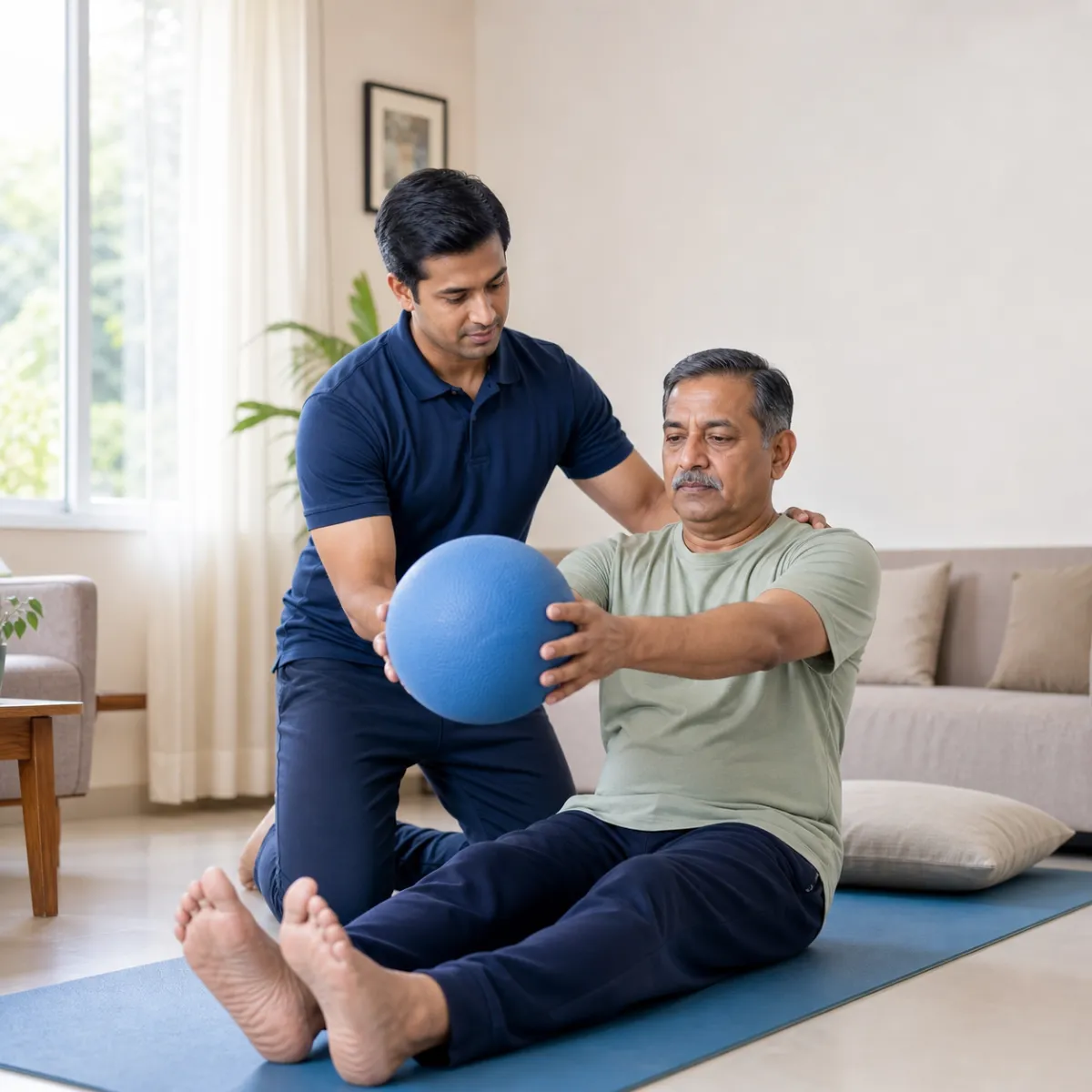
Traveling to a clinic daily in Kolkata can be physically exhausting for stroke survivors and their caregivers, leading to therapy fatigue. CareMotion brings intensive, one-on-one stroke neuro-rehabilitation directly into the patient's home.
Our specialized physiotherapists train family members and domestic caregivers on safe transfer ergonomics, positioning techniques, and daily home exercise regimens.
- Practice transfers from the patient's actual bed, bathroom commode, and dining chairs.
- Regular objective outcome tracking using the Functional Independence Measure (FIM).
- Coordinate closely with the patient's treating neurologist and hospital discharge summary.
General information to help you plan a visit. Individual assessment and your treating team's advice guide rehabilitation decisions.