
By CareMotion · Neurological Rehabilitation
Understanding Spasticity: Upper Motor Neuron Lesions
Spasticity is a velocity-dependent increase in tonic stretch reflexes (muscle tone) combined with exaggerated tendon jerks, resulting from an upper motor neuron (UMN) lesion in the brain or spinal cord following a stroke, traumatic brain injury, or cerebral palsy.
When descending inhibitory pathways are damaged, the stretch reflex arc becomes hyperactive. Rapid movement triggers a sudden catch and resistance (clasp-knife phenomenon). Over months, unmanaged spasticity causes permanent fibrotic joint contractures.
- Upper limb flexor synergy: Clenched fist, flexed wrist, bent elbow held tightly against the chest.
- Lower limb extensor synergy: Stiff straight knee, pointed foot (equinovarus), and toes curling downward.
- Painful involuntary muscle spasms triggered by cold air, full bladder, skin sores, or anxiety.
Prolonged Static Stretching and Inhibitory Techniques
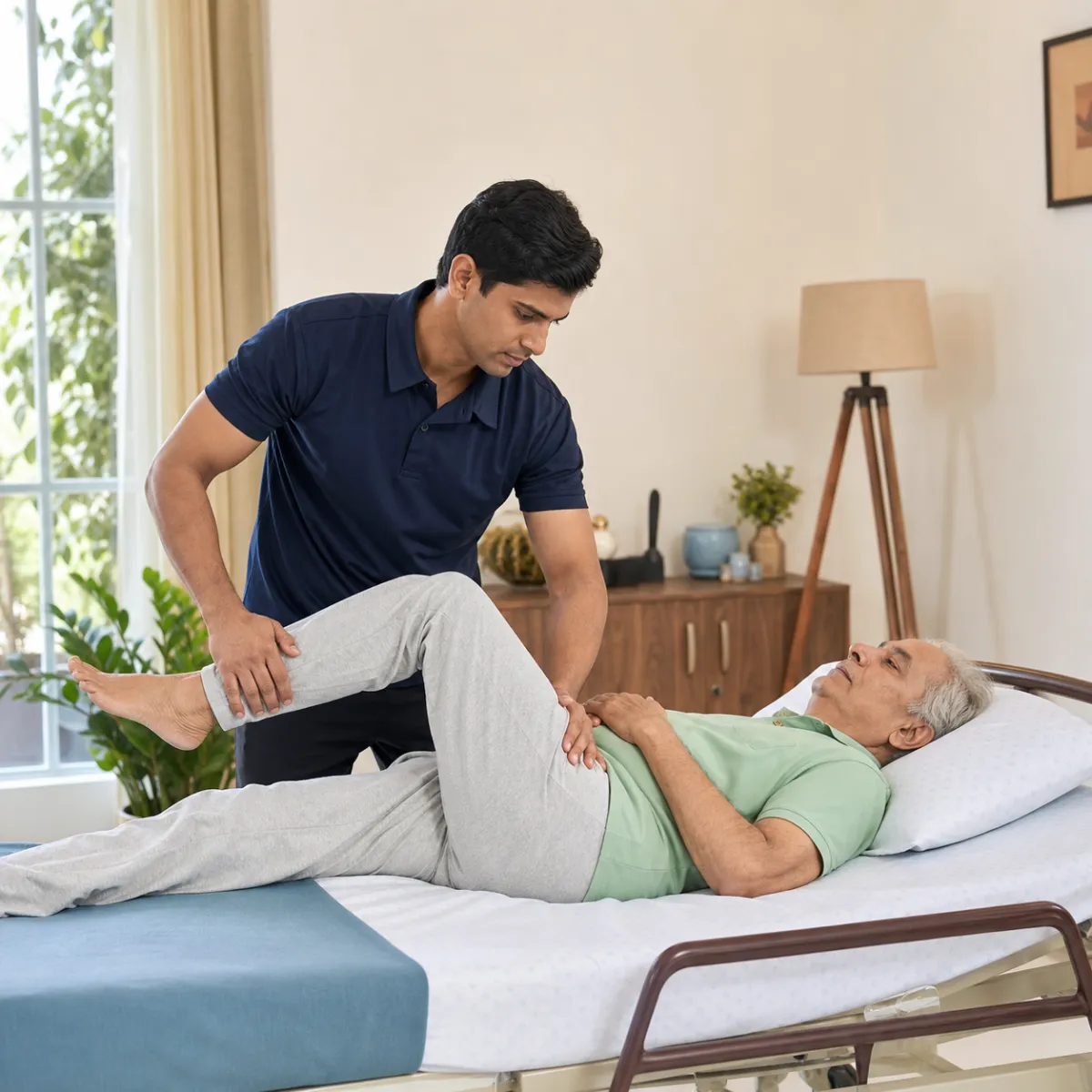
Quick, ballistic stretching triggers severe reactive spastic contraction. In contrast, prolonged static stretching—holding a joint at its comfortable end-range for at least 60 to 90 seconds—stimulates Golgi tendon organs to promote autogenic inhibition and relax the muscle.
Rhythmic rocking, slow gentle joint rotations, and sustained pressure over tendon insertions (such as the biceps tendon) help melt away spastic hypertonia before active exercise.
- Prolonged calf stretching over a wedge board to inhibit gastrocnemius clonus.
- Sustained finger and thumb abduction using a soft cone or inflatable hand splint.
- Warm moist packs applied for 15 minutes before stretching to improve collagen compliance.
Resting Splints, Positioning, and Home Support in Kolkata
Customized thermoplastic resting hand splints and dynamic ankle-foot orthoses (AFO) maintain paralyzed limbs in prolonged stretched positions during sleep, preventing permanent shortening of flexor tendons.
CareMotion home physiotherapists assess spasticity severity using the Modified Ashworth Scale (MAS), fit appropriate resting splints, and guide daily stretching routines for family caregivers.
- Wear resting hand splints for 2-3 hours during the day and during nighttime sleep as tolerated.
- Inspect skin under splints daily to ensure no localized red pressure marks or chafing.
- Coordinate with the patient's neurologist regarding oral antispasticity medications or Botox injections.
General information to help you plan a visit. Individual assessment and your treating team's advice guide rehabilitation decisions.