
By CareMotion · Spine & Pain Management
What Causes Sciatica and How Does It Manifest?
Sciatica is not a standalone disease; it is a clinical symptom describing radiating pain, tingling, numbness, or weakness that travels along the path of the sciatic nerve—from the lower back, through the buttock, and down the back of the leg into the foot.
The vast majority of sciatica cases stem from an L4-L5 or L5-S1 lumbar disc herniation pressing against exiting spinal nerve roots. Less commonly, deep piriformis muscle spasms in the buttock compress the nerve as it passes underneath.
- Sharp, shooting, or electric shock-like sensation triggered by coughing, sneezing, or bending forward.
- Tingling ('pins and needles') or numbness on the outer calf or top of the foot.
- Positive Straight Leg Raise (SLR) test reproducing neurological symptoms below 60 degrees.
Gentle Decompression Exercises and Movements to Avoid
During acute flare-ups, aggressive hamstring stretching is strictly contraindicated because pulling on the leg stretches an already inflamed sciatic nerve root like an over-tensioned cable. Instead, gentle McKenzie extension protocols or prone lying help centralize pain.
Sciatic nerve gliding (neural flossing) allows the nerve to glide smoothly through anatomical tunnels without creating excessive tension, easing mechanical adhesions.
- Prone lying on the stomach for 5 minutes with deep diaphragmatic breaths to decompress discs.
- Gentle prone press-ups (cobra pose) keeping pelvis flat on the bed to encourage disc centralization.
- Sciatic nerve flossing: sitting tall, gently extending the knee while tilting the head backward.
Sleeping Ergonomics and Home Physiotherapy Support
Sleeping on a firm, supportive mattress is essential. Side-sleepers should place a supportive pillow between their knees to keep the pelvis neutral. Back-sleepers benefit from placing a bolster or pillow under their knees to relax lumbar lordosis.
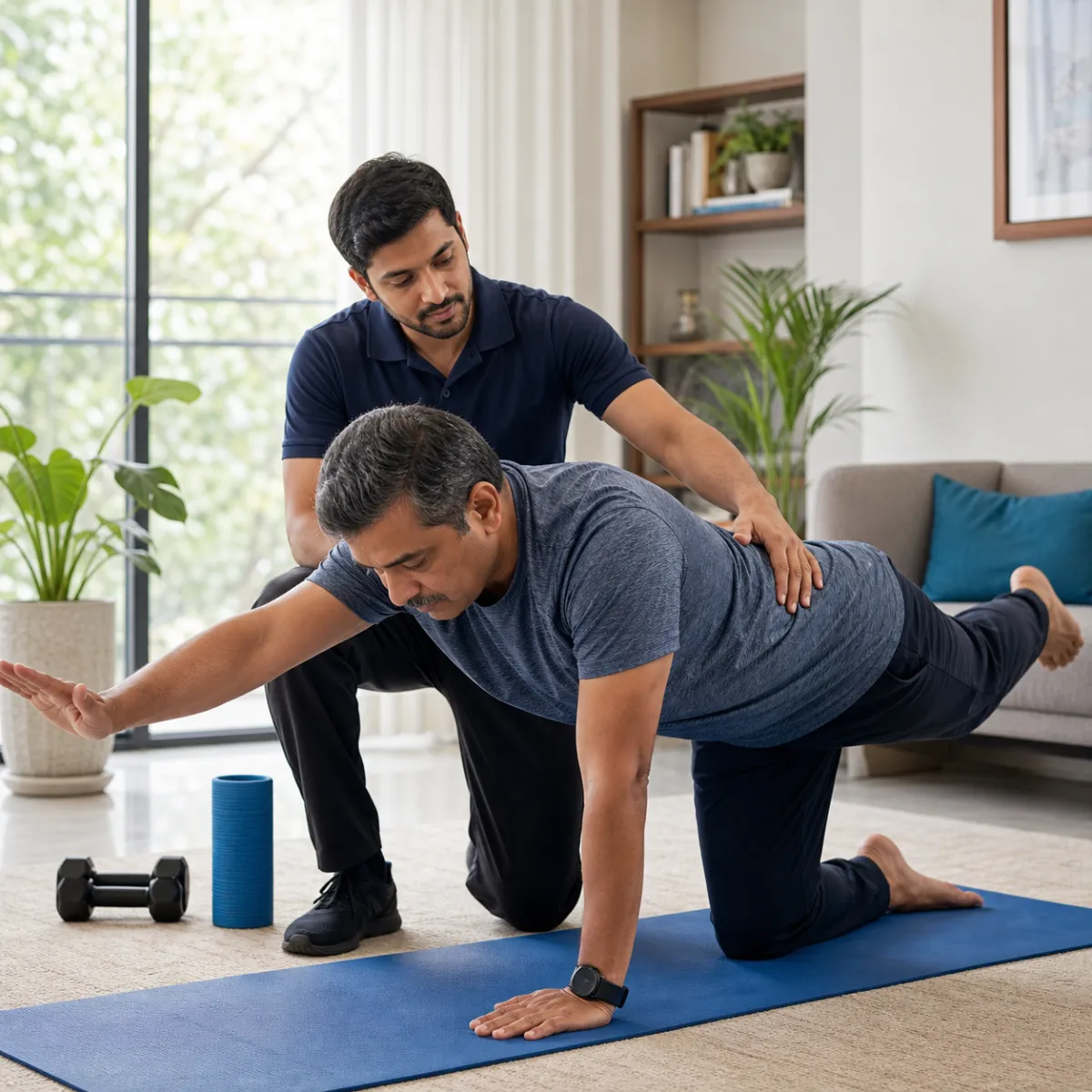
CareMotion physiotherapists assess your spinal mechanics, differentiate between true disc herniation and piriformis syndrome, and provide targeted home decompression therapy.
- Avoid prolonged soft sofa slumping which forces the lumbar spine into sustained flexion.
- Use lumbar roll support while sitting in office chairs or dining tables.
- Seek urgent medical evaluation if you experience sudden bowel/bladder incontinence or foot drop.
General information to help you plan a visit. Individual assessment and your treating team's advice guide rehabilitation decisions.