
By CareMotion · Women's Health
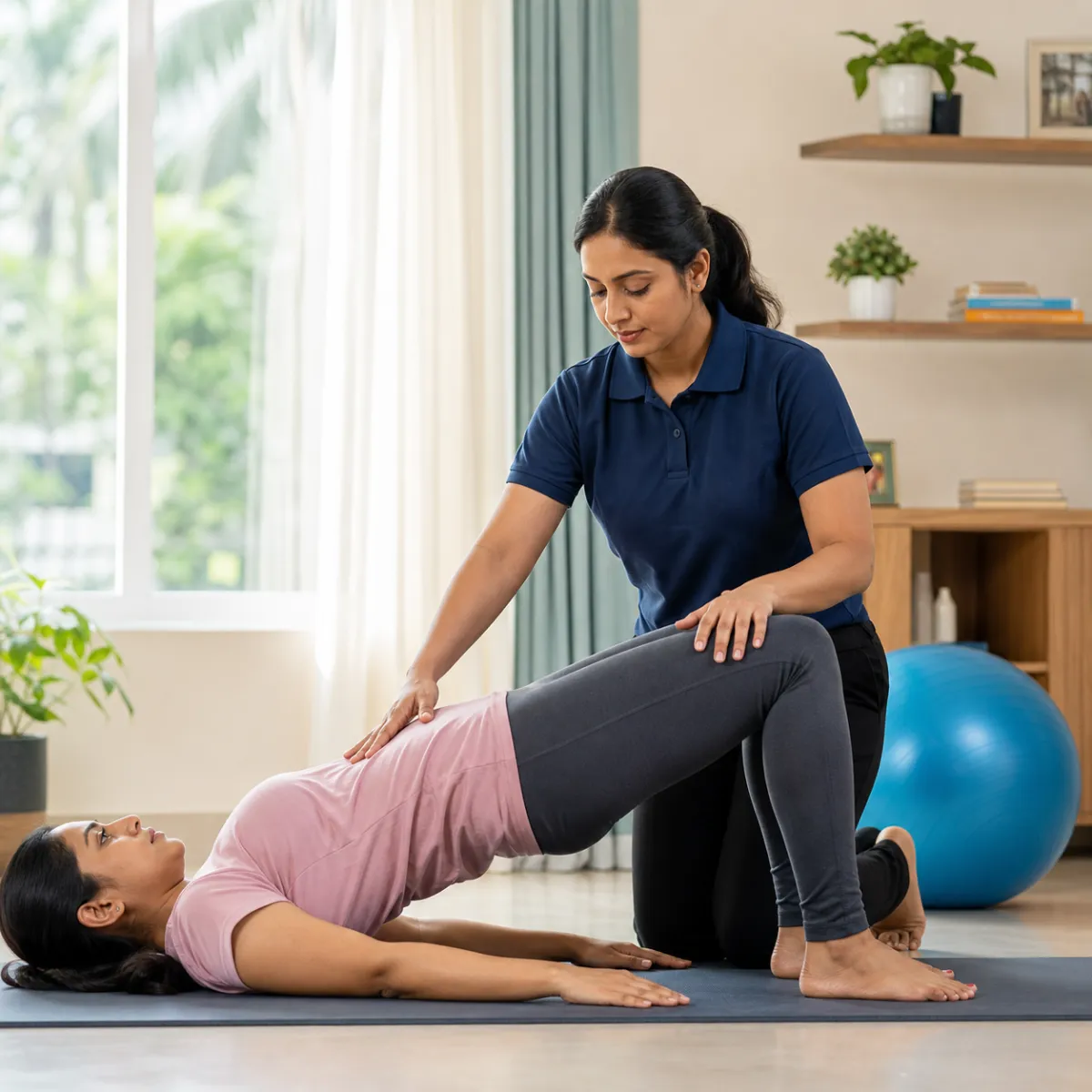
The Impact of Pregnancy and Childbirth on Pelvic Floor Muscles
The pelvic floor is a hammock-like sling of muscles and connective fascia supporting the bladder, uterus, and bowel. During 9 months of pregnancy, hormonal relaxin and uterine weight stretch these muscles. Vaginal birth can further overstretch pudendal nerve branches and levator ani fibers.
Many new mothers in Kolkata experience stress urinary incontinence (leaking urine when sneezing, coughing, or laughing), feelings of pelvic heaviness, or painful intercourse, often suffering in silence assuming it is an unavoidable consequence of motherhood.
- Stress urinary incontinence affecting over 30% of postpartum women.
- Pelvic organ prolapse sensation ('heaviness' or bulging in the vagina).
- Cesarean section scar sensitivity, lower back ache, and pelvic girdle instability.
Mastering the Correct Kegel: Squeeze, Lift, and Completely Relax
Over 50% of women perform Kegel exercises incorrectly when self-taught—often bearing down (pushing outward) or squeezing buttocks and thighs, which worsens pelvic floor prolapse.
A proper pelvic floor contraction involves an inward and upward lift—as if trying to stop the flow of urine while preventing passing wind. Equally critical is the relaxation phase: muscles must return to baseline resting length to prevent hypertonic pelvic spasms.
- Coordination contraction: Inhale naturally into the ribcage; on exhalation, gently squeeze and lift the pelvic floor inward.
- Hold for 5 seconds without holding breath, followed by 5 seconds of full, conscious relaxation.
- Perform 10 slow endurance holds followed by 10 quick fast-twitch flick contractions.
Safe Postpartum Timeline and Home Physiotherapy in Kolkata
Gentle pelvic floor activations can begin within days of delivery as comfort permits. High-impact exercises (running, jumping, heavy squats) should be avoided for at least 12 weeks to protect recovering fascial supports.
CareMotion provides compassionate, private home visits by qualified female physiotherapists across Kolkata, guiding personalized postpartum recovery in the comfort of your home.
- Never perform Kegel contractions while actually urinating on the toilet, which disrupts bladder reflexes.
- Coordinate pelvic floor lifts with lifting your baby or stroller to prevent intra-abdominal pressure spikes.
- Schedule an assessment with a specialized female physiotherapist for tailored pelvic guidance.
General information to help you plan a visit. Individual assessment and your treating team's advice guide rehabilitation decisions.