
By CareMotion · Post-Surgical Care
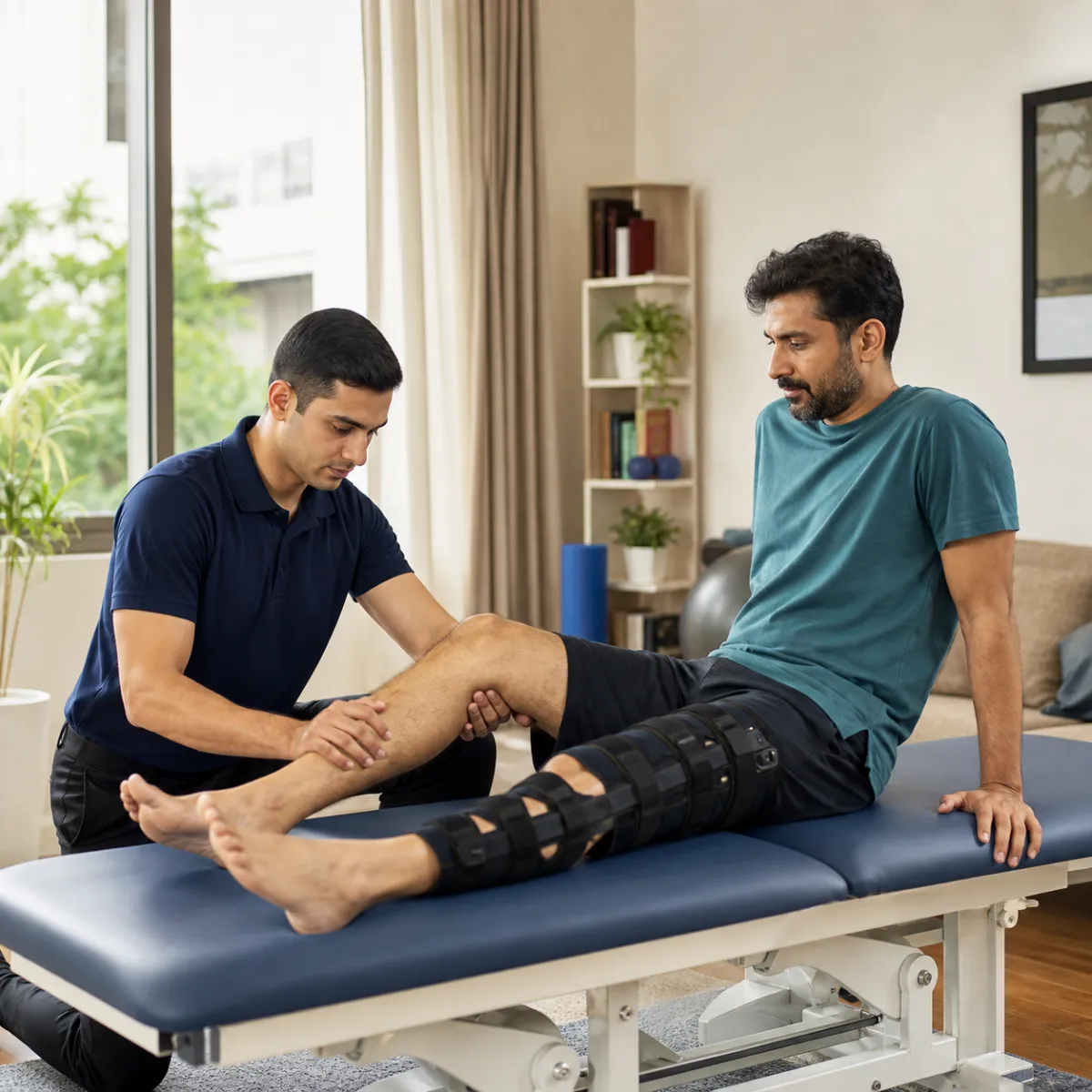
Surgical Fixation Types: Hemiarthroplasty vs. Proximal Femoral Nailing
In older adults in Kolkata, hip fractures typically occur at two primary anatomical sites: femoral neck fractures (inside the joint capsule) and intertrochanteric fractures (outside the capsule).
Displaced femoral neck fractures disrupt blood supply to the femoral head and are commonly treated with a 'hemiarthroplasty' (replacing the femoral head with a metallic ball). Intertrochanteric fractures have rich blood supply and are stabilized using internal hardware such as a Proximal Femoral Nail (PFN) or Dynamic Hip Screw (DHS).
- Hemiarthroplasty: Early full weight-bearing as tolerated is typically permitted immediately.
- PFN / DHS Fixation: Weight-bearing depends on bone quality and surgeon clearance (partial to full loading).
- Early postoperative mobilization within 24-48 hours is vital to prevent pneumonia and deep vein thrombosis.
Early Post-Op Exercises: Preventing Atrophy and Stiffness
During the first 2 weeks at home, physical therapy manages swelling, maintains circulation with ankle pumps, and reactivates the inhibited gluteal and quadriceps muscles without stressing surgical incisions.
Active-assisted heel slides, gentle isometric contractions, and seated knee extensions maintain joint nutrition while avoiding high-impact shear forces.
- Ankle pumping: Performed 20 times every waking hour to stimulate calf muscle pump circulation.
- Bed-level straight leg glides within approved surgical range limits.
- Seated marching and knee extensions to rebuild quadriceps power for standing transfers.
Gait Progression and Home Independence Across Kolkata
Walking progression begins with a two-wheeled walker, advancing to a reciprocal frame, then an elbow crutch or stick as pelvic stability improves. Clinicians monitor step symmetry, ensuring the patient does not develop an ingrained antalgic limp.
CareMotion physiotherapists deliver structured in-home fracture rehabilitation across Kolkata, coordinating closely with your orthopedic surgeon's postoperative instructions.
- Practice the 'walker-surgical leg-sound leg' cadence with upright posture and gaze forward.
- Raise low beds and armchairs with dense cushions to keep hips above 90 degrees.
- Remove door sills, thick carpets, and clutter along the patient's primary bathroom path.
General information to help you plan a visit. Individual assessment and your treating team's advice guide rehabilitation decisions.