
By CareMotion · Cardiopulmonary Rehabilitation
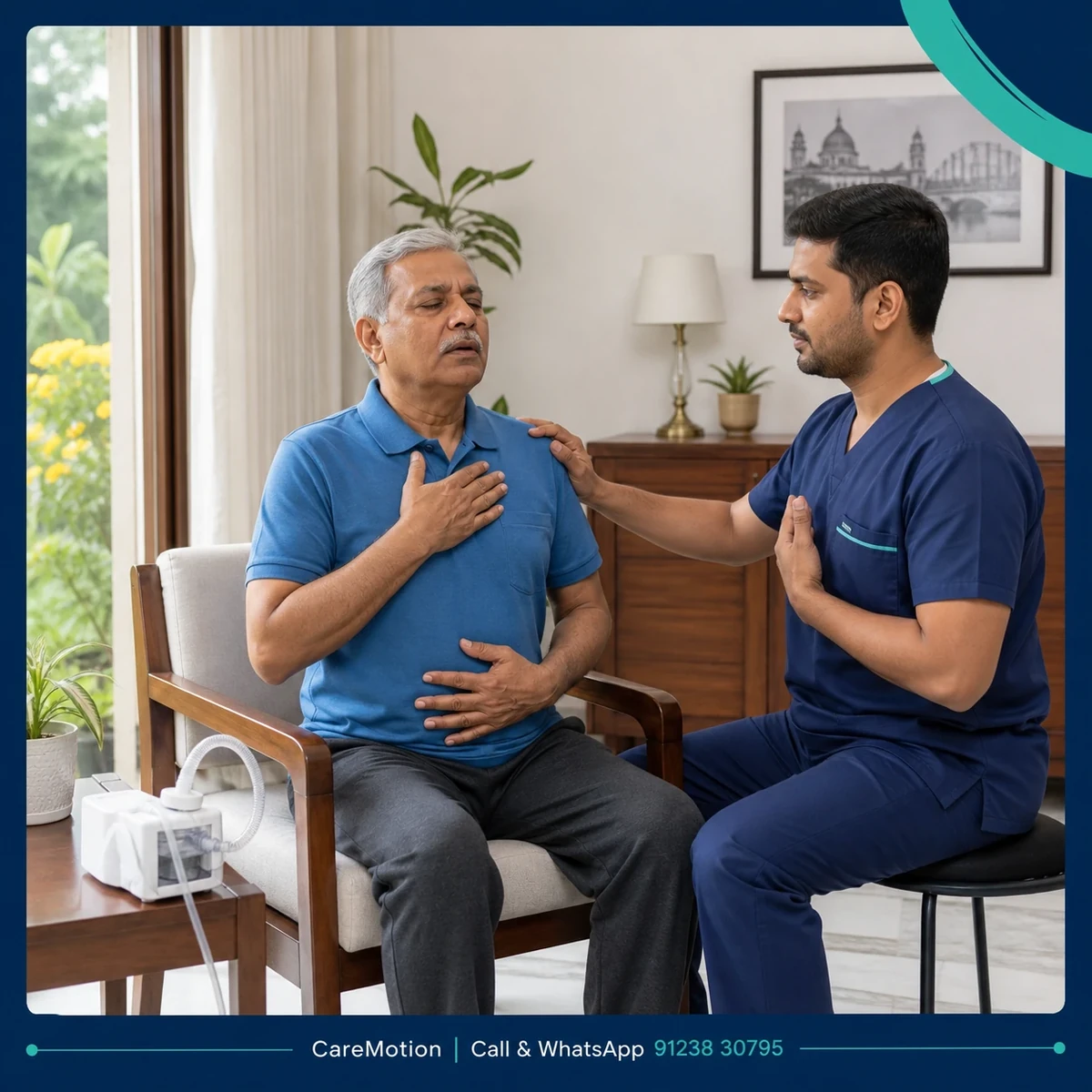
The Residual Effects of Bacterial and Viral Pneumonia
Following acute pneumonia, inflammatory exudate, pus, and cellular debris fill alveolar air sacs. Even after antibiotics successfully eradicate the infection, consolidated lung tissue takes weeks or months to clear and re-expand.
Patients in Kolkata frequently experience residual shortness of breath on climbing stairs, persistent dry or rattling cough, low stamina, and atelectasis (collapsed lung bases) from prolonged bed rest.
- Auscultation revealing diminished breath sounds and fine inspiratory crackles over affected lobes.
- Vulnerability to secondary infections if stagnant mucus remains trapped in dependent lung bases.
- Severe generalized muscle deconditioning from weeks of hospital bed confinement.
Incentive Spirometry: Expanding Collapsed Alveoli Safely
A volumetric or 3-ball incentive spirometer provides visual biofeedback to encourage sustained maximal inspiration. Unlike a forced cough, slow deep inhalation opens collateral ventilation pathways (pores of Kohn and canals of Lambert), re-inflating collapsed alveoli.
The patient must inhale slowly and steadily—drawing the balls upward—and hold their breath at full inspiration for 3 to 5 seconds before gently exhaling, performed 10 times every hour.
- Incentive spirometry performed 10 repetitions hourly while awake, followed by two gentle huffs.
- Lateral costal breathing drills: Placing hands on lower ribs to consciously direct breath into lung bases.
- Thoracic cage mobility exercises: Raising arms overhead while inhaling to mechanically expand the ribcage.
Gradual Stamina Rebuilding and Home Visits Across Kolkata
Returning directly to full household chores or work often triggers severe fatigue relapses. Rehabilitation must follow a progressive walking program, gradually increasing continuous walking duration before increasing walking speed.
CareMotion home physiotherapists monitor vital signs, auscultate lung sounds, and design progressive cardiovascular recovery routines directly within your Kolkata residence.
- Begin with 5-minute indoor walking intervals, resting when heart rate or breathing rate accelerates.
- Stay well-hydrated to keep residual bronchial secretions thin and easy to clear.
- Practice deep diaphragmatic breathing in upright sitting positions, avoiding prolonged slumping.
General information to help you plan a visit. Individual assessment and your treating team's advice guide rehabilitation decisions.