
By CareMotion · Post-Surgical Care
Why Joints Become Stiff After Prolonged Cast Immobilization
After a bone fracture (such as a distal radius wrist fracture or bimalleolar ankle fracture), 4 to 8 weeks of immobilization in a plaster cast or fiberglass splint is essential for radiographic union. However, immobilization causes severe collateral joint stiffness.
Joint capsules contract, synovial fluid thickens, collagen fibers form cross-linked adhesions, and immobilized muscles lose up to 30% of their mass through disuse atrophy. When the cast is finally cut off, the joint feels frozen, sensitive, and weak.
- Dense periarticular adhesions binding synovial folds and tendon sheaths.
- Disuse osteoporosis and cutaneous hypersensitivity from weeks without air and touch.
- Marked muscle wasting (hypotrophy) in adjacent stabilizing muscle bellies.
Gentle Mobilization Strategy: Restoring Range Without Refracture
Forcing a recently healed fracture into aggressive stretching can refracture weakened bone or tear contracted ligaments. Rehabilitation must respect the biological strength of the healing bone callus.
Gentle active-assisted movements, warm water soaks, and low-grade physiological accessory joint glides (traction and gliding) restore capsule extensibility without excessive cortical bone stress.
- Warm water immersion for 10 minutes prior to gentle range of motion exercises.
- Active-assisted joint glides within the threshold of comfortable tissue stretch.
- Gradual introduction of isometric contractions before advancing to external resistance.
In-Home Fracture Rehabilitation Across Kolkata
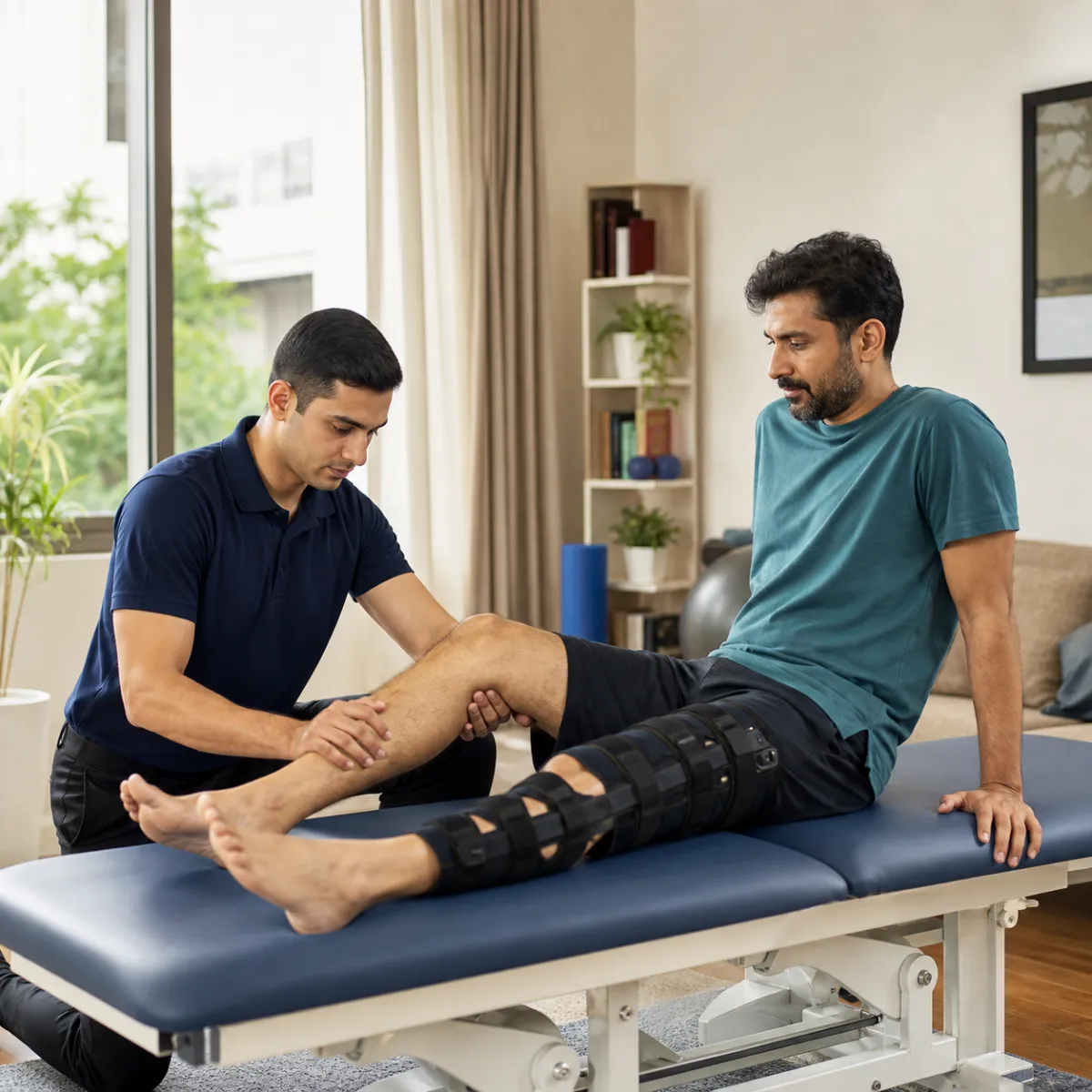
Patients in Kolkata frequently feel anxious about moving a limb after cast removal. Having an experienced physiotherapist visit your home provides reassurance, objective measurement with a goniometer, and hands-on guidance.
CareMotion clinicians review post-cast X-rays, evaluate soft tissue healing, and structure progressive functional recovery tailored to your daily household needs.
- Desensitize hypersensitive skin by gently stroking with different fabric textures (cotton, velvet, towel).
- Do not carry heavy buckets or grocery bags until the clinician confirms cortical consolidation.
- Practice functional grip or stepping drills that mimic everyday household independence.
General information to help you plan a visit. Individual assessment and your treating team's advice guide rehabilitation decisions.