
By CareMotion · Cardiopulmonary Rehabilitation
Understanding Pulmonary Fibrosis and Reduced Lung Compliance
Pulmonary fibrosis involves the progressive replacement of soft, elastic alveolar walls with stiff, scarred, thickened fibrous tissue. This scarring impairs alveolar-capillary gas diffusion, causing rapid arterial oxygen desaturation during physical activity.
Following severe viral pneumonia (such as severe COVID-19 with ARDS) or idiopathic pulmonary fibrosis (IPF), the lungs become mechanically 'stiff'—requiring significantly greater physical effort to expand each breath.
- Dry, persistent hacking cough and progressive exertional dyspnea.
- Rapid drop in SpO2 during walking that recovers quickly with seated rest.
- Velcro-like fine inspiratory crackles heard on lung auscultation with a stethoscope.
Breathing Retraining and Energy Conservation Techniques
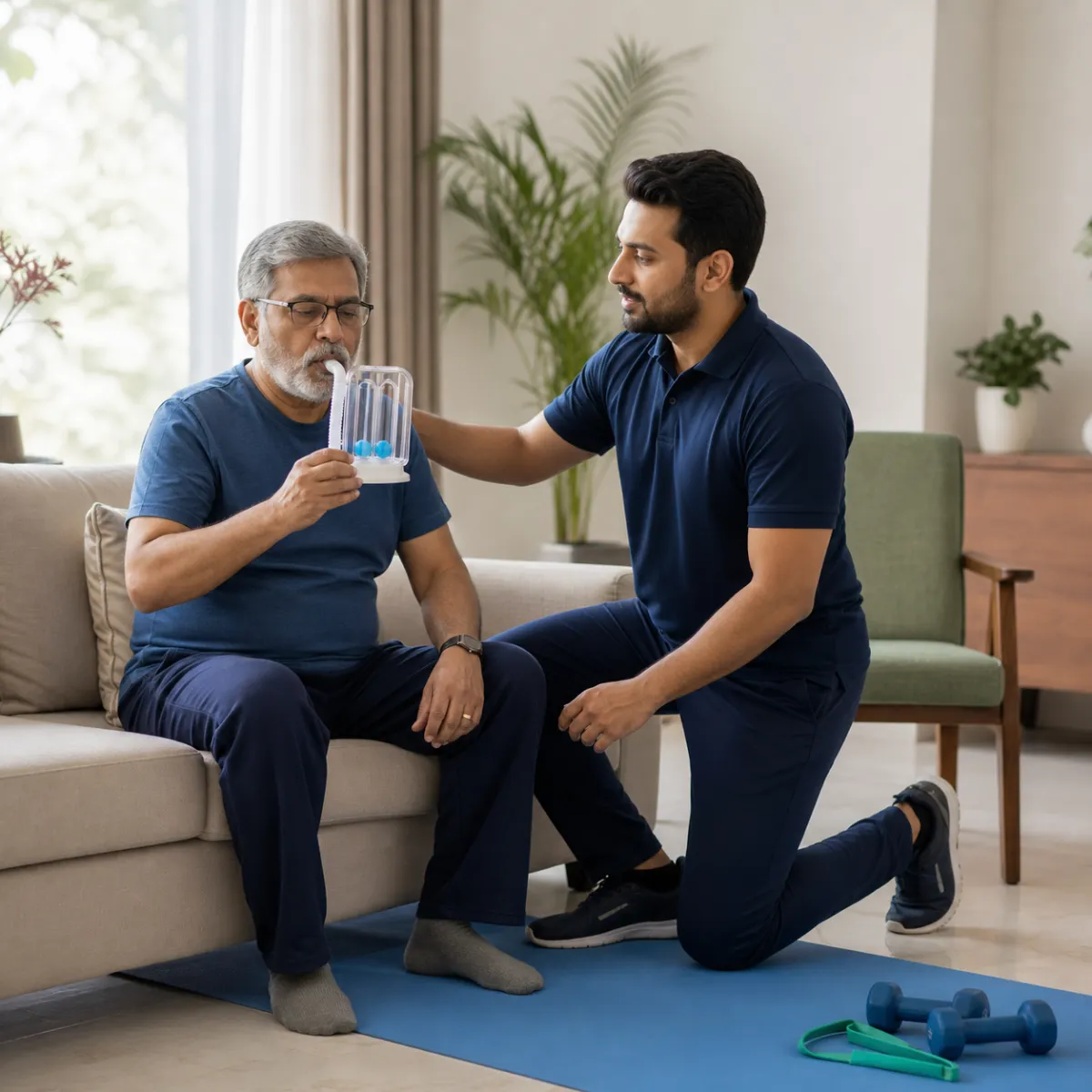
Because fibrous lungs cannot expand deeply without immense effort, deep forced breathing can trigger exhausting coughing fits. Physiotherapy focuses on rhythmic, paced diaphragmatic breathing and pacing physical tasks to match oxygen supply.
Patients are taught to synchronize breathing with movement: inhaling during resting phases and exhaling during physical exertion, preventing breath-holding (Valsalva maneuver) that spikes pulmonary artery pressures.
- Synchronized stepping: Inhale for 2 steps, exhale through pursed lips for 3 steps while walking.
- Seated upper-limb resistance drills with light 0.5 kg weights to maintain functional arm strength.
- Positioning in high-supported sitting to optimize matching between ventilation and pulmonary blood perfusion.
Integrating Supplemental Oxygen and Home Care in Kolkata
Patients using supplemental oxygen concentrators or portable cylinders at home in Kolkata must learn to adjust nasal cannula flow rates during activity as prescribed by their pulmonologist, ensuring SpO2 stays above 90%.
CareMotion home physiotherapists assess exertional oxygen saturation (using 6-minute walk tests), design personalized pacing routines, and support family caregivers at home.
- Continuously monitor pulse oximeter readings before, during, and after any physical movement.
- Ensure oxygen tubing has adequate length and is taped securely to prevent tripping hazards at home.
- Engage in daily seated mobility and gentle leg exercises to prevent secondary muscle wasting.
General information to help you plan a visit. Individual assessment and your treating team's advice guide rehabilitation decisions.