
By CareMotion · Musculoskeletal Care
The Biomechanics of Plantar Fascia Strain and Heel Pain
The plantar fascia is a thick fibrous band of connective tissue running along the bottom of the foot, connecting the heel bone (calcaneus) to the base of the toes. It functions as a dynamic shock-absorbing bowstring supporting the medial foot arch.
Repeated micro-tears and chronic tensile overload at the calcaneal insertion cause plantar fasciitis. It is exceptionally common among teachers, healthcare workers, and retail workers in Kolkata who stand for long hours on hard floors.
- Classic sharp stabbing heel pain on the very first few steps out of bed in the morning.
- Pain eases slightly after walking for 10 minutes, but returns after sitting and standing back up.
- Tenderness localized to the anteromedial aspect of the inferior heel bone.
Evidence-Based Stretches and High-Load Strength Protocol
Calf muscle tightness (gastrocnemius and soleus) significantly limits ankle dorsiflexion, transferring excessive tension directly into the plantar fascia. Stretching the posterior calf chain is fundamental.
The landmark Rathleff protocol emphasizes high-load strength training: performing slow heel raises on a step with a rolled towel under the toes to engage the windlass mechanism, promoting collagen remodeling.
- Wall calf stretch: Keeping the back heel firmly on the floor for 30 seconds, 3 repetitions.
- Plantar fascia specific stretch: Pulling toes back toward the shin while gently massaging the arch.
- High-load heel raises on a step: 3 seconds up, 2 second pause at top, 3 seconds down.
Footwear Choices, Ice Massage, and Home Care
Walking barefoot on hard marble or tile floors at home aggravates micro-tears. Wearing supportive indoor slippers with cushioned arch support provides immediate relief. Rolling the arch over a frozen water bottle for 5 minutes eases acute inflammation.
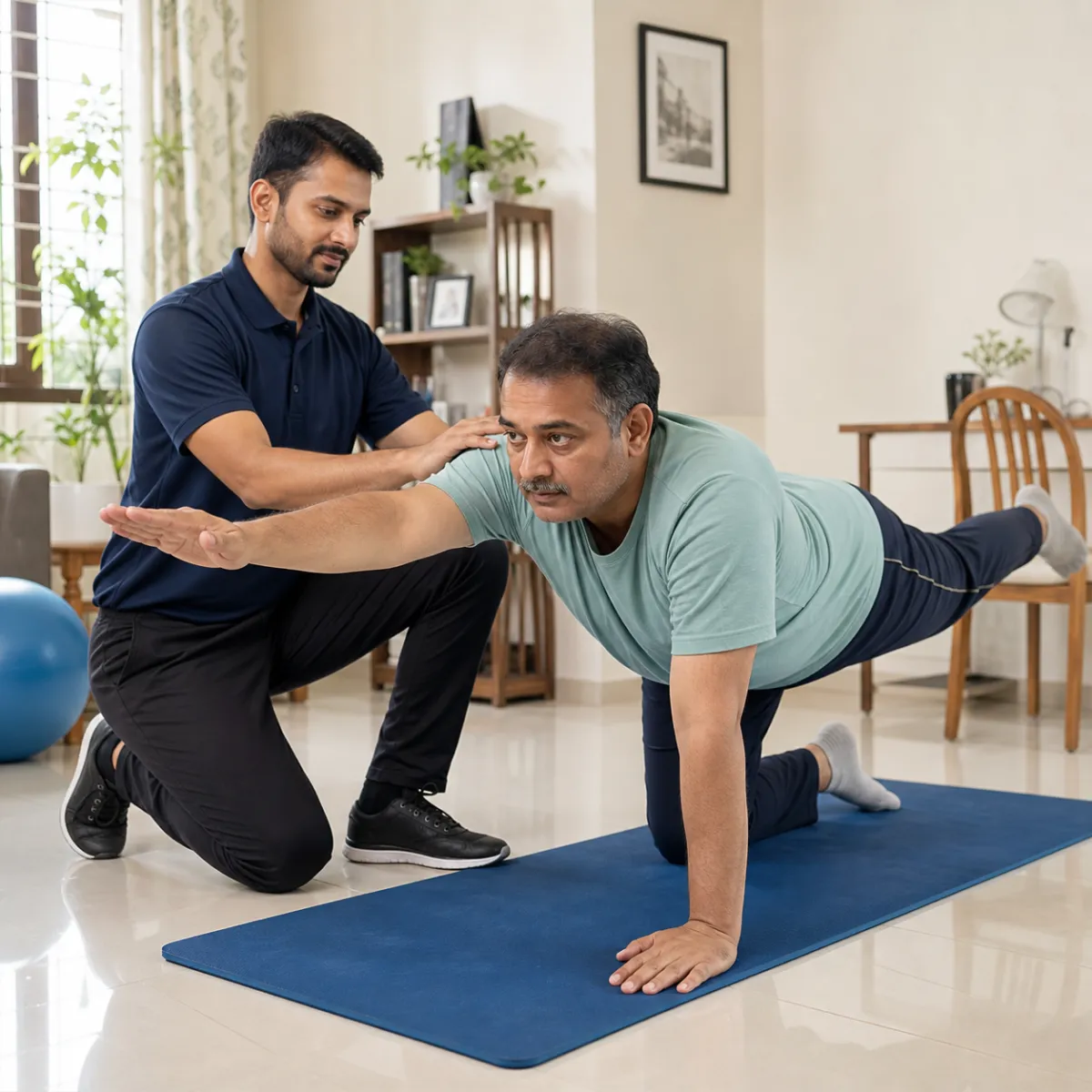
CareMotion physiotherapists assess foot pronation, gait dynamics, and provide targeted manual therapy and taping protocols at your Kolkata home.
- Never walk completely barefoot on cold, hard tiled apartment floors.
- Choose footwear with a slight 1-inch heel lift and firm medial longitudinal arch support.
- Perform gentle foot ankle circles before stepping out of bed in the morning.
General information to help you plan a visit. Individual assessment and your treating team's advice guide rehabilitation decisions.