
By CareMotion · Treatment Philosophy
The Appeal and Limitations of Electrotherapy Machines
Many patients encountering physiotherapy for the first time associate treatment with electrical machines—such as TENS, IFT, ultrasonic wands, and traction devices. While these electronic modalities provide effective short-term pain relief and muscle relaxation, they are supportive tools, not standalone cures.
An electrical current can temporarily desensitize irritated nerve endings, but it cannot strengthen a weakened gluteal muscle, correct a pelvic tilt, or restore safe balance when stepping off a curb in Kolkata.
- Excellent for short-term symptom reduction during acute inflammatory episodes.
- Helpful for breaking painful muscle guarding to allow gentle stretching.
- Ineffective when used in isolation without active functional rehabilitation.
The Irreplaceable Power of Hands-on Manual Therapy
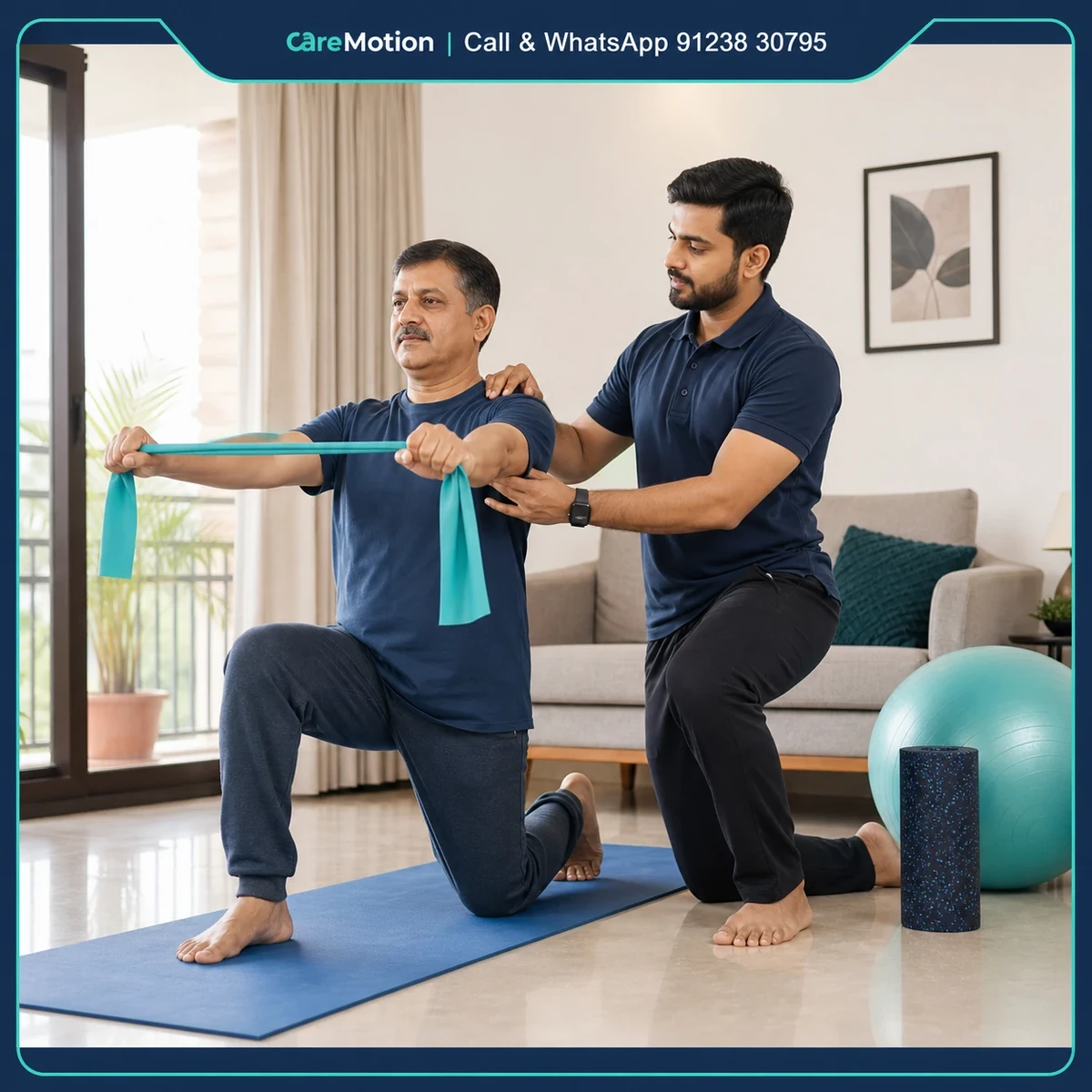
Manual therapy involves targeted hands-on techniques performed directly by a skilled clinician: passive joint mobilization (Maitland or Mulligan concepts), myofascial trigger point release, neural tissue mobilization, and assisted passive stretching.
A physiotherapist's tactile feedback allows them to feel precise end-feel resistance, joint capsular restrictions, and tissue warmth in real time—adjusting force, angle, and speed with clinical nuances no machine can replicate.
- Frees up restricted joint capsules in frozen shoulder and stiff post-surgical knees.
- Lengthens chronically shortened muscle fibers and eases stubborn fascia knots.
- Improves joint nutrition through passive synovial fluid circulation.
The Gold Standard: A Balanced Clinical Approach
Leading international orthopedic and sports medicine guidelines recommend a multi-modal strategy: use passive modalities briefly to manage high pain irritability, employ manual therapy to restore structural joint play, and immediately cement gains with progressive active exercise.
CareMotion physiotherapists focus on empowering patients with active functional strength and movement confidence, ensuring long-term independence rather than perpetual dependence on machines.
- Machine modalities: 15-20% of visit time during acute flare-ups.
- Hands-on joint mobilization and soft tissue release: 30-40% of session time.
- Active functional exercise and postural retraining: 40-50% of therapeutic engagement.
General information to help you plan a visit. Individual assessment and your treating team's advice guide rehabilitation decisions.