
By CareMotion · Bedridden & Elderly Care
Why Immobile Joints Rapidly Stiffen and Form Contractures
When a patient is bed-bound due to advanced dementia, stroke, spinal injury, or severe weakness, their joints receive zero active movement. Within just 10 to 14 days of complete immobility, articular cartilage thins, synovial fluid production plummets, and surrounding muscle fibers shorten.
Without regular movement, joints develop permanent 'contractures'—fixed, frozen flexions in elbows, wrists, knees, and ankles that make dressing, bathing, and perineal hygiene agonizingly difficult and painful.
- Loss of capsular compliance and shortening of joint ligaments.
- Equinus deformity: Ankle dropping downward and freezing in a pointed position ('foot drop').
- Severe pain during basic care tasks like washing underarms or changing adult diapers.
Safe Technique for Performing Passive Range of Motion (PROM)
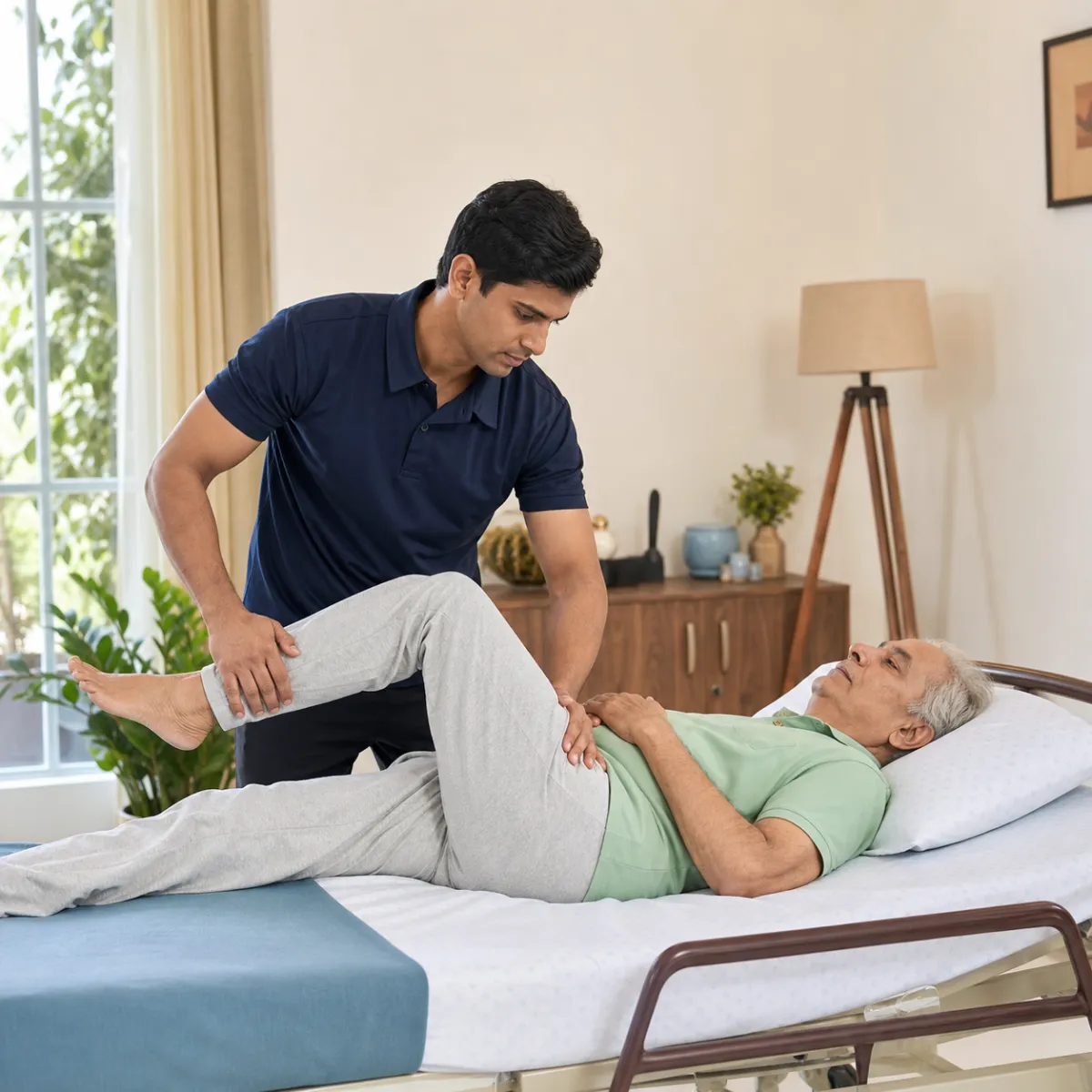
Passive Range of Motion means an outside person (a physiotherapist or trained caregiver) moves the patient's limbs through their normal anatomical pathways without any muscle effort from the patient.
Movements must be performed slowly, rhythmically, and gently. The caregiver supports the limb above and below the joint, moving smoothly to the point of comfortable tissue resistance—never forcing past stiffness or causing pain.
- Ankle: Gentle dorsiflexion (pushing toes upward toward shin) and ankle circles (10 reps each leg).
- Knee & Hip: Bending knee toward chest while supporting heel and back of knee smoothly.
- Shoulder: Slow arm elevation forward toward the head, keeping elbow supported and palm inward.
- Wrist & Fingers: Gently opening curled fingers and extending the wrist to maintain hand openness.
In-Home Caregiver Training Across Kolkata
Performing PROM twice daily maintains joint flexibility, stimulates lymphatic circulation, and preserves patient dignity. However, improper hand placements can strain fragile arthritic joints or cause micro-tears in fragile skin.
CareMotion physiotherapists visit homes across Kolkata to provide bedside joint mobilizations and teach family members and attendants the precise hand placements and safe movement arcs.
- Always support the full weight of the limb with two hands; never hold a leg by the toes or ankle alone.
- Perform 5 to 10 repetitions per joint twice daily as part of morning and evening care routines.
- Stop immediately if the patient grimaces, winces, or if joint resistance suddenly feels hard and bony.
General information to help you plan a visit. Individual assessment and your treating team's advice guide rehabilitation decisions.