
By CareMotion · Spine & Pain Management
Degenerative Changes in the Lumbar Spine Explained
Lumbar spondylosis refers to degenerative osteoarthritis of the lumbar spinal joints, facet joint cartilage thinning, and disc height loss. It is one of the most common causes of persistent lower back stiffness in older adults across Kolkata.
Patients typically report pronounced stiffness upon waking or after sitting for prolonged periods, which gradually loosens with light walking but worsens with heavy lifting or prolonged backward bending.
- Dull, achy lower back discomfort concentrated over L4-S1 facet joints.
- Stiffness relieved by gentle forward leaning or sitting in a supportive armchair.
- Compensatory tightness in hip flexors, hamstrings, and piriformis muscles.
Safe Core Muscle Activation: Deep Stabilizers Over Crunches
Traditional sit-ups and crunches compress degenerative lumbar discs with hundreds of pounds of unnecessary spinal loading. Physical therapy focuses on activating the deep 'corset' muscles: the transverse abdominis, multifidus, and pelvic floor.
Isometric stabilization drills maintain a neutral spine, teaching the body to transfer loads through the hips rather than jamming degenerated lumbar facet joints.
- Pelvic tilts and abdominal drawing-in maneuver (navel gently pulled toward spine).
- Glute bridges to reactivate inactive hip extensors and offload lumbar paraspinals.
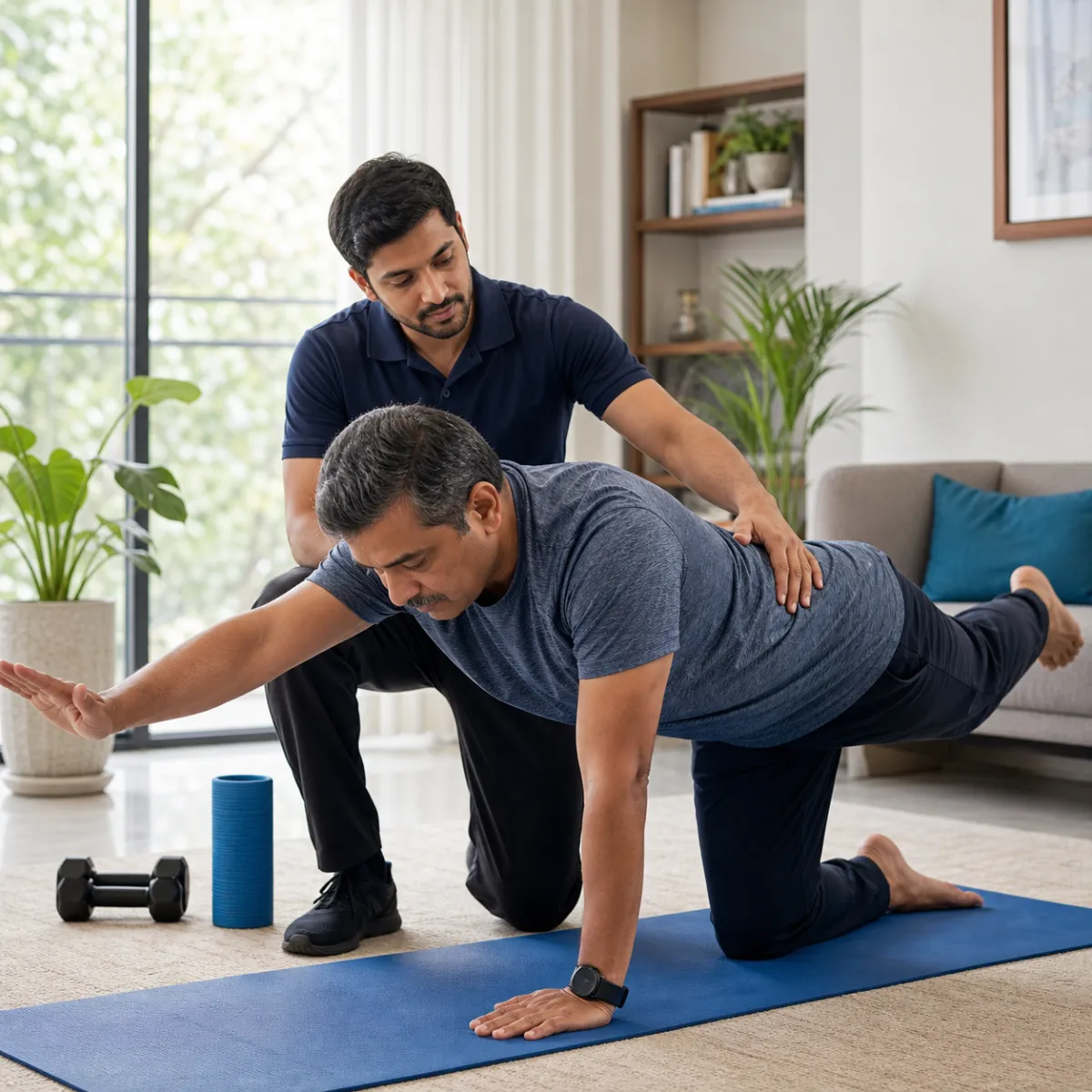
- Modified Bird-Dog and Dead Bug exercises maintaining a steady, motionless lumbar curve.
Practical Daily Habits for Kolkata Residents
Lifting groceries, bending over wash basins, and sitting in low auto-rickshaws can aggravate lumbar spondylosis. Learning to hip-hinge (bending at hips and knees while keeping the back straight) protects aging vertebrae.
CareMotion clinicians provide customized lumbar rehabilitation at your home, combining gentle facet joint mobilizations with core stability progressions.
- Never lift heavy buckets or luggage by rounding the lower back.
- Break prolonged sitting every 30 minutes with gentle lumbar extension standing breaks.
- Wear cushioned walking shoes to absorb shock impact during daily neighborhood strolls.
General information to help you plan a visit. Individual assessment and your treating team's advice guide rehabilitation decisions.