
By CareMotion · Post-Surgical Care
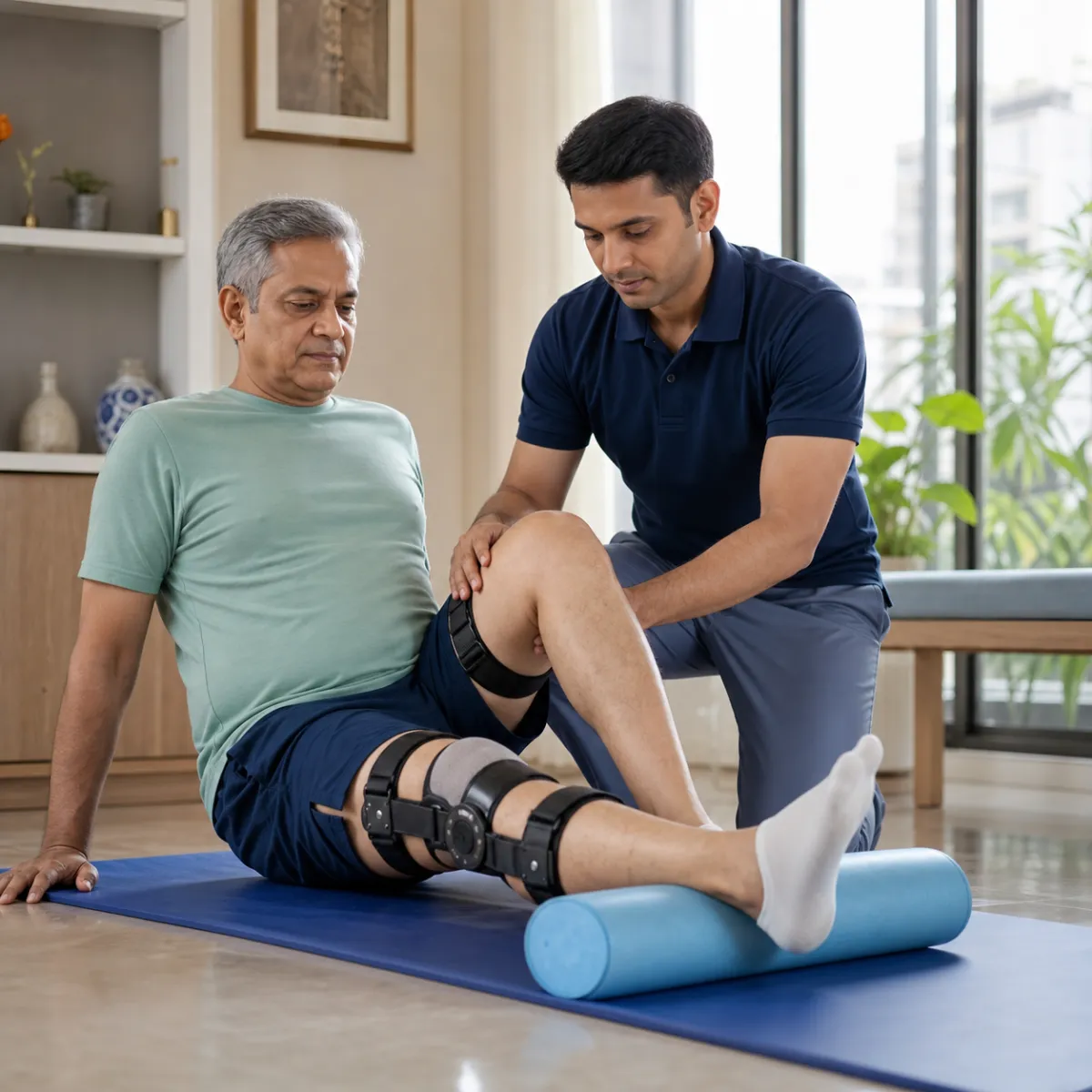
Weeks 1 to 2: Early Tissue Healing and Extension Priority
Immediately following discharge after a total knee replacement (TKR) in Kolkata, the primary goals are managing postoperative inflammatory edema, preventing deep vein thrombosis (DVT), and achieving complete passive knee extension (zero degrees).
While many patients obsess over bending, gaining full straight extension is clinically more critical for a normal walking gait without a limp. A slight extension lag significantly increases energy expenditure while walking.
- Ankle pumps performed 20 times every waking hour to facilitate venous blood return.
- Static quadriceps sets and towel squeezes under the knee to reactivate the inhibited vastus medialis.
- Ice therapy (cryotherapy) applied for 15-20 minutes after exercises to calm joint swelling.
Weeks 3 to 6: Breaking 90 Degrees and Transitioning Walking Aids
During weeks 3 through 6, rehabilitation focuses on achieving at least 90 to 110 degrees of active knee flexion, strengthening hip abductors, and weaning off a walking frame to a single elbow crutch or walking stick.
A home physiotherapist assists with gentle patellar mobilizations and scar tissue desensitization once the surgical incision has fully closed and staples or sutures are removed.
- Heel slides on a smooth surface or bedsheet to encourage knee bending.
- Straight leg raises (SLR) without an extensor lag to confirm strong quadriceps control.
- Practicing sit-to-stand transfers from chairs of varying heights with equal weight-bearing.
Weeks 7 to 12+: Stair Climbing and Community Independence
The final phases of total knee rehabilitation transition toward functional community independence: negotiating apartment stairs ('up with the good leg, down with the bad leg'), prolonged walking, and balance stability.
CareMotion clinicians supervise each stage of home knee rehabilitation across Kolkata, coordinating closely with your orthopedic surgeon's postoperative protocol.
- Step-ups and step-downs to build eccentric quadriceps deceleration strength.
- Mini-squats and hamstring curls to ensure symmetrical leg strength.
- Proprioception exercises on balance pads to prevent future slips and falls.
General information to help you plan a visit. Individual assessment and your treating team's advice guide rehabilitation decisions.