
By CareMotion · Modalities & Technology
IFT Full Form and Scientific Working Principle
The full form of IFT in physiotherapy is 'Interferential Therapy' (or Interferential Current Therapy). It is one of the most effective electrotherapy modalities for deep-seated musculoskeletal pain, muscle spasms, and localized fluid swelling.
Traditional low-frequency currents meet high skin resistance, which can cause skin irritation. IFT circumvents this by passing two slightly differing medium-frequency currents (around 4,000 Hz and 4,100 Hz) that intersect within the deep tissues, producing an effective therapeutic low-frequency beat frequency of 100 Hz.
- Medium-frequency carrier waves overcome epidermal electrical impedance effortlessly.
- Interference pattern forms deep in underlying muscle tissue without burning skin.
- Provides deep analgesic stimulation and gentle rhythmic muscle pump action.
Conditions Treated with Interferential Current Therapy
Because IFT penetrates deeper than superficial TENS units, it is widely utilized for large muscle groups and deeply situated joints. It promotes vasodilation, speeds up waste product removal, and breaks the vicious pain-spasm-pain cycle.
In home physiotherapy settings across Kolkata, IFT is often indicated for severe acute spasms where active movement is temporarily impossible due to protective muscle guarding.
- Lumbar disc herniation with severe paraspinal muscle spasms.
- Severe shoulder adhesive capsulitis (frozen shoulder) joint ache.
- Knee osteoarthritis with peri-articular inflammatory edema.
- Sports-related quad or hamstring muscle strains.
Safe Application and Integration into Home Rehabilitation
IFT requires skilled electrode positioning (either four-pole quadripolar vector sweep or two-pole bipolar mode) to focus the interference cross directly over the injured tissue. A clinical physiotherapist carefully selects sweep frequencies to prevent nerve accommodation.
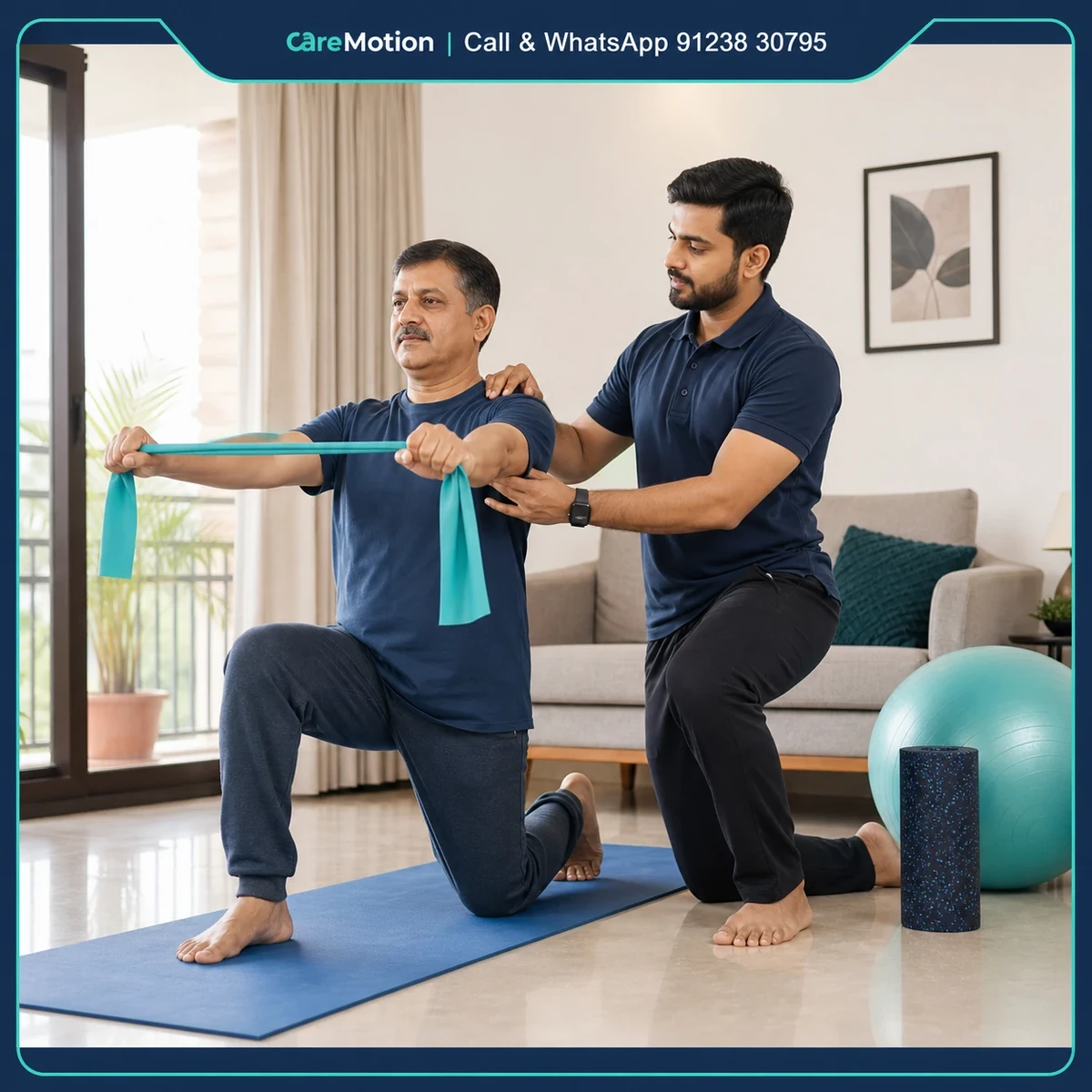
Interferential therapy is most effective when paired with progressive active exercises that rebuild long-term joint stability and tissue resilience.
- Session duration typically ranges from 15 to 20 minutes under clinician supervision.
- Patients experience a pleasant, gentle tingling sensation without sharp prickling.
- Contraindicated in active bleeding, deep vein thrombosis, and over cardiac pacemakers.
General information to help you plan a visit. Individual assessment and your treating team's advice guide rehabilitation decisions.