
By CareMotion · Neurological Rehabilitation
Deconstructing the Normal Human Gait Cycle
Human walking is a complex neuromuscular coordination of two main phases: the Stance Phase (60% of cycle, foot in ground contact absorbing weight) and the Swing Phase (40% of cycle, foot clearing the floor and advancing forward).
Neurological injuries—such as stroke, brain trauma, or spinal cord compression—disrupt corticospinal drive. Patients typically exhibit stiff knee hyperextension (genu recurvatum), lack of active ankle dorsiflexion (foot drop), and compensatory hip circumduction (swinging the leg outward).
- Initial Contact: Heel strike initiates forward momentum and activates pretibial muscles.
- Mid-Stance: Single limb support requiring gluteus medius pelvic stability.
- Terminal Swing: Adequate ankle clearance preventing toes from catching on the floor.
Component-Based Gait Rehabilitation Drills
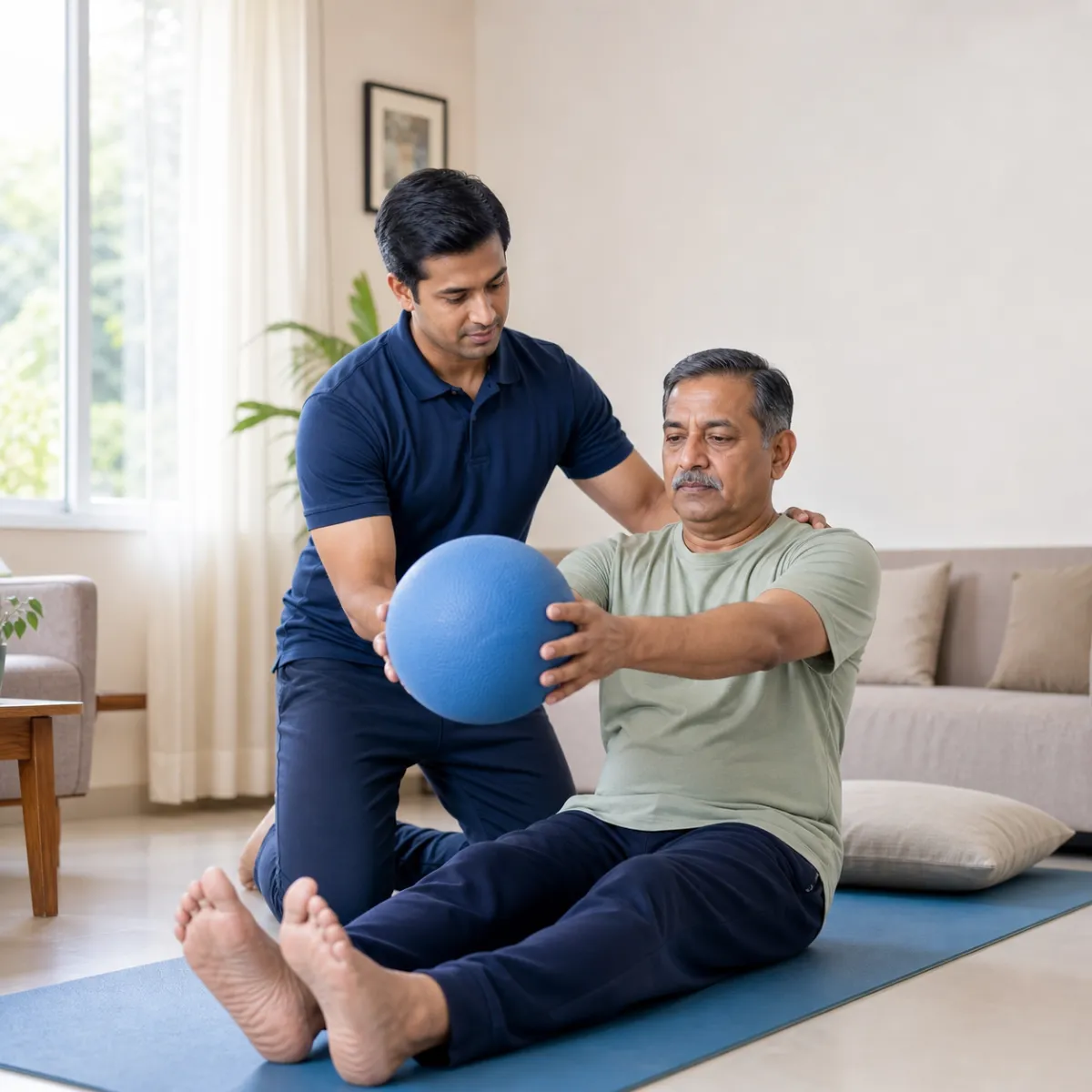
Instead of forcing a patient to walk poorly with severe compensations, neuro-physiotherapists break walking down into modular components: practicing isolated weight shifts, single-leg stance balance, and stepping drills in a safe, supported setup.
Rhythmic step-tap drills onto a low aerobic step and backward stepping reinforce hip extensor control while breaking abnormal extensor synergy.
- Lateral weight shifting: Transferring 70% of body weight onto the affected hemiplegic leg holding parallel bars.
- Forward stepping: Advancing the unaffected foot forward, forcing the affected leg into true stance stability.
- Ankle dorsiflexor electrical stimulation or AFO splints to guarantee safe toe clearance during swing.
Overground Walking and Indoor Safety in Kolkata Residences
Gait rehabilitation must translate into functional domestic success: stepping over door thresholds, navigating between sofa and dining table, and turning around safely in compact bathrooms without losing balance.
CareMotion home physiotherapists supervise gait training directly inside your Kolkata flat, choosing the optimal walking aid (quad cane, tripod, or hemi-walker) matching the patient's recovery phase.
- Remove door sills, thick carpets, and trailing phone cables from primary walking paths.
- Practice the 'cane-affected leg-good leg' gait sequence until stepping rhythm becomes automatic.
- Never pull a walking patient forward; support them gently from the affected side and waist.
General information to help you plan a visit. Individual assessment and your treating team's advice guide rehabilitation decisions.