
By CareMotion · Orthopedic Rehabilitation
Understanding the Three Clinical Stages of Adhesive Capsulitis
Frozen shoulder (adhesive capsulitis) is characterized by progressive thickening, contraction, and chronic inflammation of the glenohumeral joint capsule. It frequently affects adults between 40 and 65, particularly those with diabetes or thyroid conditions in Kolkata.
The condition progresses through three classic phases: the Freezing stage (severe pain with gradual range loss), the Frozen stage (less pain but marked joint stiffness), and the Thawing stage (gradual spontaneous return of joint motion over months).
- Freezing Stage (2-9 months): Severe nighttime pain, progressive loss of external rotation.
- Frozen Stage (4-12 months): Pain plateaus into a dull ache; severe mechanical stiffness.
- Thawing Stage (5-24 months): Progressive regaining of arm elevation and functional reach.
Why Aggressive Forcible Stretching is Counterproductive
A frequent mistake is forcing a stiff shoulder into painful extremes during the early freezing stage. Forcible stretching triggers severe reactive capsular spasm, intensifying inflammatory pain without gaining permanent motion.
Evidence-based physiotherapy prioritizes gentle oscillatory Maitland joint mobilizations (Grade I and II) to modulate pain, paired with supported pendulum (Codman's) exercises and scapular setting drills.
- Pendulum swings to gently distract the glenohumeral joint using gravity.
- Finger ladder or wall-walking drills within the pain-free comfort window.
- Sleeper positioning: supporting the elbow with a soft pillow to prevent nighttime capsular traction.
Structured Home-Visit Rehabilitation in Kolkata
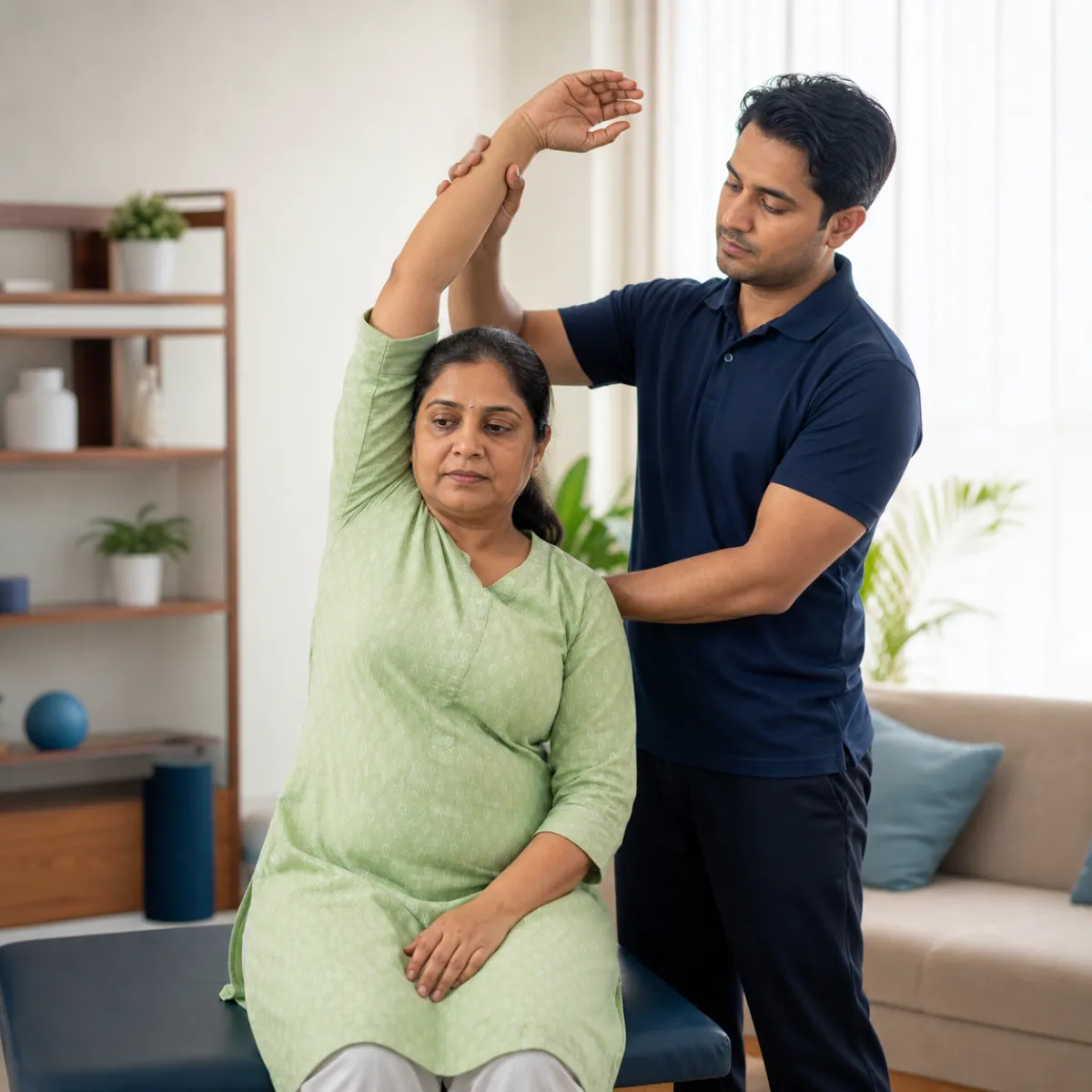
CareMotion physiotherapists assess your exact capsular restriction patterns—measuring external rotation, abduction, and internal reach behind the back. We progress therapy according to your specific capsular stage.
Home visits allow patients to practice reaching into high kitchen cabinets, dressing comfortably, and sleeping without agonizing nighttime shoulder twinges.
- Gentle passive mobilization and myofascial release around the rotator cuff.
- Theraband progressive external rotator strengthening during the thawing phase.
- Consistent home exercise protocols with clear guidance on what constitutes safe discomfort.
General information to help you plan a visit. Individual assessment and your treating team's advice guide rehabilitation decisions.