
By CareMotion · Modalities & Technology
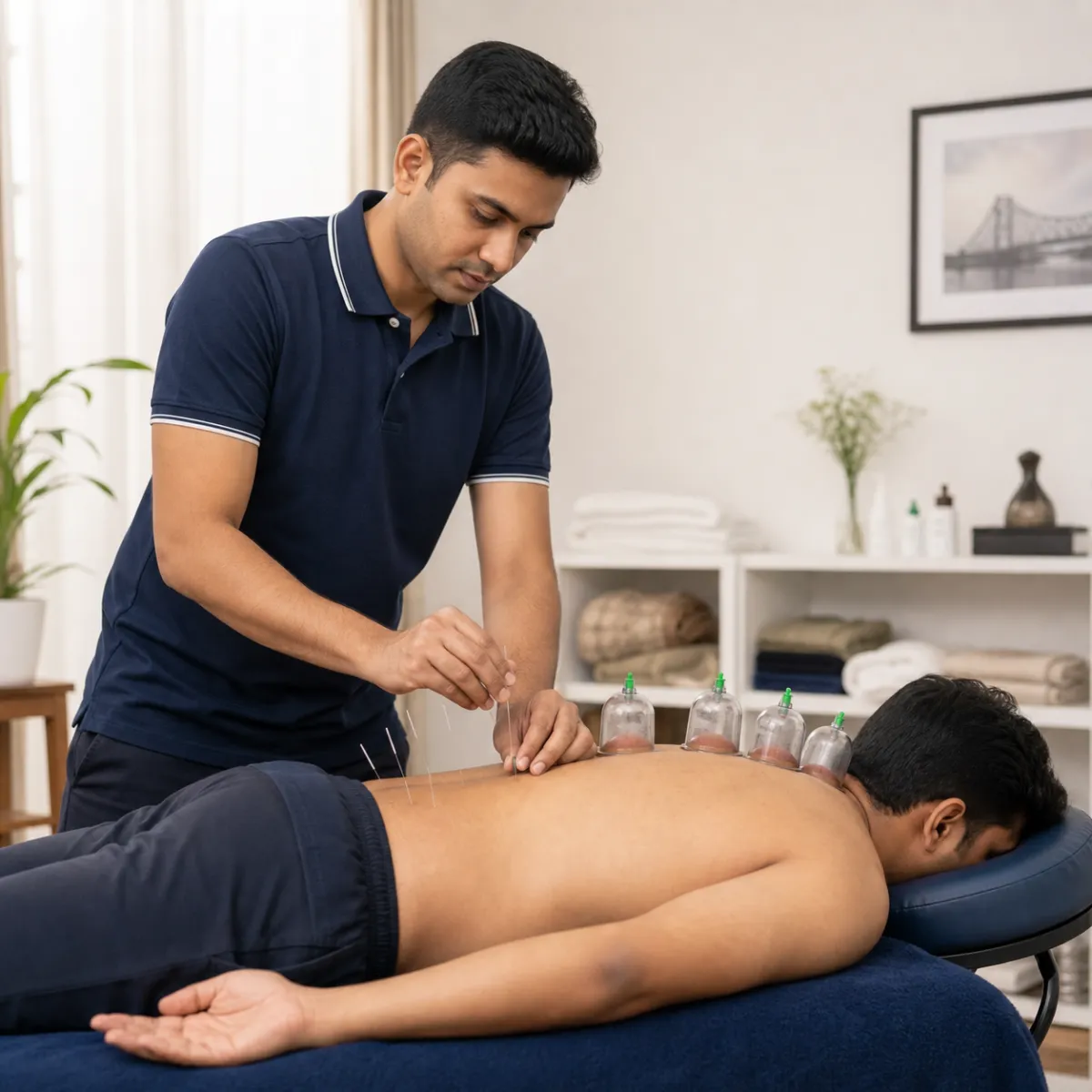
What is Dry Needling and How Does It Work?
Dry needling is an advanced physical therapy technique that involves inserting very fine, sterile, single-use stainless steel filiform needles into taut bands of skeletal muscle known as myofascial trigger points ('knots').
It is called 'dry' because no medication or fluid is injected. Instead, the physical needle tip mechanically stimulates the dysfunctional motor endplate, triggering a localized muscle twitch response (LTR) that resets abnormal neuromuscular acetylcholine release.
- Myofascial trigger points: Hyperirritable spots in taut muscle bands that refer pain to distant zones.
- Local Twitch Response (LTR): A brief involuntary contraction that releases muscle tension immediately.
- Biochemical washout: Needling dramatically reduces local concentrations of inflammatory substance P and bradykinin.
Dry Needling vs. Traditional Acupuncture: The Key Differences
While both techniques utilize similar thin needles, their underlying philosophy and clinical reasoning are entirely distinct. Traditional acupuncture is rooted in Traditional Chinese Medicine (TCM), targeting meridian lines and balancing 'Qi' energy flow.
Dry needling is grounded in Western neuro-anatomy, myofascial trigger point science, and evidence-based orthopedic pathology, targeting specific anatomical muscle bellies to restore functional movement.
- Acupuncture: Traditional meridian theory, superficial needle retention along energetic channels.
- Dry Needling: Western medical diagnosis, deep anatomical insertion directly into dysfunctional muscle knots.
- Common sites: Upper trapezius for tension headaches, piriformis for buttock pain, infraspinatus for shoulder ache.
Clinical Safety and Post-Treatment Expectations in Kolkata
Dry needling must be performed exclusively by certified physiotherapists who hold specialized postgraduate training in clean needle technique (CNT) and deep cross-sectional anatomy, completely avoiding pleura, lungs, and major arteries.
CareMotion certified clinicians bring sterile single-use equipment to your home, combining dry needling with active corrective exercise for lasting relief.
- Mild post-treatment muscle soreness (similar to an intense workout) is normal for 24-48 hours.
- Stay well-hydrated and apply gentle moist heat to treated muscles post-session.
- Always combined with active stretching and postural re-education to prevent knot recurrence.
General information to help you plan a visit. Individual assessment and your treating team's advice guide rehabilitation decisions.