
By CareMotion · Neurological Rehabilitation
The Mechanism of Sensation Loss in Diabetic Neuropathy
Diabetic peripheral neuropathy (DPN) is a microvascular complication of chronic hyperglycemia, causing progressive axonal degeneration and demyelination in the longest sensory nerve fibers—typically starting in the toes and feet in a 'stocking' distribution.
In Kolkata, where diabetes prevalence is high, loss of protective sensation (LOPS) deprives the brain of essential proprioceptive feedback about floor texture, incline, and foot placement, tripling the risk of catastrophic falls.
- Numbness, burning sensation, tingling ('ants crawling'), or completely dead sensation under the soles.
- Impaired light touch, vibration sensation (128 Hz tuning fork), and loss of 10g monofilament detection.
- Waddling, wide-based walking gait with heavy foot stomping to confirm ground contact.
Sensory Re-weighting: Training the Brain to Rely on Vision and Vestibular Senses
Balance relies on three sensory systems: somatosensory (feet and joints), vestibular (inner ear), and vision. When foot sensations are dulled by diabetes, the brain must be trained in 'sensory re-weighting'—learning to rely more effectively on visual cues and inner ear orientation.
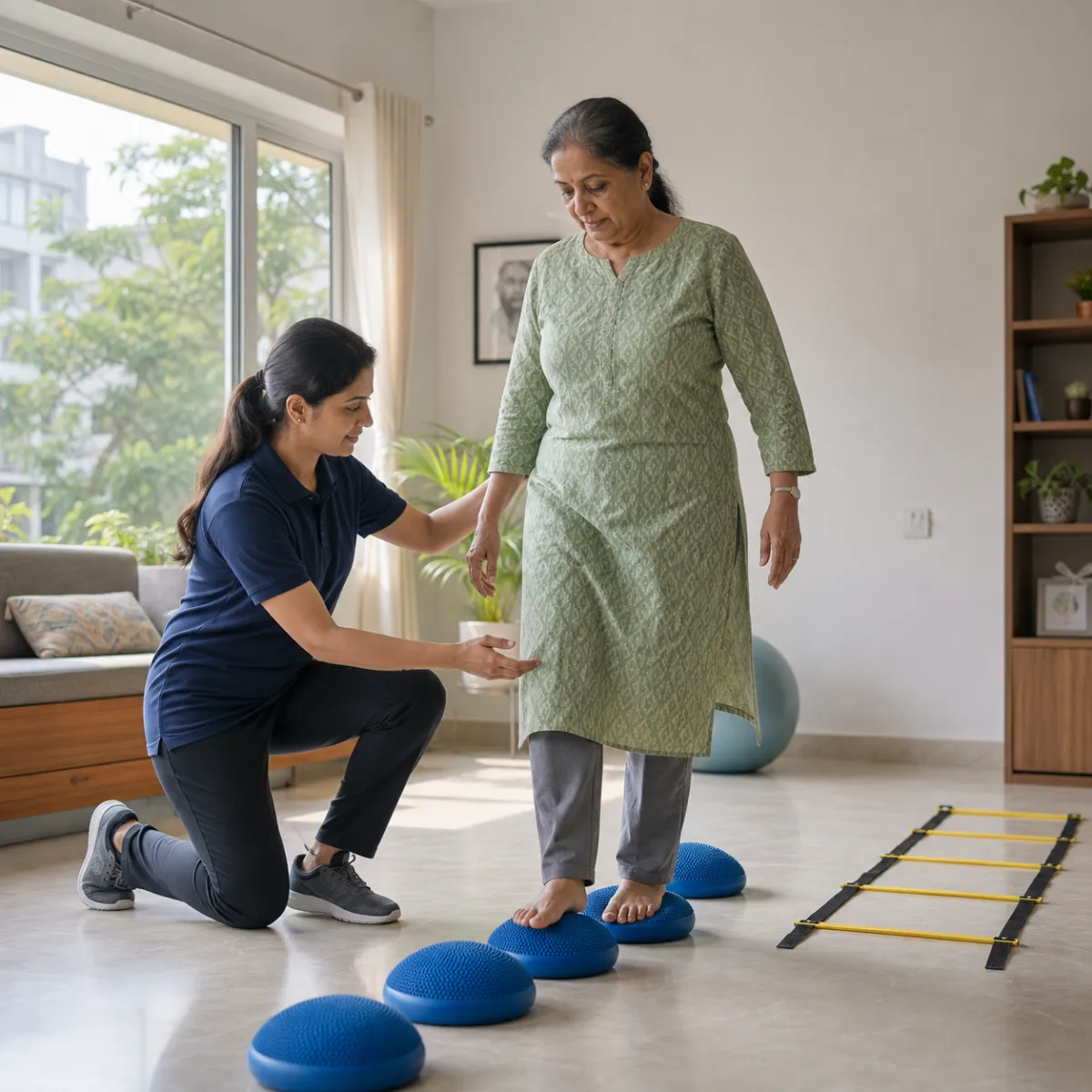
Therapeutic drills challenge balance in safe, supported home environments: practicing standing with feet together, head turns while walking, and stepping over small obstacles.
- Tandem stance and semi-tandem balance drills holding onto a sturdy kitchen counter.
- Head turning drills while walking down a well-lit corridor to integrate vestibular signals.
- Ankle strengthening with resistance loops to reinforce eversion and dorsiflexion control.
Non-Negotiable Diabetic Foot Inspection Rules
Because patients cannot feel pain from small pebbles, blister friction, or hot marble floors, daily visual foot inspection is life-saving to prevent diabetic foot ulcers and amputations. Custom cushioned footwear with wide toe boxes is mandatory.
CareMotion physiotherapists assess balance reflexes, check footwear suitability, and guide safe home balance training across Kolkata.
- Never walk barefoot, even inside the home on clean marble or mosaic floors.
- Inspect bottoms of both feet daily using a small hand mirror to catch early red spots or blisters.
- Wear seamless diabetic socks and well-cushioned shoes with firm heel counters.
General information to help you plan a visit. Individual assessment and your treating team's advice guide rehabilitation decisions.