
By CareMotion · Cardiopulmonary Rehabilitation
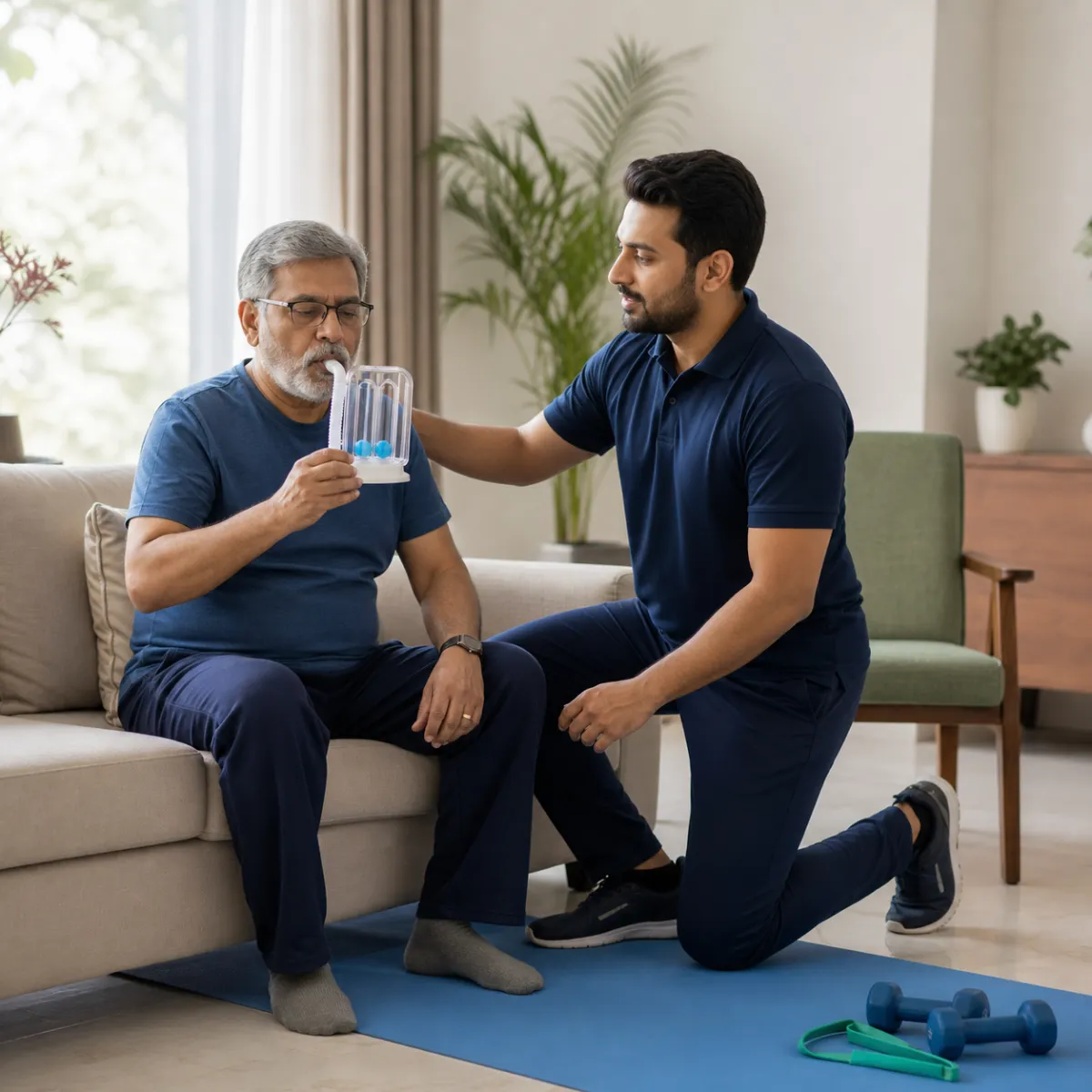
The Pathophysiology of Air Trapping in COPD
Chronic Obstructive Pulmonary Disease (COPD)—encompassing chronic bronchitis and emphysema—is characterized by progressive airflow limitation, loss of lung tissue elastic recoil, and destruction of alveolar walls.
Patients struggle not with getting air in, but with getting stale air out. Collapsed small airways trap air inside the lungs (hyperinflation), flattening the diaphragm and forcing weak accessory neck and chest muscles to work overtime, leading to chronic dyspnea (breathlessness) in Kolkata.
- Chronic productive morning cough, progressive exertional shortness of breath, and chest tightness.
- Flattened, mechanically disadvantaged diaphragm unable to generate efficient downward negative pressure.
- Anxiety-driven rapid shallow breathing that exacerbates dynamic hyperinflation and panic.
Two Master Breathing Techniques: Pursed-Lip and Diaphragmatic
Pursed-lip breathing is the single most effective tool for stopping breathlessness panic. By gently exhaling through pursed lips (like blowing out a candle), it creates back-pressure inside the airways, holding floppy bronchial walls open and allowing trapped carbon dioxide to escape.
Diaphragmatic breathing trains the patient to breathe into their lower belly rather than hiking their shoulders, re-establishing efficient, energy-conserving respiratory mechanics.
- Pursed-Lip Breathing: Inhale slowly through the nose for 2 counts, purse lips, and exhale gently for 4 counts without forcing.
- Diaphragmatic Retraining: Hand on belly, hand on chest; inhale so only the belly rises while the chest stays still.
- Recovery Posture: Forward-leaning sitting resting forearms on thighs (tripod position) to mechanically assist the diaphragm.
Exercise Pacing, Air Quality, and Home Care in Kolkata
In Kolkata's seasonal winter air quality, patients with COPD must stay indoors during peak smog hours, using air purifiers or masks when stepping outside. Aerobic conditioning (seated pedaling, indoor corridor walking) should be paced using the 'Blow as you go' principle.
CareMotion physiotherapists assess resting and active SpO2, design paced functional exercise routines, and teach secretional clearance techniques at your home.
- Blow as you go: Exhale through pursed lips during the hardest part of any task (such as standing up or climbing a step).
- Pacing daily activities: Break bathing and dressing into smaller steps with seated rest breaks.
- Maintain pulse oximetry monitoring, ensuring oxygen levels stay within your physician's target range.
General information to help you plan a visit. Individual assessment and your treating team's advice guide rehabilitation decisions.