
By CareMotion · Assistive Devices & Mobility
The Importance of Matching the Device to Functional Need
Walking aids are not one-size-fits-all. Using the wrong assistive device or using an incorrectly adjusted height can destabilize posture, strain the shoulders, or paradoxically increase the risk of a senior falling.
Selecting between a standard walking stick, a tripod, a broad-base quad cane, a rigid folding walker, or a four-wheeled rollator depends on an objective clinical evaluation of weight-bearing tolerance, balance coordination, and home environment.
- Single-point cane: Ideal for mild unilateral knee osteoarthritis or slight balance hesitation (offloads 15-20% weight).
- Tripod / Quad cane: Provides a broad, stable base that stands independently on flat floors (best for hemiplegia stroke patients).
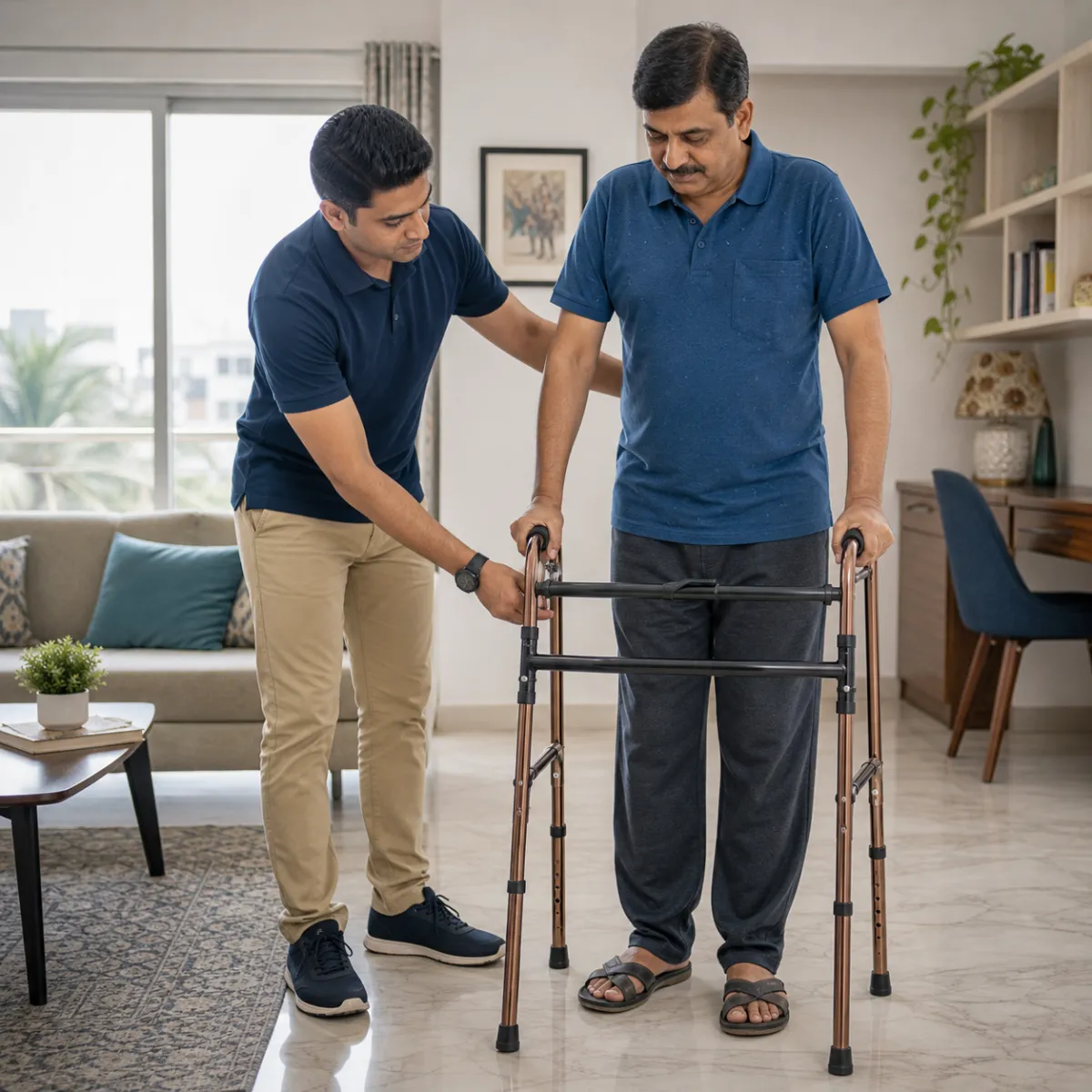
- Standard folding walker: Provides maximum stability and bilateral arm support (offloads up to 50% weight).
- Rollator (wheeled walker with seat): Best for active seniors with cardiopulmonary fatigue who need frequent resting breaks.
How to Measure and Set the Exact Correct Handle Height
A universal rule in physical therapy is that walking aid height must be measured with the patient standing upright wearing their regular walking footwear, arms hanging relaxed naturally at their sides.
The top of the cane or walker handle must align exactly with the patient's greater trochanter (the prominent bony bump on the side of the hip) or the distal wrist crease. When gripping the handle, the elbow should bend naturally at a comfortable 20 to 30-degree angle.
- If handle is too low: Patient stoops forward, increasing lumbar disc compression and neck fatigue.
- If handle is too high: Shoulders hike uncomfortably, reducing leverage and upper limb stability.
- Rubber ferrule check: Ensure the bottom rubber stopper has deep tread grooves and is not worn down smooth.
Correct Walking Cadence and Professional Home Fitting in Kolkata
When using a single cane or quad cane, it must always be held in the hand OPPOSITE the weak or painful leg—moving forward simultaneously with the injured leg to maintain natural contralateral arm-swing biomechanics.
CareMotion physiotherapists assess gait mechanics inside your Kolkata home, correctly adjust device heights, and teach safe stair and doorway navigation.
- Three-point gait rule: Advance cane first, step injured leg forward level with cane, then step sound leg through.
- Stair climbing rule: 'Up with the good leg first, down with the bad leg first' while holding the handrail.
- Never use a rolling walker on steep inclines or narrow staircases without close clinical supervision.
General information to help you plan a visit. Individual assessment and your treating team's advice guide rehabilitation decisions.