
By CareMotion · Spine & Pain Management
Understanding Cervical Spondylosis and Cervical Radiculopathy
Cervical spondylosis is age-related wear and tear affecting the spinal discs and facet joints of the neck. Over decades, intervertebral discs dehydrate and lose height, while adjacent vertebrae develop reactive bone spurs (osteophytes).
When bone spurs or disc bulges narrow the neural foramina, exiting nerve roots become compressed (cervical radiculopathy), sending sharp radiating pain, numbness, or tingling down the shoulder, arm, and fingertips.
- Chronic morning neck stiffness and grinding sensation (crepitus) on turning the head.
- Pain radiating into the shoulder blade, triceps, or index and middle fingers.
- Tension headaches originating at the base of the skull (occipital region).
Key Physiotherapy Exercises: Chin Tucks and Thoracic Extension
The cornerstone of cervical rehabilitation is deep neck flexor strengthening (longus colli and longus capitis). Prolonged forward head posture weakens these stabilizers, placing enormous shear strain on cervical facet joints.
Chin tucks (axial neck retraction) glide the head backward, aligning ears over shoulders, reducing anterior shear forces, and widening narrowed intervertebral foramina.
- Chin tuck exercise: Sit tall, look straight ahead, and gently slide the chin backward as if making a double chin.
- Isometric neck strengthening: Gentle palm resistance against forehead and temples without moving the head.
- Scapular retraction: Squeezing shoulder blades backward and downward to open the thoracic cage.
Pillow Selection, Laptop Ergonomics, and Home Care in Kolkata
Using multiple thick pillows elevates the neck into exaggerated flexion all night, aggravating disc bulges. A single contoured cervical pillow or memory foam roll that supports the natural neck curve without tilting the head is recommended.
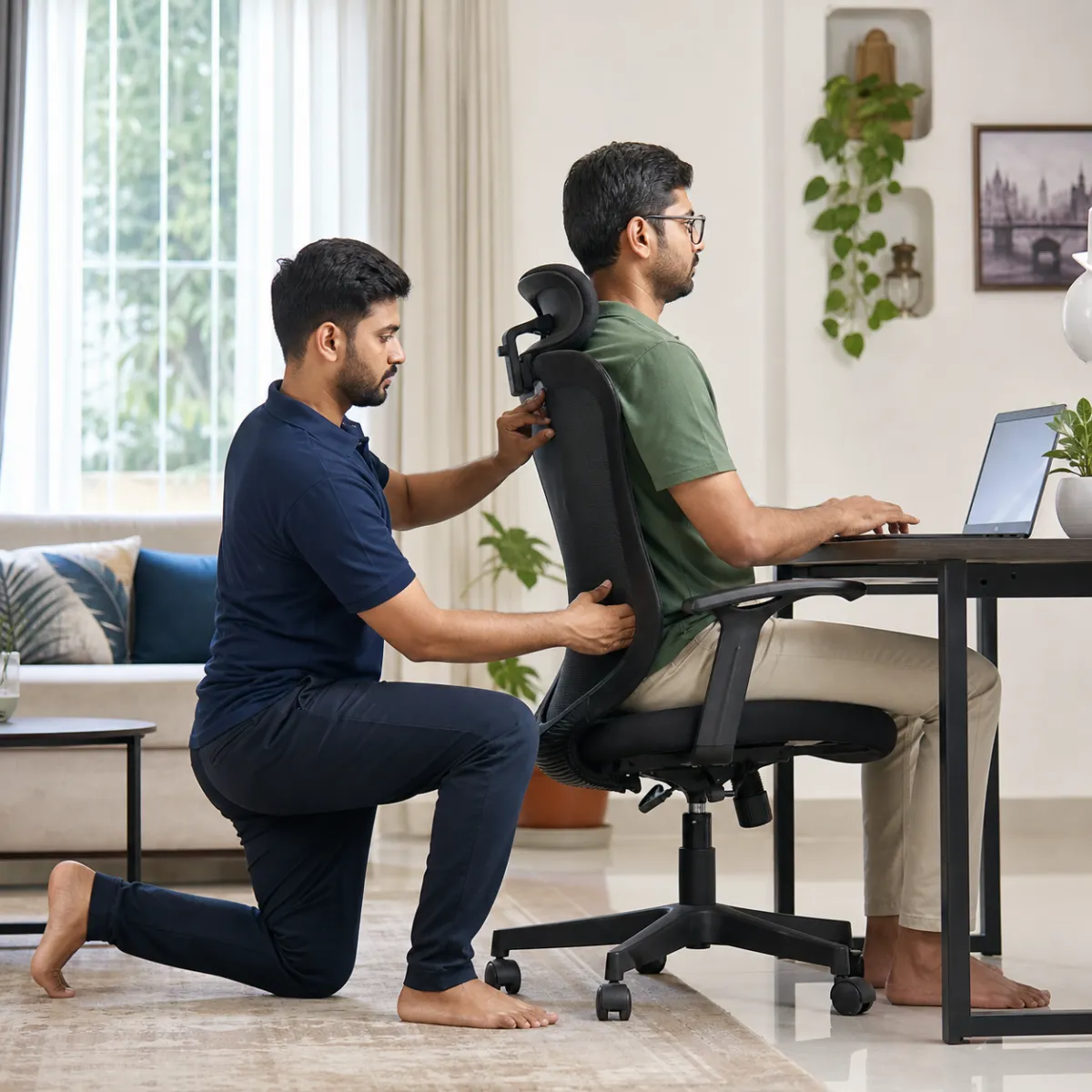
CareMotion physiotherapists assess your desk setup in Salt Lake or New Town, analyze neck mobility, and deliver gentle manual traction and mobilizations at home.
- Elevate laptop screens so the top third of the monitor aligns with your natural eye level.
- Take a 2-minute posture break every 45 minutes to perform 5 slow chin tucks.
- Avoid rolling the neck in wide full circles which crushes posterior facet joints.
General information to help you plan a visit. Individual assessment and your treating team's advice guide rehabilitation decisions.