
By CareMotion · Musculoskeletal Care
The Anatomy of Median Nerve Compression in the Wrist
Carpal Tunnel Syndrome (CTS) occurs when the median nerve becomes compressed as it travels through a narrow anatomical tunnel in the wrist, bounded by carpal bones on the bottom and the rigid transverse carpal ligament on top.
Nine flexor tendons share this confined tunnel with the median nerve. Chronic fluid retention, repetitive wrist flexion, or tenosynovitis increases carpal tunnel pressure, choking microvascular blood flow to the nerve.
- Nocturnal tingling and burning pain in the thumb, index, middle finger, and radial half of the ring finger.
- Waking up at night needing to 'shake out' the hand to restore sensation (Flick sign).
- Weakness in the thenar muscles causing accidental dropping of cups and pens.
Physiotherapy Interventions: Nerve Gliding and Splinting
Wearing a neutral wrist cock-up splint at night keeps the wrist at 0-5 degrees of extension—the position of lowest hydrostatic pressure inside the carpal canal—preventing nocturnal flexion that starves the nerve of oxygen.
Median nerve gliding exercises (flossing) gently pull the nerve through the carpal tunnel, breaking micro-adhesions and promoting longitudinal axonal sliding.
- Median nerve flossing sequence: Progression through neutral wrist, finger extension, thumb abduction, and gentle wrist extension.
- Flexor retinaculum myofascial stretching to improve transverse canal compliance.
- Nighttime neutral splinting worn consistently for 4-6 weeks.
Ergonomic IT Workstation Fixes in Salt Lake & New Town
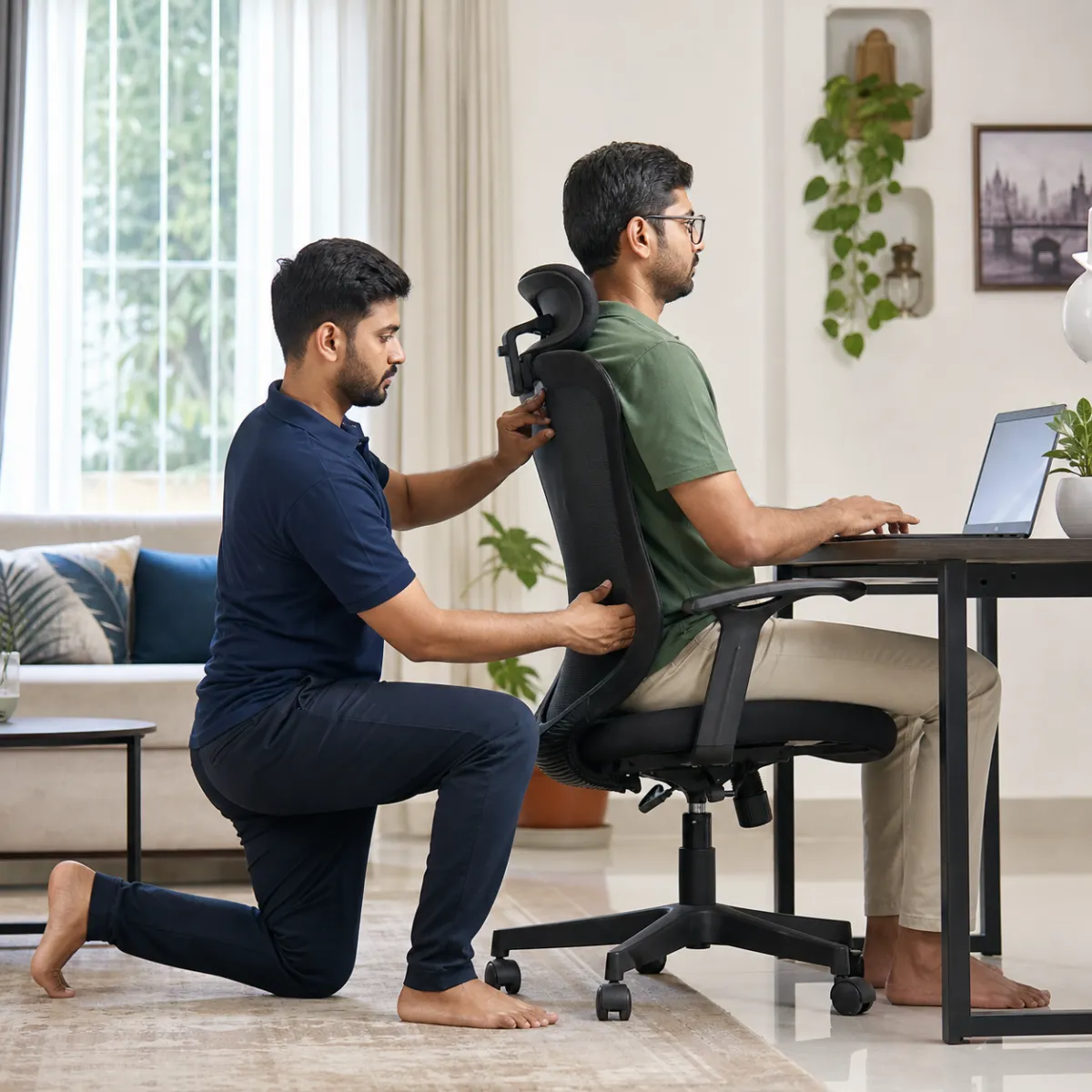
Many IT professionals in Sector V and New Town develop CTS due to typing on flat laptop keyboards with wrists bent upward into sustained extension. External ergonomic keyboards and palm rests neutralize these angles.
CareMotion physiotherapists assess your hand ergonomics, perform diagnostic tests (Phalen's and Tinel's signs), and guide conservative rehabilitation at home.
- Keep wrists straight (neutral) while typing rather than resting wrist creases on sharp desk edges.
- Take a 30-second micro-break every 30 minutes to perform gentle finger extension stretches.
- Seek urgent medical evaluation if muscle wasting (atrophy) appears in the fleshy base of the thumb.
General information to help you plan a visit. Individual assessment and your treating team's advice guide rehabilitation decisions.