
By CareMotion · Musculoskeletal Care
Anatomical Differences Between Bursae and Tendons
Tendons and bursae are distinct anatomical structures that often sit adjacent to one another around major joints (such as the shoulder, hip, knee, and heel), which is why bursitis and tendinitis frequently coexist.
A tendon is a tough, fibrous cord of dense collagen that anchors muscle to bone, transmitting contractile mechanical force. A bursa is a small, fluid-filled synovial cushion that acts as a friction-reducing ball bearing between tendons and underlying bones.
- Tendinitis: Micro-tears, collagen degeneration, and localized tenderness within the tendon cord itself.
- Bursitis: Rapid inflammatory fluid distension of the lubricating sac, often warm, swollen, and diffusely tender.
- Both cause localized joint ache, but clinical testing reveals distinct mechanical triggers.
How a Physiotherapist Differentiates Between the Two
During a physical examination, a physiotherapist performs selective tissue tension testing. Tendinitis typically produces sharp pain during resisted active muscle contraction or when the tendon is put on maximum passive stretch.
Bursitis produces pain on direct compression or deep palpation of the bursa, and pain often occurs on active and passive motion in the exact same direction without needing muscle resistance.
- Shoulder: Subacromial bursitis vs supraspinatus tendinopathy (Neer and Hawkins-Kennedy tests).
- Hip: Greater trochanteric bursitis vs gluteus medius tendinopathy.
- Knee: Prepatellar bursitis ('housemaid's knee') vs patellar tendinitis ('jumper's knee').
Targeted Treatment Strategies and Healing Expectations
Acute bursitis responds rapidly to cold therapy, temporary rest, and mechanical offloading. Tendinopathy requires prolonged, progressive load management over 8 to 12 weeks to stimulate cellular collagen remodeling.
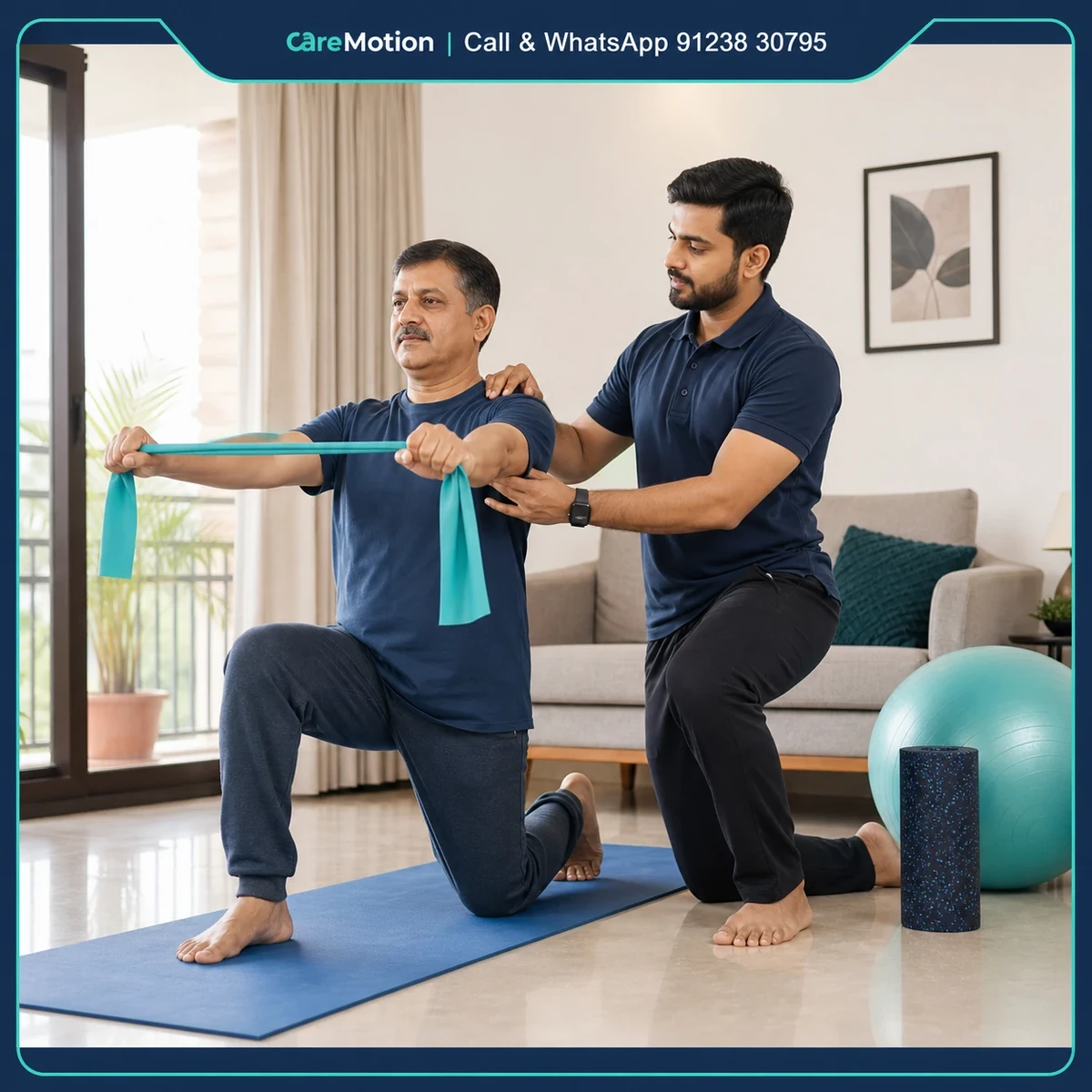
CareMotion home physiotherapists evaluate your exact inflammatory profile, ensuring you receive the appropriate balance of calming modalities and progressive loading.
- Bursitis protocol: De-loading, gentle pain-free mobility, and eliminating friction triggers.
- Tendinopathy protocol: Progressive isometric, concentric, and heavy-slow eccentric loading.
- Long-term: Addressing biomechanical kinetic chain flaws to prevent recurring inflammation.
General information to help you plan a visit. Individual assessment and your treating team's advice guide rehabilitation decisions.