
By CareMotion · Cardiopulmonary Rehabilitation
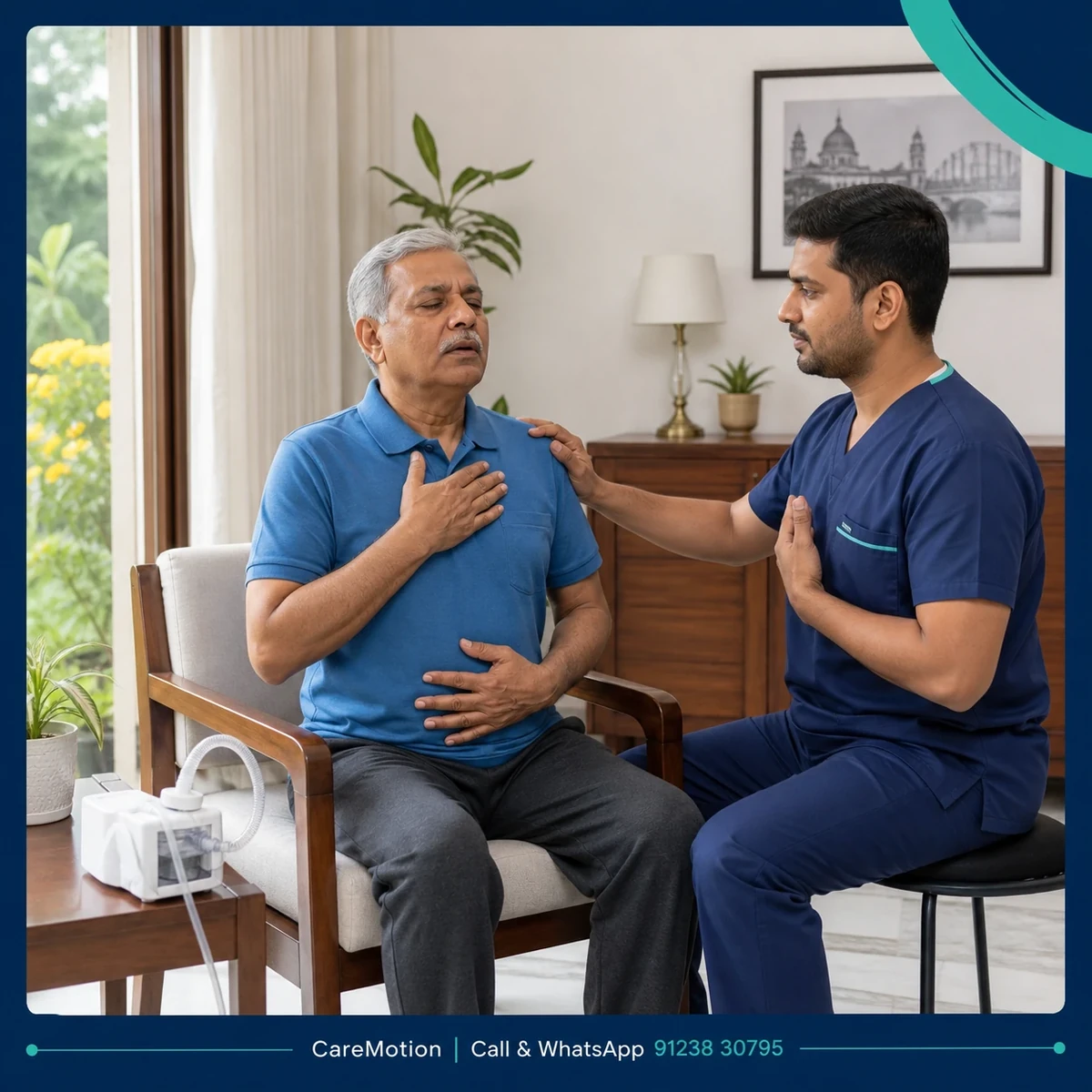
The Anatomy of Irreversible Bronchial Dilation in Bronchiectasis
Bronchiectasis is a chronic respiratory condition characterized by permanent, abnormal widening and scarring of bronchial airways. Impaired mucociliary clearance leads to chronic pooling of thick secretions, recurrent bacterial infections, and progressive airway destruction.
In Kolkata, bronchiectasis often develops following childhood tuberculosis, severe whooping cough, or recurrent aspiration. Daily airway clearance is the primary medical defense against lung damage and hospital admissions.
- Daily production of copious, thick yellow or green purulent sputum.
- Chronic fatigue, recurrent respiratory infections, and persistent chest crackles.
- Risk of hemoptysis (blood streaks in sputum) during acute inflammatory exacerbations.
The Three Phases of the Active Cycle of Breathing Techniques (ACBT)
ACBT is an internationally recognized, flexible airway clearance protocol that mobilizes secretions from peripheral lung bases to central airways without causing airway collapse or exhausting coughing paroxysms.
The cycle repeats three distinct phases: Breathing Control (gentle diaphragmatic rest), Thoracic Expansion Exercises (deep breaths with 3-second breath-holds), and the Forced Expiration Technique (gentle huffing).
- Phase 1: Breathing Control (gentle, relaxed belly breathing for 6 breaths to prevent bronchospasm).
- Phase 2: Thoracic Expansion (3-4 slow, deep inhalations holding breath for 3 seconds to get air behind secretions).
- Phase 3: Forced Expiration (1-2 gentle huffs from mid-lung volume like fogging a mirror, moving mucus upward).
Postural Drainage Positions and Home Physiotherapy Support
Combining ACBT with gravity-assisted postural drainage positions (such as side-lying tilted positions using pillows) drains specific congested lung segments efficiently. Oscillating positive expiratory pressure (PEP) devices like the Flutter or Acapella further loosen secretions.
CareMotion home physiotherapists perform stethoscope auscultation, identify congested lobes, and train patients in independent daily clearance routines across Kolkata.
- Perform airway clearance twice daily—first thing in the morning and late afternoon before dinner.
- Never perform postural drainage immediately after meals to avoid gastroesophageal acid reflux.
- Inhale prescribed bronchodilators or hypertonic saline nebulizers before clearance to open airways.
General information to help you plan a visit. Individual assessment and your treating team's advice guide rehabilitation decisions.