
By CareMotion · Bedridden & Elderly Care
The Physiology of Pressure Ulcers (Decubitus Ulcers / Bed Sores)
Pressure ulcers develop when prolonged, unrelieved pressure over bony prominences exceeds capillary closing pressure (approximately 32 mmHg). This compresses microvascular blood vessels, cutting off oxygen and nutrient delivery to tissues, resulting in ischemia, tissue necrosis, and open wounds.
In bedridden older adults, stroke patients, and terminal palliative patients in Kolkata, bed sores can develop in as little as 2 hours if left immobile in the same position on an unpadded mattress.
- Highest risk bony sites: Sacrum and tailbone (40%), heels (30%), greater trochanters (hips), and shoulder blades.
- Shear force damage: Sliding a patient up in bed drags skin against sheets, tearing fragile subcutaneous capillaries.
- Moisture maceration: Perspiration, urinary incontinence, or poor hygiene softens skin, accelerating ulcer breakdown.
The Mandatory 2-Hour Lateral Turning Schedule
The gold standard for bed sore prevention is a strict 2-hour turning clock: alternating between lying on the back (supine), 30-degree tilted right lateral, and 30-degree tilted left lateral. Avoid turning directly onto the 90-degree hip trochanter, which concentrates immense pressure.
Use pillows strategically: place one pillow behind the back to maintain the 30-degree tilt, one pillow between knees to prevent medial bone contact, and float heels completely off the bed using a pillow under calves.
- Supine: Head of bed elevated no more than 30 degrees to minimize downward sacral shear force.
- 30-Degree Lateral Tilt: Offloads both the sacrum and the greater trochanter onto the fleshy gluteal mass.
- Heel Floating: Ensure heels hang suspended in the air over a calf pillow without touching the mattress.
Mattress Selection, Skin Hygiene & Physiotherapy in Kolkata
A dynamic alternating pressure air mattress (bubble or tubular ripple mattress) is essential for any patient confined to bed for more than 16 hours daily. However, an air mattress does not replace the need for physical turning.
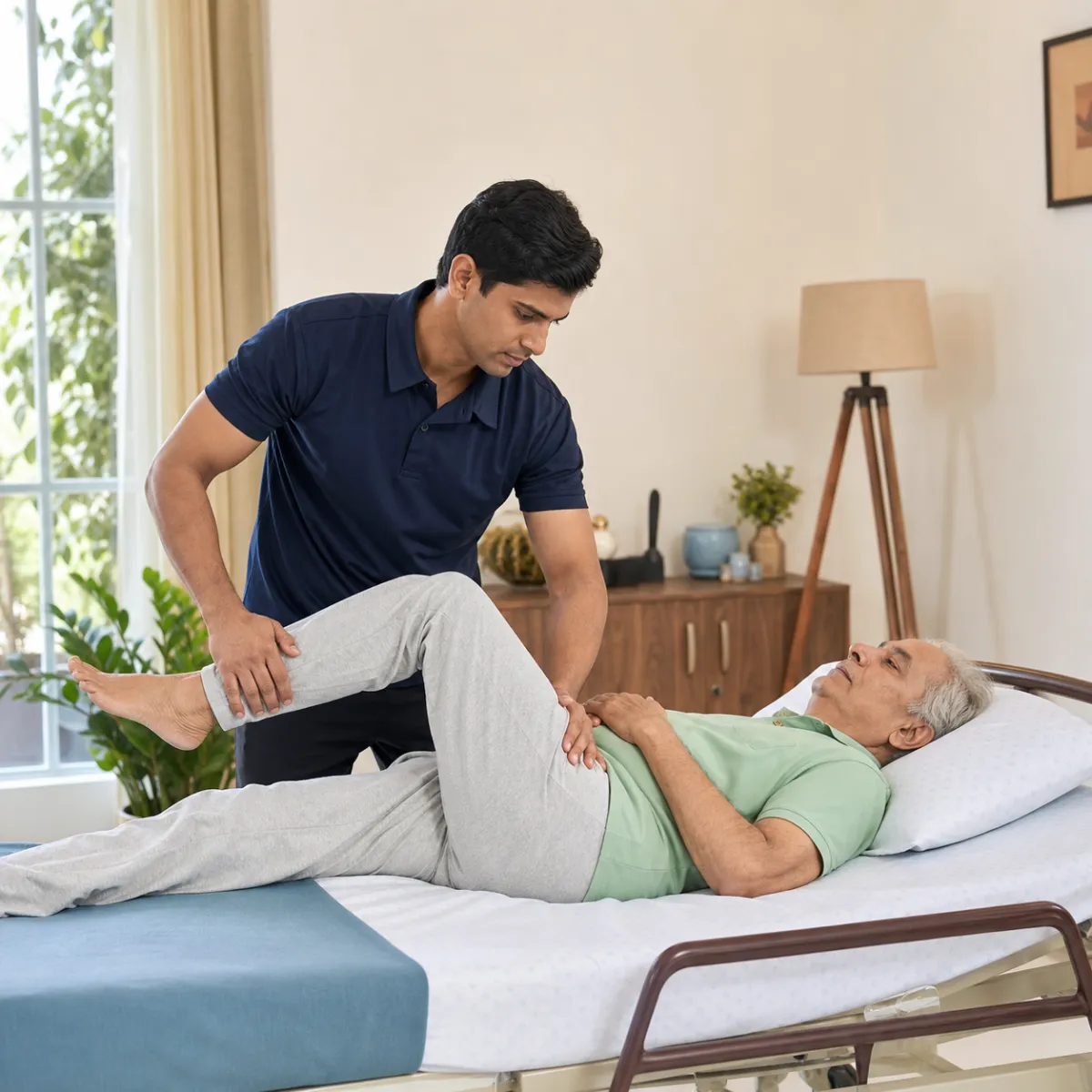
CareMotion physiotherapists assess skin integrity, train family and domestic attendants in safe friction-free log rolling, and perform passive joint movements to prevent contractures.
- Inspect sacrum and heels daily under bright light for non-blanchable redness (Stage 1 pressure injury).
- Never massage red, inflamed bony prominences; massage destroys ischemic micro-vessels beneath the skin.
- Use draw-sheets to lift and reposition patients in bed, never dragging them across bed linens.
General information to help you plan a visit. Individual assessment and your treating team's advice guide rehabilitation decisions.