
By CareMotion · Geriatric Mobility
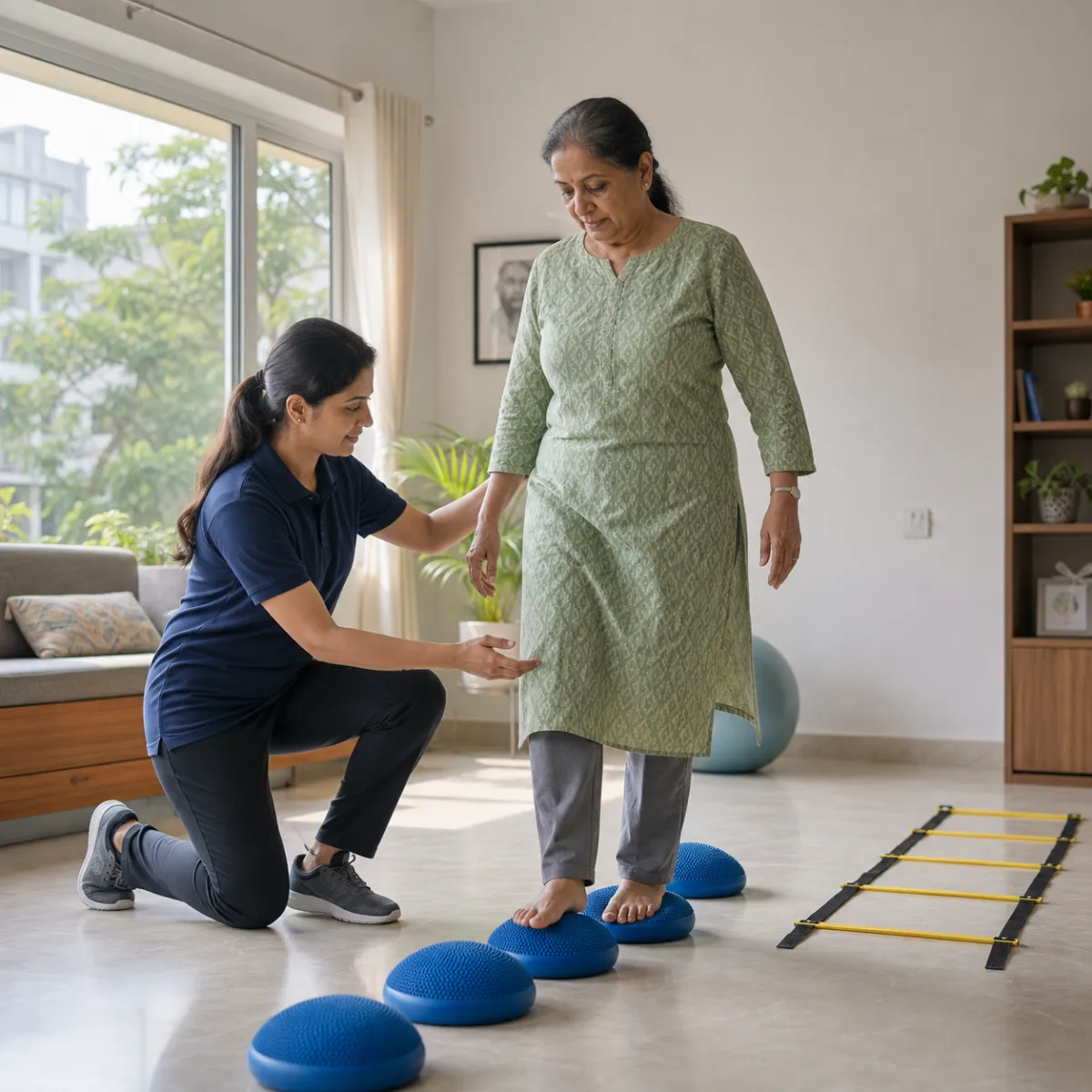
The Triad of Human Postural Equilibrium
Maintaining upright balance without swaying or falling requires constant, millisecond-by-millisecond sensory integration from three distinct systems: the Somatosensory system (joint and foot pressure sensors), the Vestibular system (inner ear canals), and Vision.
As we age, sensory input from all three systems gradually degrades: cataracts dull vision, inner ear hair cells decline by 20-40%, and peripheral nerve conduction slows down. When combined with reduced lower limb muscle power, balance reactions become delayed.
- Increased postural sway during quiet standing, especially in low light or on thick carpets.
- Difficulty recovering equilibrium after minor trips, requiring multiple rescue steps.
- Developing a cautious, hesitant gait with eyes glued continuously to the floor.
Clinical Assessment and Multi-System Balance Drills
A clinical physiotherapist evaluates postural stability using validated tests such as the Berg Balance Scale (BBS) and the Timed Up and Go (TUG) test. Rehabilitation challenges each sensory system individually to force the brain to strengthen sensory integration.
Practicing balance on firm surfaces with feet together progresses to tandem stance, standing on soft foam cushions, and turning head side-to-side while maintaining stable foot placement.
- Romberg stance: Standing with feet together, arms folded, maintaining stability with eyes open then closed.
- Tandem walk: Stepping heel-to-toe along a corridor holding a supportive handrail.
- Weight-shifting clock drills: Stepping the foot forward to 12 o'clock, side to 3 o'clock, and back to 6 o'clock.
Environmental Modifications and Home Safety in Kolkata
Older adults in Kolkata frequently fall inside their own homes—often when walking to the bathroom in the middle of the night in dimly lit rooms. Ensuring adequate illumination and removing floor obstacles provides immediate protection.
CareMotion physiotherapists assess balance inside your actual living environment, identify hidden trip hazards, and deliver progressive balance training tailored to your physical confidence.
- Install motion-sensor LED nightlights between the bedroom and bathroom.
- Eliminate high-pile scatter rugs and loose door mats that catch dragging slippers.
- Practice daily ankle and hip strengthening exercises while holding the kitchen counter.
General information to help you plan a visit. Individual assessment and your treating team's advice guide rehabilitation decisions.