
By CareMotion · Geriatric Mobility
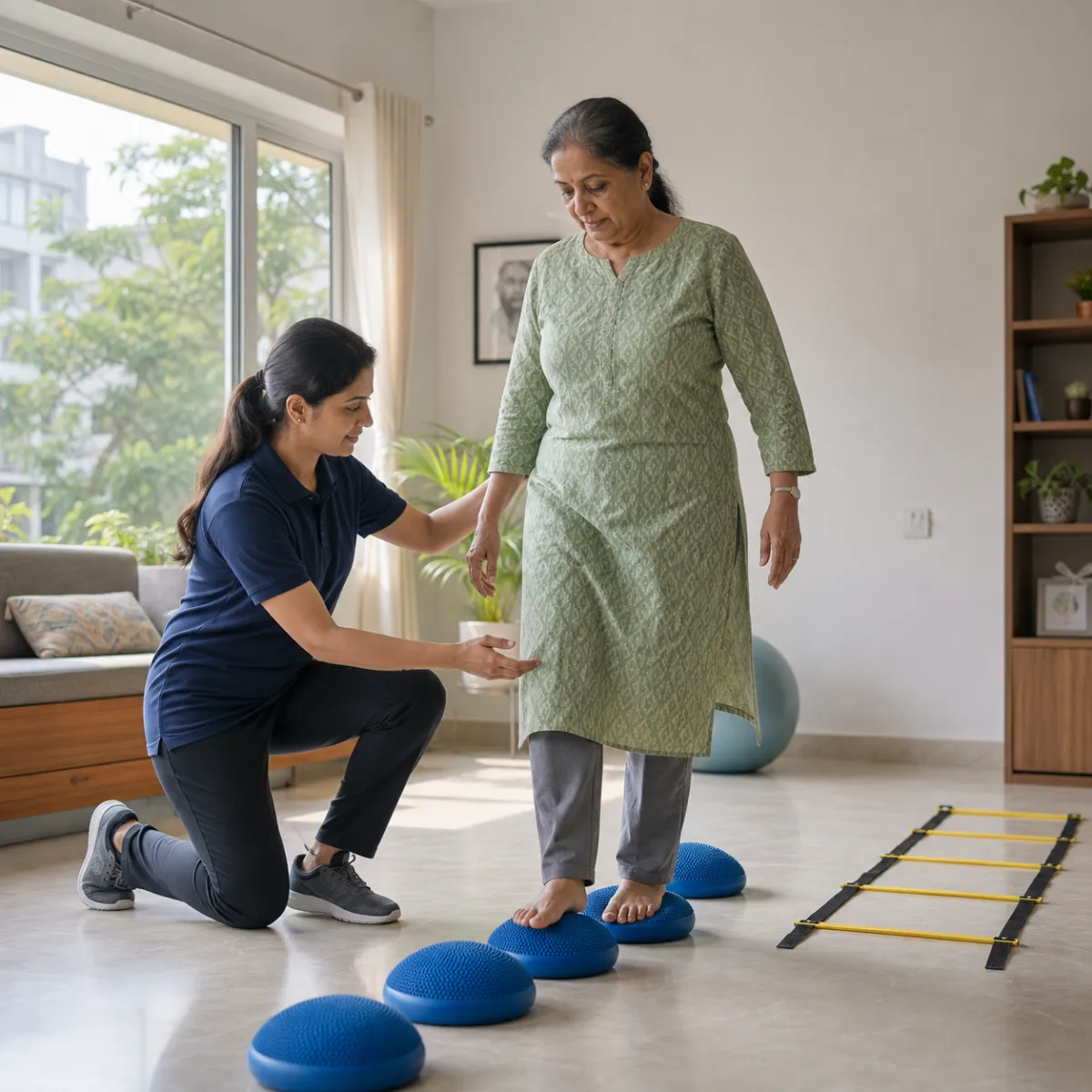
Why Daily Balance Practice is Essential for Longevity
Balance is not an unchangeable trait; it is a neuromuscular skill that sharpens with daily practice and dulls with sedentary disuse. Just as a muscle weakens when inactive, the brain's rapid postural equilibrium adjustments become sluggish without regular challenge.
For older adults living in Kolkata apartments, performing 10 minutes of structured balance drills daily maintains reactive stepping reflexes, preventing minor trips from turning into catastrophic falls.
- Stimulates mechanoreceptors in ankle ligaments and plantar foot pads.
- Improves vestibular canal coordination during head rotations while walking.
- Builds psychological self-confidence, overcoming debilitating fear of falling.
Progressive Static Balance Drills at the Kitchen Counter
All balance drills should be practiced standing directly beside a sturdy kitchen counter or heavy dining table for immediate hand support if unsteadiness occurs.
Progress balance systematically: start with feet together (narrow base), advance to semi-tandem (heel of one foot touching the arch of the other), progress to full tandem (heel directly touching toes in a straight line), and finally single-leg standing.
- Feet Together Stand: Stand tall with ankles touching, gaze forward, hold for 30 seconds without swaying.
- Tandem Stance: Stand heel-to-toe like on a tightrope, holding the counter with one finger, hold for 20 seconds per side.
- Single-Leg Stance: Lift one foot 2 inches off the floor, stand tall on the supportive leg for 15-20 seconds per side.
- Head Turns in Stance: Stand with feet together while slowly turning the head left and right 5 times.
Dynamic Walking Drills and Home Care in Kolkata
Static balance must translate into dynamic walking control. Dynamic drills include tandem walking (stepping heel-to-toe down a clear hallway), side-stepping along a bed frame, and high-knee marching in place.
CareMotion physiotherapists assess balance reflexes using standardized clinical metrics and progress drills safely within the comfort of your living room.
- Heel-to-toe corridor walking: Walk 10 steps forward along a clear hallway with hand hovering over the wall for safety.
- Lateral side-stepping: Take 10 steps sideways to the right, then 10 steps back to the left, keeping knees slightly soft.
- Figure-8 walking: Walk in a figure-8 loop around two dining chairs to practice smooth rotational turning.
General information to help you plan a visit. Individual assessment and your treating team's advice guide rehabilitation decisions.