
By CareMotion · Sports & Musculoskeletal
Understanding Lateral Ankle Ligament Sprains
An inversion ankle sprain occurs when the foot rolls inward under body weight, stretching or tearing lateral stabilizing ligaments—most commonly the anterior talofibular ligament (ATFL) and calcaneofibular ligament (CFL).
Without comprehensive physical therapy, up to 40% of ankle sprains develop into 'Chronic Ankle Instability' (CAI), characterized by recurring giving-way sensations on uneven pavement or cobblestones in Kolkata.
- Grade 1 (mild stretch, minimal swelling), Grade 2 (partial tear), Grade 3 (complete ligament rupture).
- Damage to mechanoreceptors within the joint capsule, impairing subconscious balance reflexes.
- Swelling, bruising tracking into the toes, and difficulty bearing full weight.
Transitioning from Protection to Active Proprioception
Modern sports medicine has evolved beyond prolonged immobilizing casts toward early functional protected movement. Gentle ankle alphabets and calf muscle pumps prevent scar contractures and speed hematoma resorption.
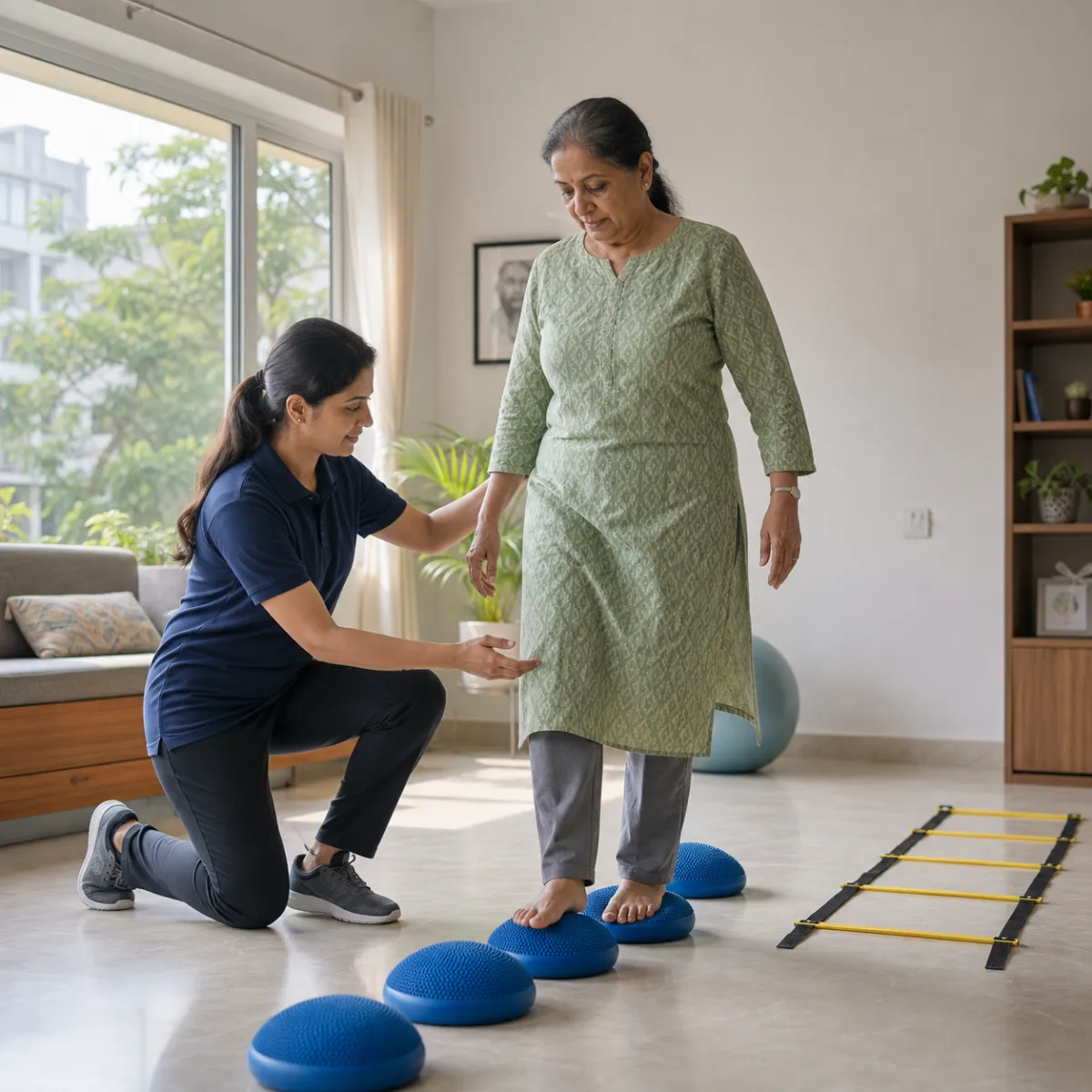
Once weight-bearing is comfortable, proprioceptive retraining on balance boards, single-leg stands, and eyes-closed drills rewires impaired neural pathways, protecting against re-injury.
- Ankle alphabet: Tracing letters in the air to mobilize the talocrural and subtalar joints.
- Peroneal muscle strengthening using resistance loops to reinforce dynamic eversion.
- Single-leg stance balance drills progressing from firm floor to a soft foam cushion.
Footwear, Bracing, and Home Physiotherapy in Kolkata
During the early recovery phase, wearing a lace-up ankle brace with lateral plastic stays provides superior functional stability compared to an elastic bandage. Sturdy supportive shoes prevent accidental re-inversion while walking.
CareMotion physiotherapists assess ligament laxity (anterior drawer and talar tilt tests) and deliver progressive balance and agility therapy at home.
- Wear an active supportive ankle brace when navigating uneven street pavements.
- Practice tandem walking (heel-to-toe) along a straight corridor floor at home.
- Do not return to badminton, football, or running until single-leg hop tests match the uninjured side.
General information to help you plan a visit. Individual assessment and your treating team's advice guide rehabilitation decisions.